Why this chopping board earns its place
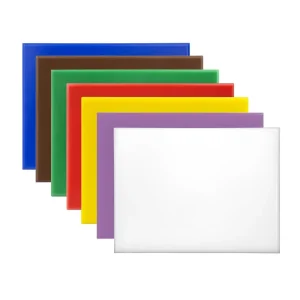
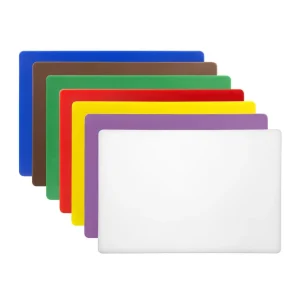
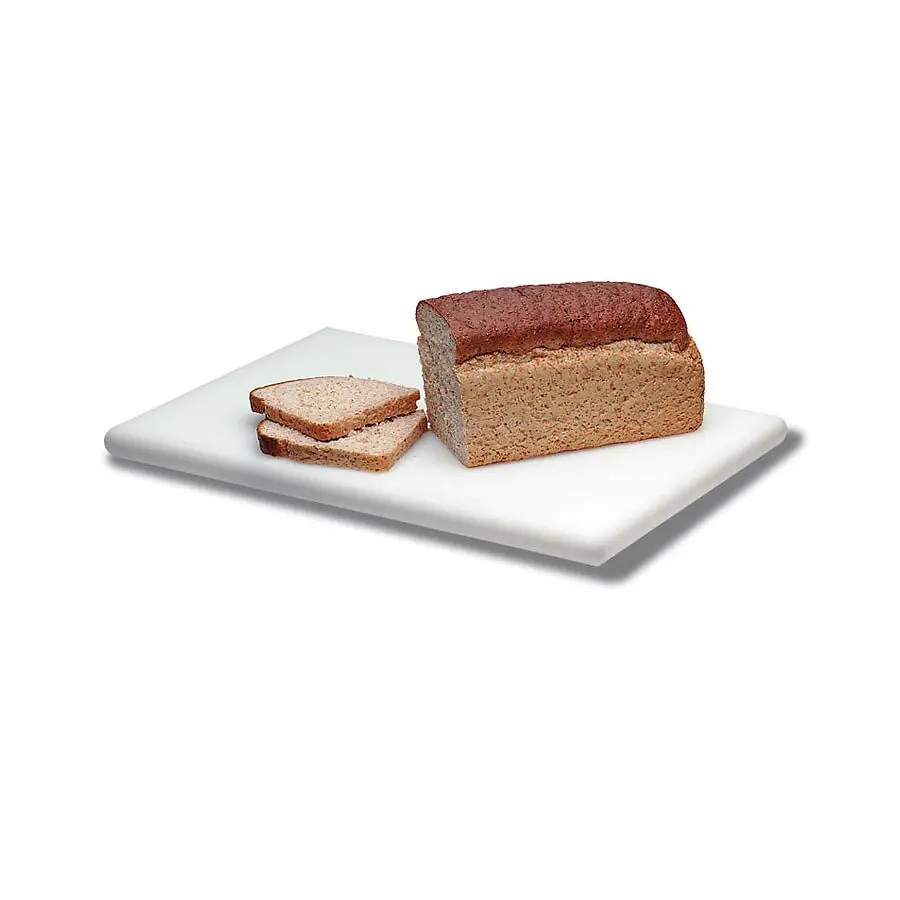
White is the colour UK kitchens conventionally give to bakery and dairy, the section where the work is clean, repetitive and usually going out without a further cook. Prepara set out what the board is for in a line — keeping cross-contamination out of a busy kitchen — and a coded board only delivers that if the pastry bench has its own and nobody carries it over to the protein side for a quick job. White has a second, practical advantage: nothing hides on it. A board that has not been washed properly announces itself.
At 460 × 300 mm there is room to roll and cut on the same surface, or to lay out a batch of portions without pushing the last of them off the edge. The 25 mm thickness is what makes it behave under pressure. Bakery work leans on the board rather than chopping at it, and at that depth it stays flat and stays put instead of shifting or flexing when you put your weight into dough or press through a set slab. It sits square on a standard prep table and stores on edge in a rack; the depth makes it a two-handed lift to the wash-up.
Polyethylene is the sensible surface here for the same reason it is everywhere else on the line — it gives under a blade and closes behind it, so an edge lasts far longer than it would on glass, stone or a hard composite. Dairy and pastry work leaves fat on the board, which wants hot water and a proper scrub rather than a wipe, and the board should stand on edge to dry rather than be stacked wet. Once the scoring is deep enough to hold soil after a wash, or the board has cupped enough to rock, it comes off the rota.