Why this chopping board earns its place
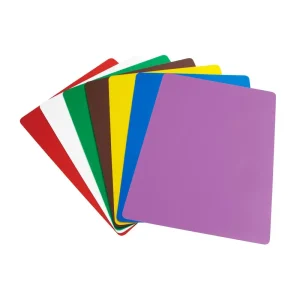
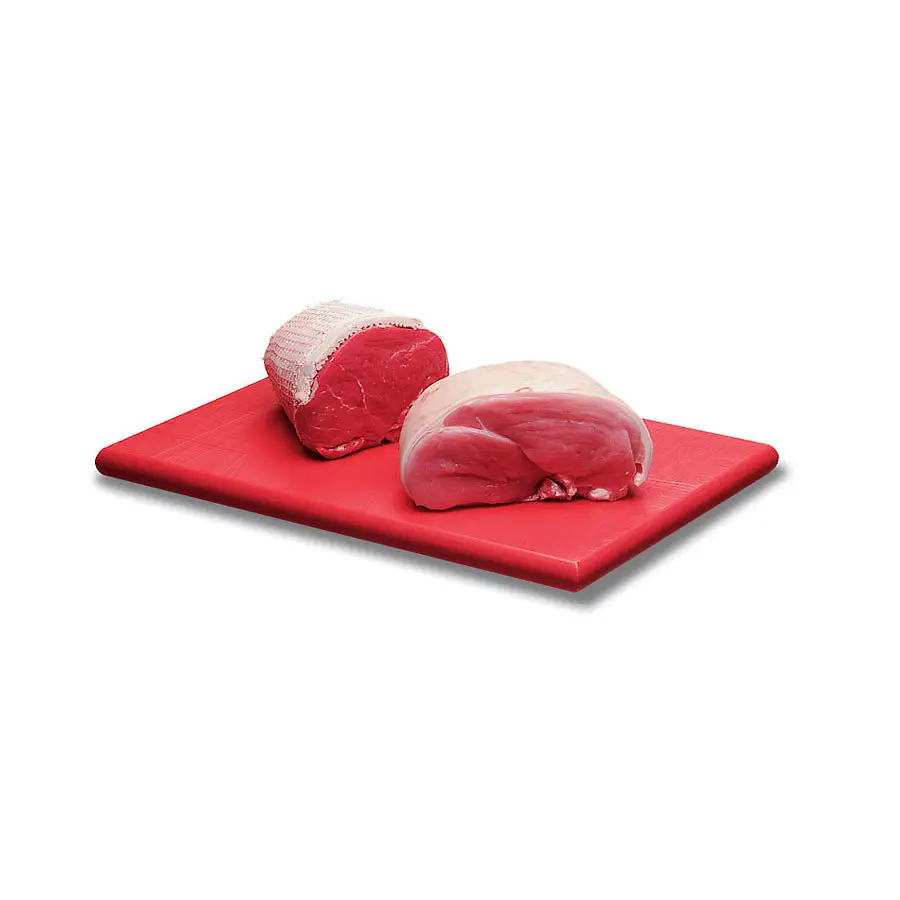
Red is the colour a UK kitchen conventionally gives to raw meat, and that convention is the whole working value of a coded board. Nobody at the bench has to ask what it was last used for, because the colour answers before anyone reaches for it. Prepara put the case plainly — a board like this exists to keep cross-contamination out of a busy kitchen — and it only earns that if the raw side has a board of its own and nobody borrows across for a quick job.
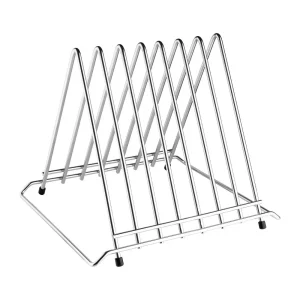
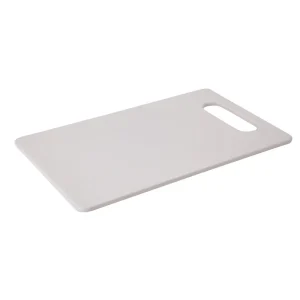
At 460 × 300 mm there is room to break down a joint or lay out a tray of portions without trimmings going over the edge onto the bench, and it still sits square on a standard prep table and drops into a board rack. The 25 mm thickness is the part you feel in use. At that depth the board carries enough mass to stay where you put it rather than skating with each stroke, and it absorbs the shock of jointing and chopping instead of flexing under the blade. It is a proper two-handed lift into the wash-up, which is the honest trade for a board that does not move while you work.
Polyethylene is the standard surface for raw protein because it gives under an edge and closes behind it, so a knife stays sharp far longer than it would on glass, stone or a hard composite. The routine is unglamorous and it matters: scraped and scrubbed between tasks, washed properly at the end of service, stood on edge to dry rather than stacked wet. A board is a wear item. Once the cut marks are deep enough to hold soil after a wash, or the board has cupped enough to rock on the bench, it comes off the rota.