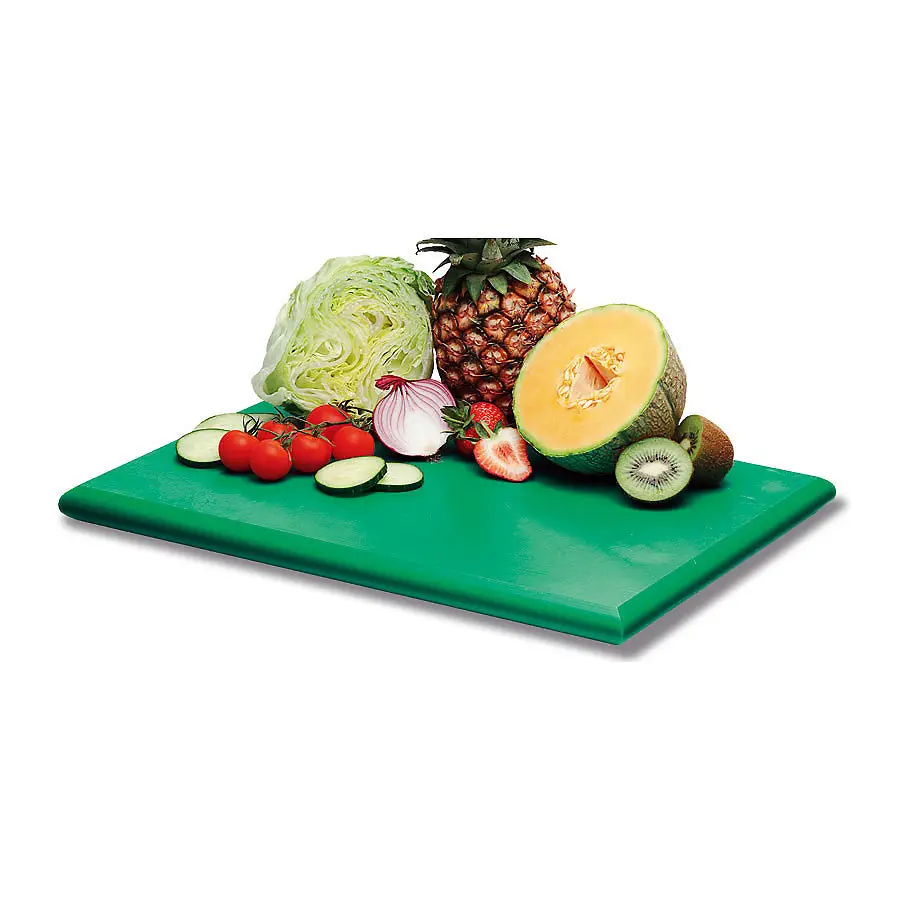
Why this chopping board earns its place
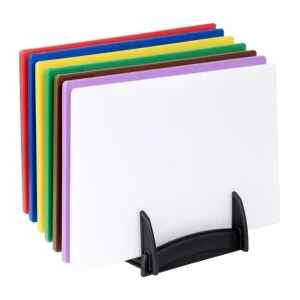
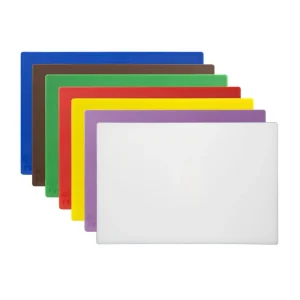
Green is the salad and fruit board. It handles the food that reaches the customer with no cook step between the surface and the plate, which is exactly why it is kept clear of anything raw: no heat is coming along afterwards to correct a mistake made here. In practice it also logs more hours than most boards in the set, because leaves, tomato, cucumber, citrus and garnish are a constant across every service rather than a job that happens once.
Salad prep is volume work and volume needs area. 610 × 440 mm holds a full box's worth of chopped product on the board while it is being worked, instead of forcing a transfer to a bowl every couple of minutes, and it leaves room to keep cut product on one side with untouched stock on the other. The 25 mm thickness earns itself on repetitive chopping: a thin board bounces under a fast rocking cut and the rhythm goes with it, where a slab this deep sits still and lets the knife do the work.
Polyethylene handles the acid this board sees. Citrus, tomato and vinegar-dressed product sit on a non-porous face and rinse away rather than working into it, though strongly coloured produce such as beetroot, berries and turmeric will mark the surface over time. Staining is cosmetic and does not affect what the board is doing. Scoring does. Once the cuts are deep enough that a wash no longer clears them, the green board is carrying ready-to-eat food over surfaces that cannot be cleaned, and it should come out of service.