
Why this chopping board earns its place
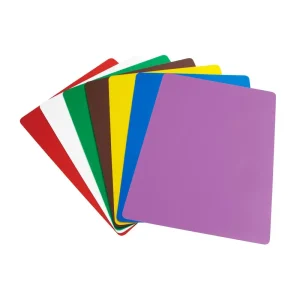
Blue is the raw fish board in a UK kitchen, and it is the code a hygiene inspector looks for first when a site handles fish alongside anything else. Fish leaves a distinct trail — scales, brine, protein slime — and none of it should reach a board that will later take ready-to-eat food. Prepara put the purpose bluntly: boards like this reduce the risk of cross-contamination, and the colour is what makes the rule enforceable at speed on a busy bench.
At 455 × 305 mm there is room to lay a whole side down and work along it, rather than fighting a fillet that overhangs both ends and drips onto the table. The 12 mm section matters when a knife goes through a spine or a head: the board holds flat under the load instead of flexing, and it stays put rather than sliding as you press. High density polyethylene is also the right material for filleting work, because it yields under the blade and closes behind it — a fish knife keeps its edge far longer on polyethylene than on glass or a hard composite.
The surface is antibacterial high density polyethylene, non-porous and made to be washed properly rather than wiped. Fish work earns a full wash at the end of every session, not just at the end of the day, and the board should be stood on edge to dry so water is not trapped underneath. Once the cut marks are deep enough to hold residue through a wash cycle, or the board has cupped and rocks on the bench, take it out of service and replace it.