Why this boning knive earns its place
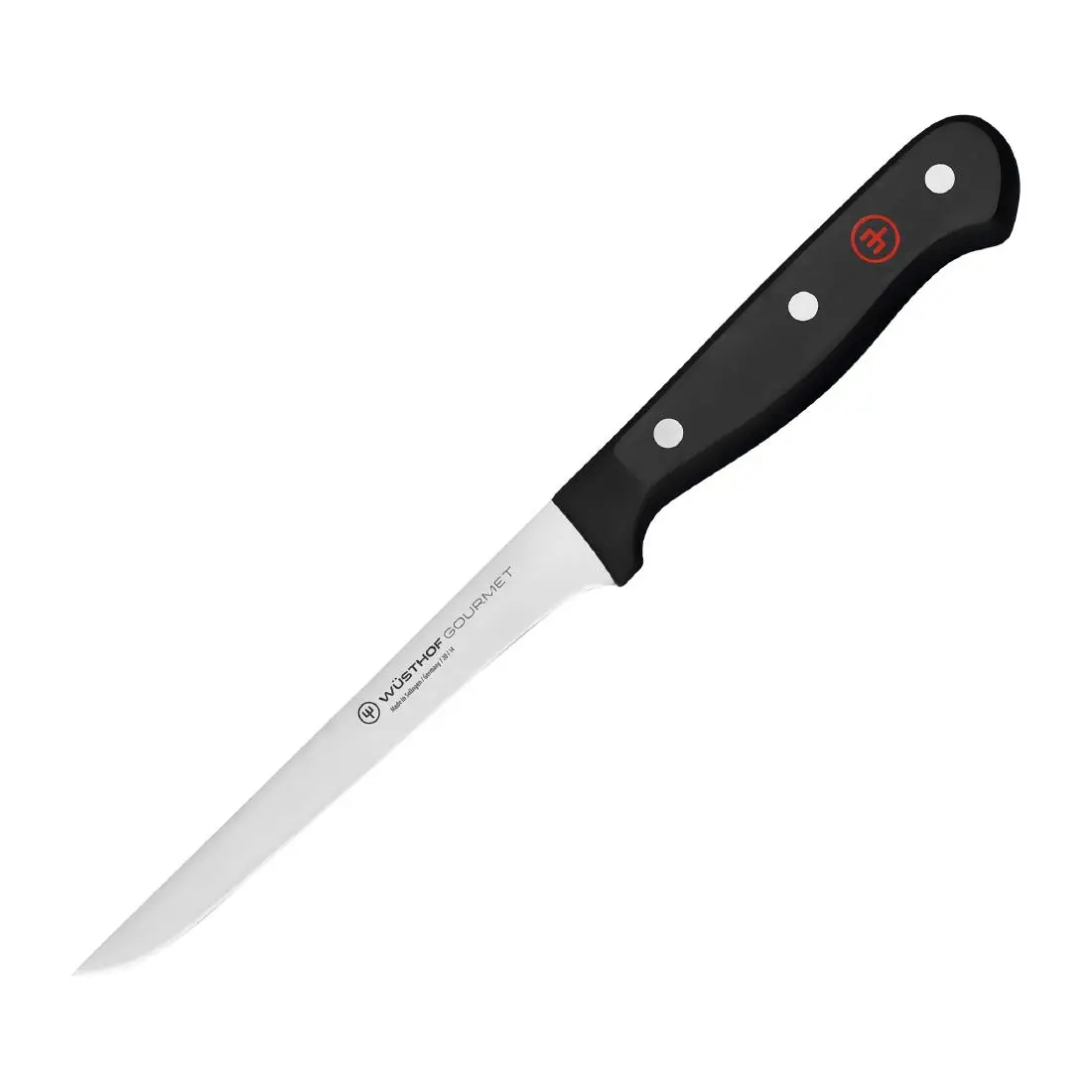
The boning knife does what a chef knife can't: it works tight spaces, follows bone anatomy, and separates meat from structure with precision. At 14 cm, the Wüsthof Gourmet Boning Knife is built for detail. The blade is thin, stiff enough to push through connective tissue without flexing, and honed to an edge sharp enough to reveal the line between meat and membrane. For any kitchen that breaks down whole birds, primals, or fish, this blade earns its place.
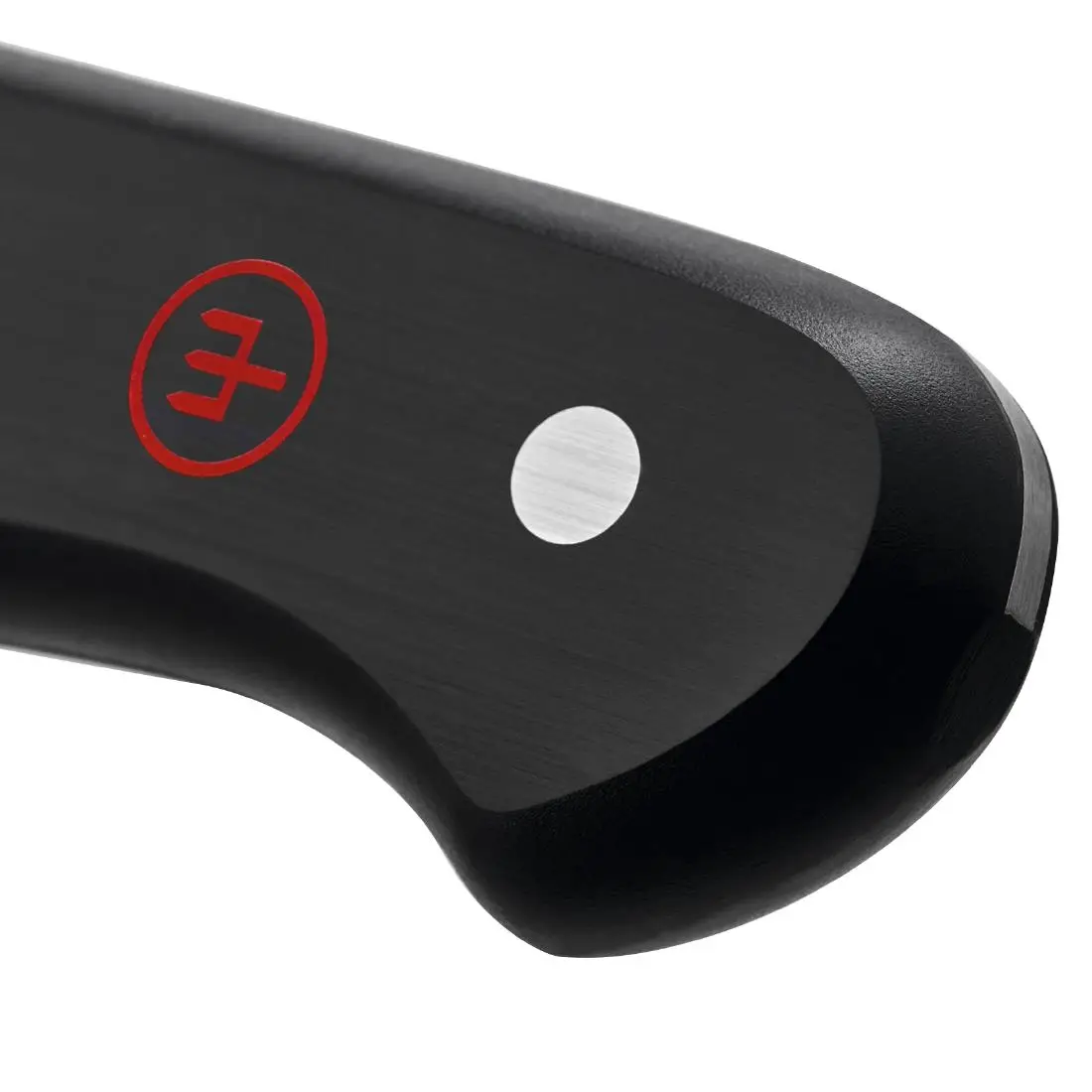
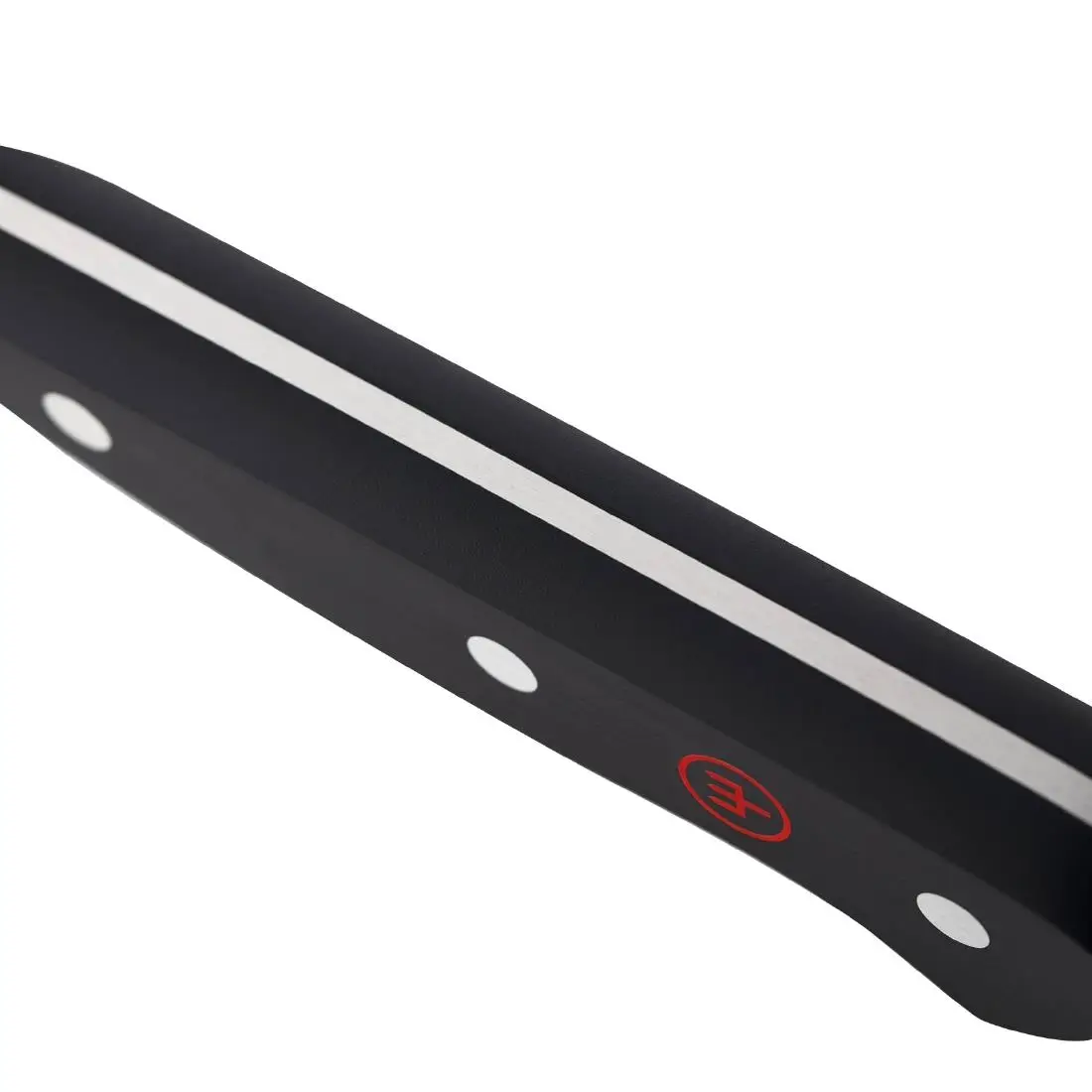
Wüsthof's laser-cutting process is especially valuable in a boning knife. The thin blade is prone to irregularities in forged geometry—tiny inconsistencies that cause binding or slipping during delicate work. Laser-cut blades are uniform; they push through without surprise, and they're easier to maintain when they dull. The 35-stage manufacturing pipeline builds blades that hold their edge under repeated fine work. The triple-riveted black handle is as honest as the blade: it's designed to be cleaned hard, without worry, and gripped intensely during precise work without slipping.
Fourteen centimetres isn't a compromise; it's purpose-built. Long enough to complete most cuts in one stroke, short enough to guide your knuckles safely around bone. The blade tapers to a point that lets you follow seams and separate meat from cartilage without hacking. It's a specialist's blade, but once you use one for butchery, generic chef knives feel clumsy by comparison.