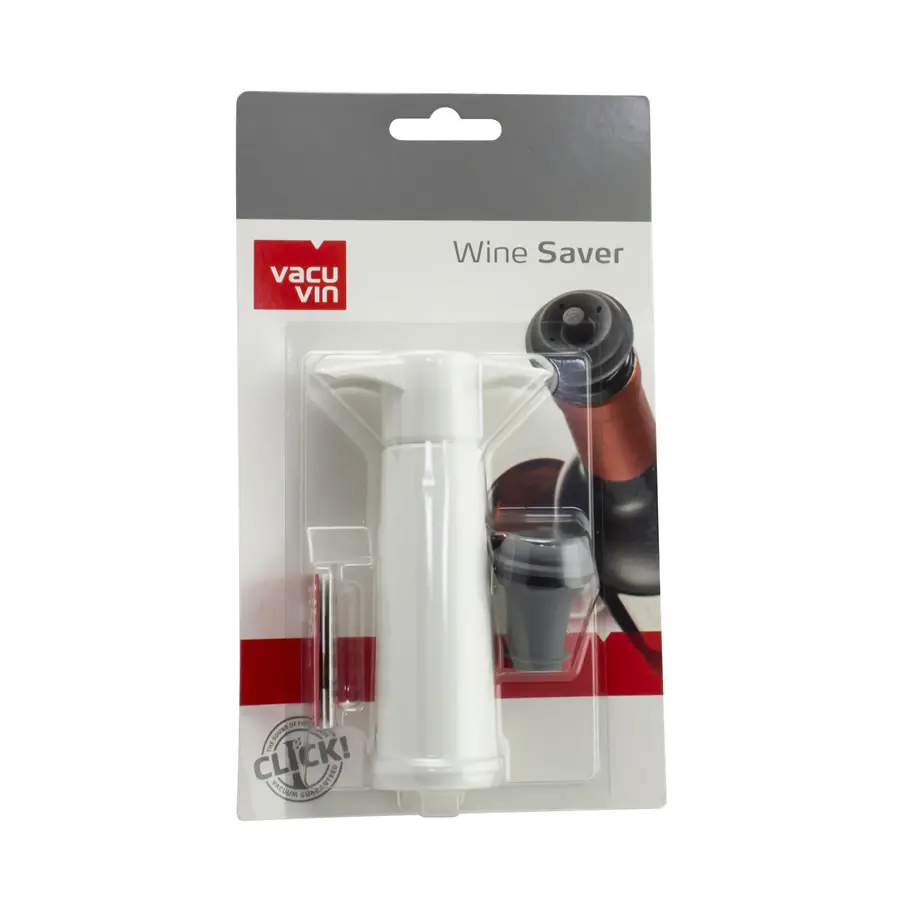
Why this wine saver earns its place
Wine by the glass has one enemy and it is oxygen. The moment a bottle is opened the wine starts reacting with the air above it, and what began as a good bottle turns flat and dull within a day or two of standing on a back bar with a cork pushed back in. A vacuum saver attacks the cause rather than the symptom: the stopper seals the neck, the pump draws the air out from above the wine, and the reaction that spoils it is slowed to a crawl. For any list where a bottle is opened for one glass and expected to sell the other five, that is the difference between pouring it and pouring it away.
Using it is a ten-second job that has to actually happen. The stopper goes into the neck, the pump goes over the stopper and is worked until it stiffens against the hand — that resistance is the signal that the air is out. Crucially it has to be repeated after every pour, because each time the stopper comes off the bottle refills with air; a bottle pumped once at the start of the week and opened nightly is no better protected than one that was never pumped at all. Bottles sit upright with the stopper in, and the stopper is pulled with a twist rather than yanked.
The set is a pump and one stopper, and the pump is the part that lasts — it works with the stopper for as long as the rubber seals cleanly against the glass. Rubber is what allows that seal: it deforms into the imperfections of a bottle neck and holds against the pressure difference, which no rigid material does. Keep the pump dry, wipe the stopper after use so wine residue does not dry on the sealing face, and check occasionally that a pumped bottle still resists when you press the stopper — a stopper that has lost its grip is the one failure mode worth watching for.