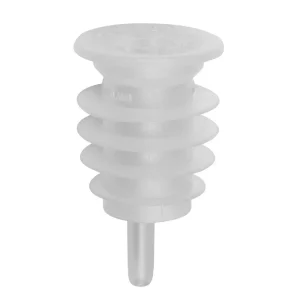
Why this bottle pourer earns its place
High speed is the quickest of the freeflow rates. The liquid clears the spout with the least resistance, so the count is short and a tray of long drinks builds in noticeably less time than it would on a slow pourer. On a wet-led bar where the queue is the constraint rather than the recipe, that difference adds up across a Friday night.
The trade is margin for error. A short count means a fraction of a second is worth more liquid, so a high-speed pourer belongs in practised hands and on the bottles where a splash over does least damage — mixers, cordials, juices and high-turnover spirits rather than the top shelf. It is also worth being plain that freeflow does not stop itself: the pour ends when the bottle comes upright, so a stamped measure still does the measuring wherever a measured serve is sold.
Chrome and silver stainless steel is what survives a back bar. It wipes down between services, takes citrus and sugar without discolouring, and does not hold the smell of the last bottle it lived in, which matters when pourers get washed as a batch and refitted wherever they land.