Why this plate earns its place
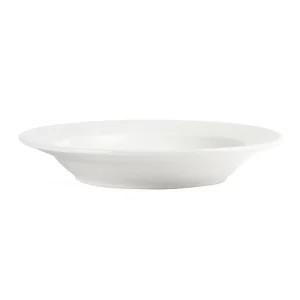
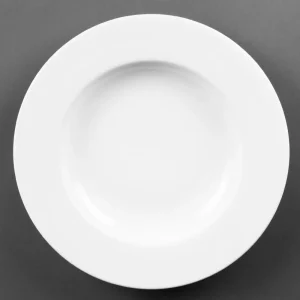
A 260 mm dinner plate is the working standard: large enough for protein, starch and vegetables to land without crowding, compact enough to fit two across a table's width. The coupe profile—a ten millimetre raised rim—is deliberate engineering. It contains sauce and dressing on the plate itself during plating and hand-off, keeps the visual composition intact through the dining room, and prevents spillage across the diner's lap.
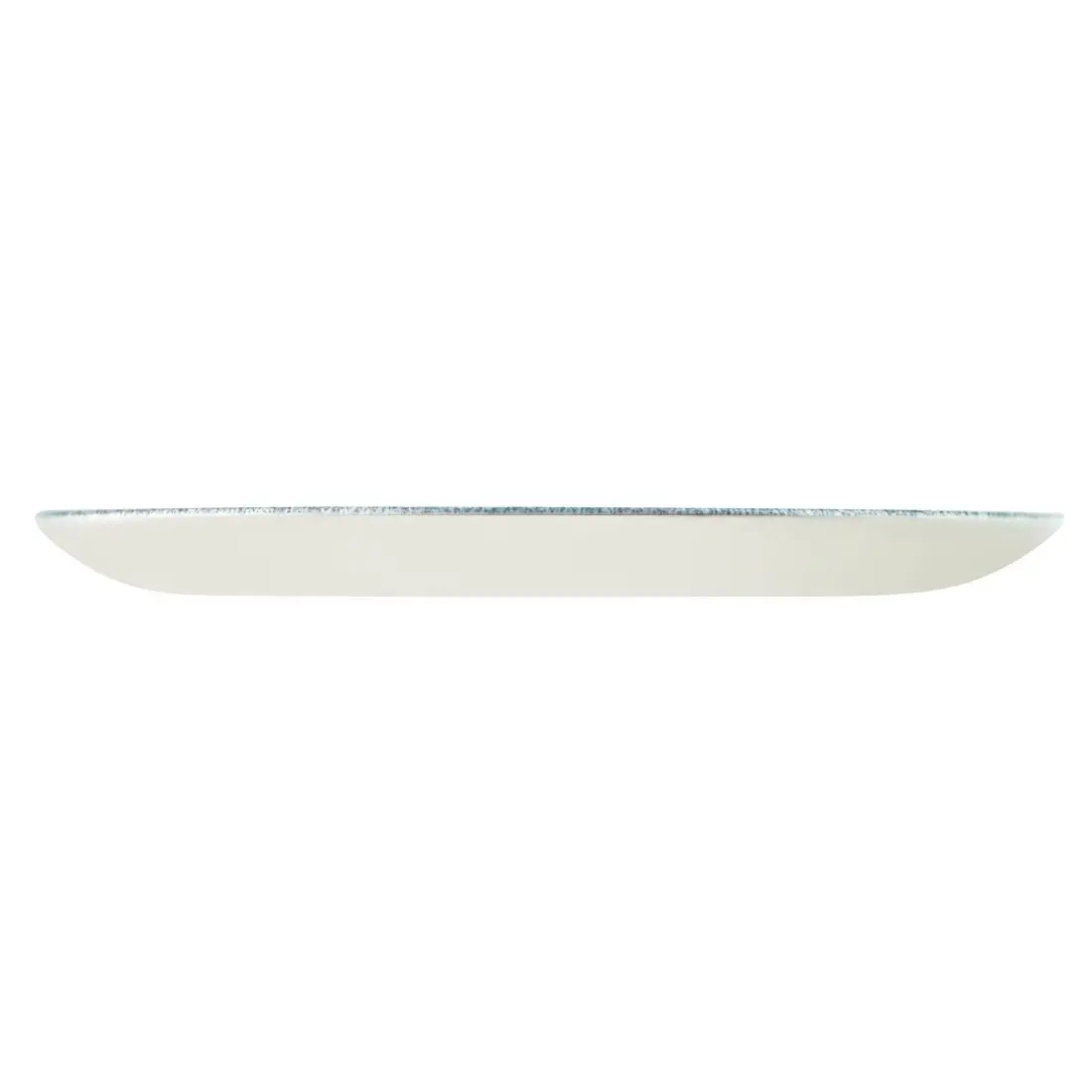
Porcelain is harder and denser than ceramic, which means it whitens less under commercial wash alkalinity and survives thermal shock better. The topaz blue glaze is fired at high temperature, not painted—chips expose white ceramic, not a basecoat, so visible damage reads as damage, not wear. The finish photographs neutrally, neither colour-casting nor competing with plated food.
At this size and weight (730 grams per piece), the plate sits confidently in front of a guest. The rim profile is shallow enough to clean under a standard high-pressure pass spray, steep enough that water doesn't pool. Twelve packs fit a standard crockery crate with room to rotate stock; stacking more than four packs without separation risks rim-to-rim damage during transport or storage lift.