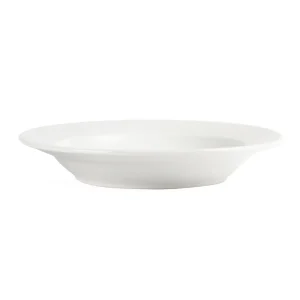


Why this plate earns its place
The Kintsugi collection translates the Japanese aesthetic of mending broken ceramics into a commercial porcelain range. The coral glaze has depth and texture—not a painted finish that wears away, but colour fired into the material itself. At 260 mm, this is a dinner plate in the classic sense: wide enough to hold a composed main course without crowding, small enough to move cleanly through a dishwashing cycle when you're running plates four deep.
The walled profile—a gentle rim that rises about 20 mm—serves two functions. It contains sauce and juices without them pooling at the plate edge, and it gives the eye a natural frame for plating. That rim is where your knife edge lives when you plate up, so the slight wall protects the glaze from constant contact with hot steel. Porcelain stands up to this better than stoneware; the glaze doesn't chip from normal use in a kitchen, and colour remains stable through hundreds of wash cycles.
Restaurants use these at table and in the window; hotels move them through function banquets and à la carte service. Care homes find the walled edge helps residents with a slightly unsteady fork. They stack tight and the colour carries across a room—coral reads even under fluorescent light in a busy service station.