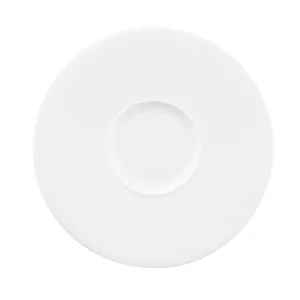
Why this plate earns its place
A 330mm plate is a restaurant standard — large enough to present plated food with white space, small enough to stack three-deep in standard restaurant pass trays. Porcelain is harder than fine china; the vitrified glaze bonds at high firing temperature, making chip resistance competitive with any high-turnover tableware. The neutral white surface accepts any plating style without competing, and the rolled edge catches light enough to lift it above basic hotel stock.
Stackability matters more in restaurants than anywhere else. Six plates per pack stack into a predictable footprint for cupboard planning. The round shape and even weight distribution — 1.3 kg per plate — means a stack of 12 stays stable on a mobile rack without wedging or binding. Commercial passthrough dishwashers push these through 65–80 °C cycles, and the full glaze coverage means no water pooling or trapped debris at joins.
The glazed foot runs full circumference, preventing marks on white linens and reducing the acoustic noise of stacked plates on metal shelves. This is practical efficiency: no chipped rims eating into your replacement budget every six months, no rings on tablecloths affecting first impressions at each cover.