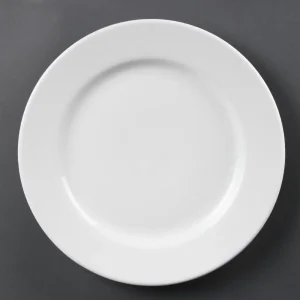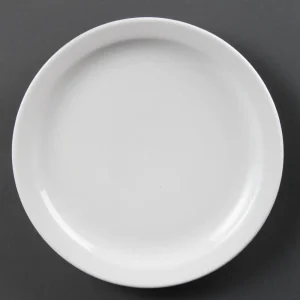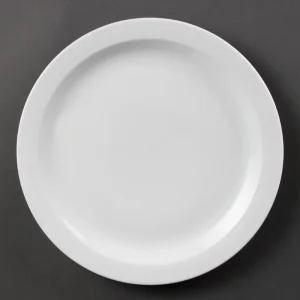

Why this plate earns its place
This is a dinner plate—the main piece in a place setting at formal or casual table service. The 26 cm diameter is the standard width for a plated main course in a restaurant or hotel dining room. It stacks two high in a passthrough dishwasher basket and two or three high in hand-stacked tubs, so it manages storage space well even in volume service.
Vitrified stoneware is fired to a point where the clay becomes non-porous and durable. The reactive glaze—a meadow green base that reacts during kiln firing—produces natural variations: lilac and turquoise highlights emerge across each piece, so no two are identical. That variability is the nature of the material, not a fault. The glaze is semi-translucent, which means water spots show after passthrough washing; buffed dry, the plate looks spotless. The glaze also means the surface has a slight non-slip texture, which keeps plated food stable on the plate and makes stacking easier by hand.
The plate performs well through passthrough dishwashing at standard cycles and survives daily kitchen use without chipping. It does not show wear from cutlery, and moves between temperatures—refrigerated storage to a warm dining room—without risk of crazing. The 26 cm surface is generous enough for restaurant plating and the reactive glaze creates visual interest around the food without competing for attention.