Why this plate earns its place
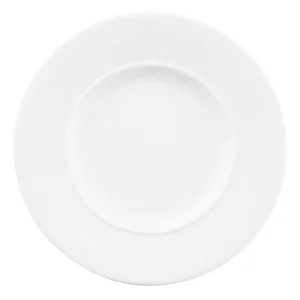
The 217 mm coupe profile—a raised rim at roughly eight millimetres—sits between a soup bowl and a plate. That rim does two jobs: it contains sauce or dressing on a composed course without running to the edge, and it signals to the diner that this is a contained item, not a spill risk.
At this size, the plate works for single-portion desserts, cold appetisers, and constructed starters where the presentation depends on arrangement staying put. The topaz blue glaze photographs as warm without blue-casting plating colours; it reads well against white components and bright garnish. Porcelain fires to a density that survives daily dishwashing and doesn't yellow under alkaline detergent cycles.
The coupe shape is deliberate geometry—neither flat nor steep enough to trap water. A 217 mm span sits comfortably in front of a dinner plate setting, leaving room for bread and glassware without crowding. Twelve packs move through rotation in medium-volume services (80–150 covers); the glaze texture means chips register as damage rather than wear.