

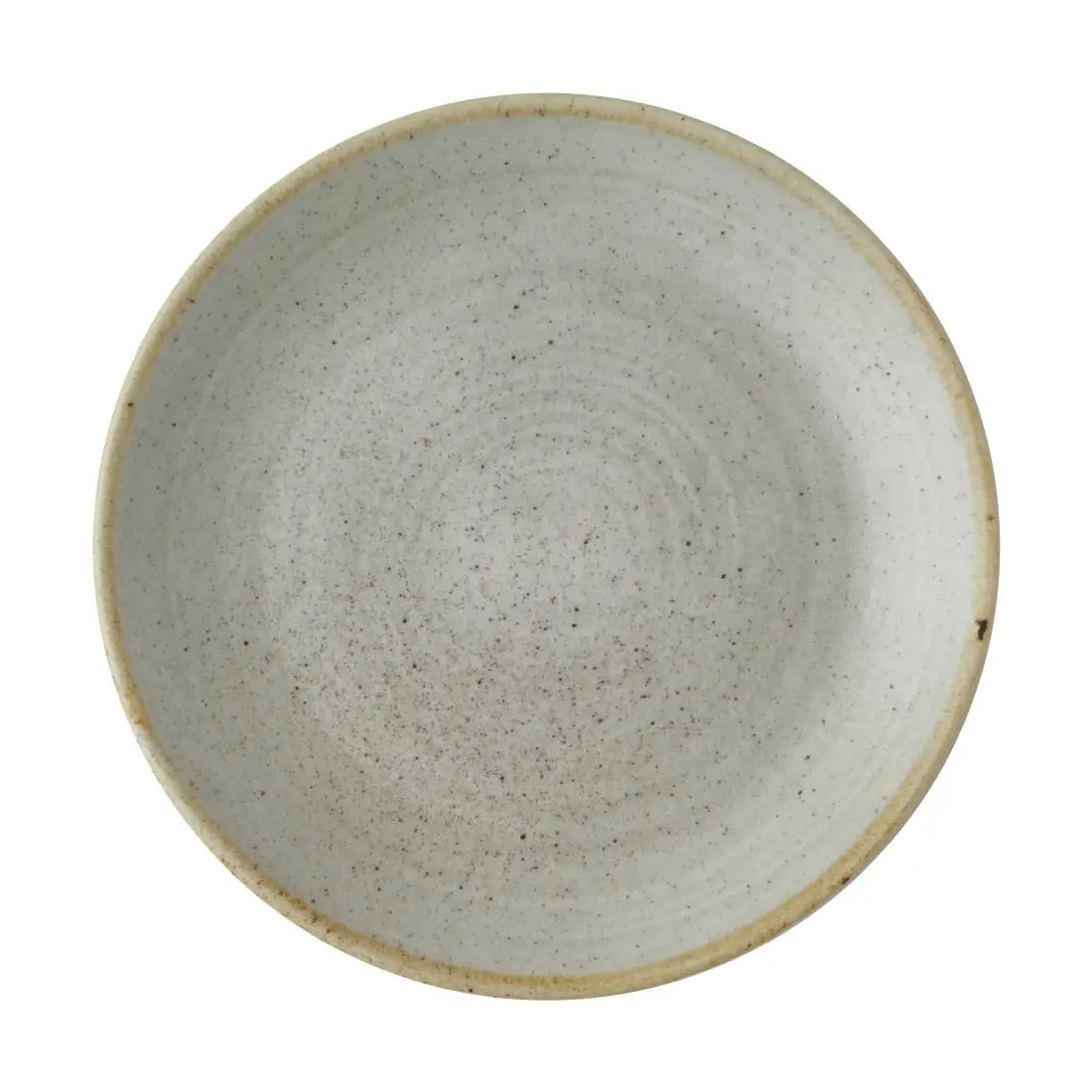
Why this plate earns its place
The coupe shape—a shallow well with a raised rim—is built for plating that shows the plate as part of the presentation. At 220 mm it's large enough for a composed starter (smoked fish, greens, sauce) or a dessert course without looking skimped, yet compact enough to keep a four-course table setting uncrowded. The round coupe profile is easier to plate on than triangular dishes, since the curve gives you a natural wall to work against and the rim sits cleanly within flatware spacing.
Porcelain is the standard for sites that run back-to-back services. It won't absorb water between washing cycles, so a plate coming from the passthrough won't carry cold spots that ruin temperature when sauce hits the rim. The hand-applied rustic edge band is integral to the firing—it won't wear smooth or dull under repeated detergent cycles, and it reads warmer under service lighting than machine-fired rims.
The semi-matte Vellum glaze was built for this environment. It resists the soap bloom that makes glossy finishes look tired after a few months, and it shows off plating without glare. Chips appear evenly and don't propagate along stress lines, which matters in high-seat venues. A full case stacks tight with no spacers; store these shallow and you'll have storage to spare.