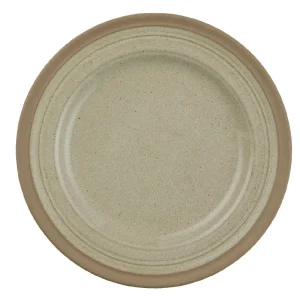
Why this plate earns its place
The 230mm plate sits at the intersection of different service needs. It's the size restaurants use for a plated starter in formal fine dining; it's what hotels stack for salad courses in multi-course banquets; it's the right scale when you want a composed dessert plating to feel intentional rather than undersized. It's smaller than a dinner plate, but it's substantial enough to carry real food and genuine presentation.
The durability engineering is identical to Jardin's larger plates, which matters because smaller crockery in busy kitchens actually takes more abuse per plate. When you're plating forty starters an hour, each plate is handled more frequently than a dinner plate in a slower service. High-alumina porcelain is significantly tougher than standard ceramic—it resists both the thermal shock of commercial dishwashing and the repeated impact of service. The embossed border stays crisp because it's built into the plate body, not applied to the surface; the chip-resistant rolled rim protects the edge where damage typically occurs. The superior glaze resists the wear and microscopic scratching that would normally dull a plate this size within months.
At 6.25 kg per dozen, the 230mm is light enough to handle comfortably at service pace but substantial enough to feel like real crockery rather than a compromise. It scales the Jardin aesthetic down without loss of presence—the embossed border proportion is as visually refined on a smaller plate as it is on a dinner plate. For hotels and fine-dining kitchens running multi-course service, stocking the 230mm alongside the larger 254mm and 300mm gives you crockery that feels coordinated across all courses.