
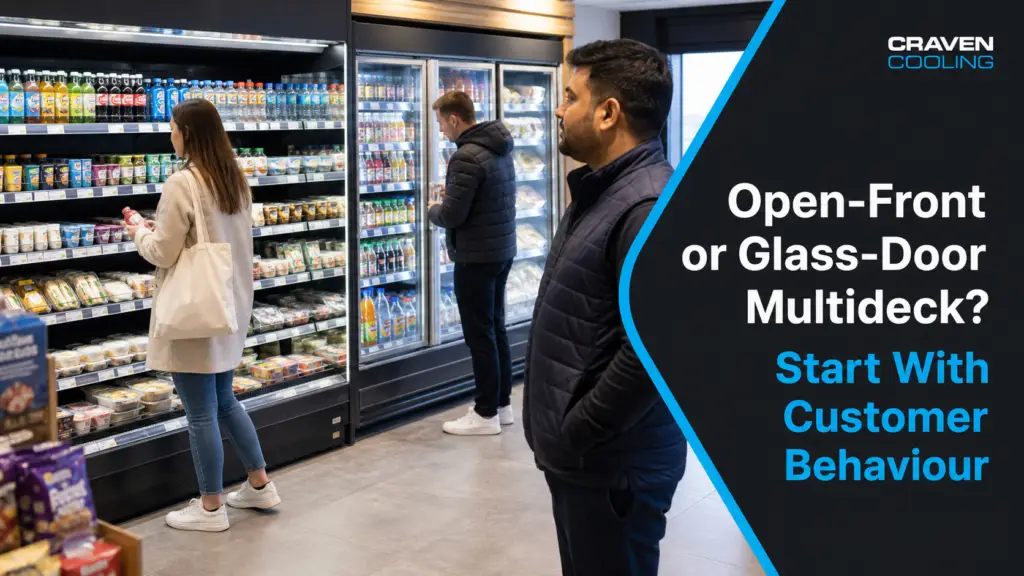
Open-Front or Glass-Door Multideck? Start With Customer Behaviour
Open-front versus glass-door multidecks are usually discussed as an energy debate. That matters, but it is not the only decision. The door choice also changes how customers shop. Do they grab quickly during a lunch rush? Browse premium meals? Care about sustainability? Need to see products from a distance? The right answer starts with behaviour, then checks energy and temperature control.
- Open-front displays reduce friction: useful for impulse, grab-and-go and very high footfall.
- Glass doors support energy saving: they can also signal care, quality and sustainability.
- Product type matters: premium, delicate or longer-dwell products may suit doors better.
- Lighting and facings matter with doors: good presentation reduces the access barrier.
- Mixed layouts can work: some stores use open-front for impulse and doors for premium or core chilled lines.
Craven already has a detailed open-front versus glass-door energy guide. This article avoids repeating the maths and focuses on shopper psychology and product role.
Table of Contents
When Open-Front Still Makes Sense
Open-front multidecks can suit high-speed impulse zones: sandwiches, drinks, snacks and meal deals where customers want to move quickly. Removing the door removes one small barrier to purchase, which can matter in dense footfall.
When Glass Doors Improve the Offer
Glass doors suit operators who want lower running cost, more stable temperature and a clearer sustainability message. They can also work well for premium ready meals, dairy and products where quality perception matters.
| Customer behaviour | Likely fit |
|---|---|
| Rush-hour grab and go | Open-front or very easy-access doors |
| Browsing premium food | Glass-door display |
| Eco-conscious local retail | Glass-door or hybrid layout |
Presentation Has to Work Harder With Doors
If you add a door, the display must be easy to understand. Good lighting, logical categories, clean glass and strong facings stop the door feeling like a barrier. Poor merchandising behind glass can look forgotten.
Consider a Hybrid Chilled Zone
There is no rule that the whole store must choose one format. Some operators use open-front units for lunch-rush impulse and glass-door cabinets for dairy, ready meals or evening trade. Craven Cooling can compare mixed layouts across brands.
Shop both formats
Choose for customer behaviour and running costRelated Craven advice
Build the decision around the store- Open-fronted vs glass-door energy guide
- Glass-door fridge retail guide
- Display counter layout guide
Get a second view
Multi-brand advice matters hereCraven Cooling view: The winning format depends on impulse trade, dwell time, replenishment habits, store temperature and the type of product being merchandised. Energy matters, but so does whether customers actually buy from it.
Open-front multidecks can support fast impulse buying, while glass doors support energy efficiency, temperature stability and quality perception. Start with how customers shop the range, then check the running cost.


