
Commercial refrigeration · News desk
Digital Waste Tracking Starts 1 October. Here’s Who It Actually Catches
The paper-first era of waste records begins to end this autumn. But the day-one duty does not land on your kitchen — it lands on the sites that take your waste.
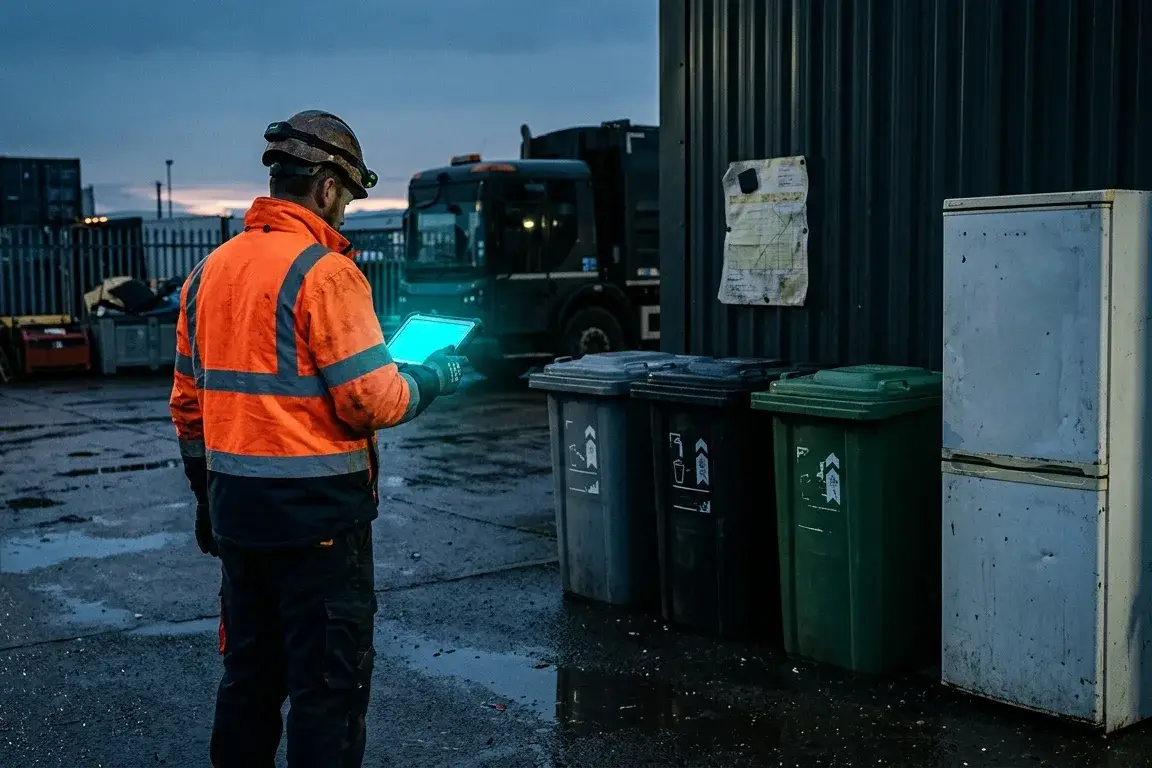
From 1 October 2026, operators of permitted waste receiving sites in England, Wales and Northern Ireland must record every load of controlled waste they take in on the government’s new digital waste tracking service — the first mandatory step away from a paper system Defra calls outdated.
Scotland follows in January 2027. Roughly 12,000 licensed and permitted sites — recycling centres, landfills, treatment facilities — are caught in phase one, with the system eventually expanding to more than 100,000 operators. Government says waste crime costs the UK around £1 billion a year; a near real-time digital trail is its answer.
Who is caught on day one — and who isn’t
Read the regulations and the 1 October duty is narrower than the headlines suggest. It falls on receiving sites: the permitted operator taking in waste must log each load — operator details, transport, parties, waste codes, hazardous properties — by the end of the second working day after receipt. Exempt sites sit outside phase one, and council-run household recycling centres have a specific carve-out in the English regulations.
Waste carriers, brokers and dealers are not required on the system until 1 October 2027, and waste producers — that is you, the kitchen — later still. And the paper transfer notes and consignment notes you keep today are not abolished on 1 October — law firm Burges Salmon notes those duties continue alongside the digital records for now.
So what changes for a kitchen?
Indirectly, quite a lot. When you get rid of an old upright fridge, fryer oil or any electrical equipment, the site receiving it must now log that load digitally — and enforcement has teeth: non-compliance is a criminal offence, with a £1,000 fixed penalty, variable penalties with no upper limit, and unlimited fines on conviction. Expect your waste contractor to demand cleaner information: accurate descriptions, weights, and what counts as WEEE, because their own record now depends on it.
The upside is real. A digital trail makes it far harder for a cowboy carrier to take your dead cabinet for cash and fly-tip it — with your name on the note.
Craven’s verdict
The strength of this reform is that it squeezes the rogue traders who undercut legitimate disposal and leave operators exposed. The caution: do not let anyone sell you panic. Your direct duty to record digitally does not start on 1 October, and your existing paper transfer notes remain a legal requirement — a supplier claiming your kitchen must buy compliance software this month is ahead of the law. It matters most to operators replacing appliances this autumn — and anyone whose waste paperwork is, let’s say, informal. When Craven Cooling supplies a replacement cabinet, we can talk you through compliant disposal of the old one at the same time.
The stunt — The Transfer-Note Drawer Audit: Pull every waste transfer note and collection receipt from the last twelve months. Check three things: is the carrier’s registration number there, does the description match what left, and could you produce it within two minutes if asked? Fix whichever failed most often — before the digital era makes the gaps visible.
Sources: The Digital Waste Tracking (England) Regulations 2026 — legislation.gov.uk · Defra — Digital waste tracking: what it is and why it matters · GOV.UK — Digital tracking takes fight to rogue waste traders · Burges Salmon — The rollout of digital waste tracking in the UK
Related equipment, live from our range
Live products and prices from our current range.
Replacing kit? Sort the old unit properly.
We’ll help you spec the replacement and point you to compliant disposal of the appliance it retires—no cowboys, no comebacks.