
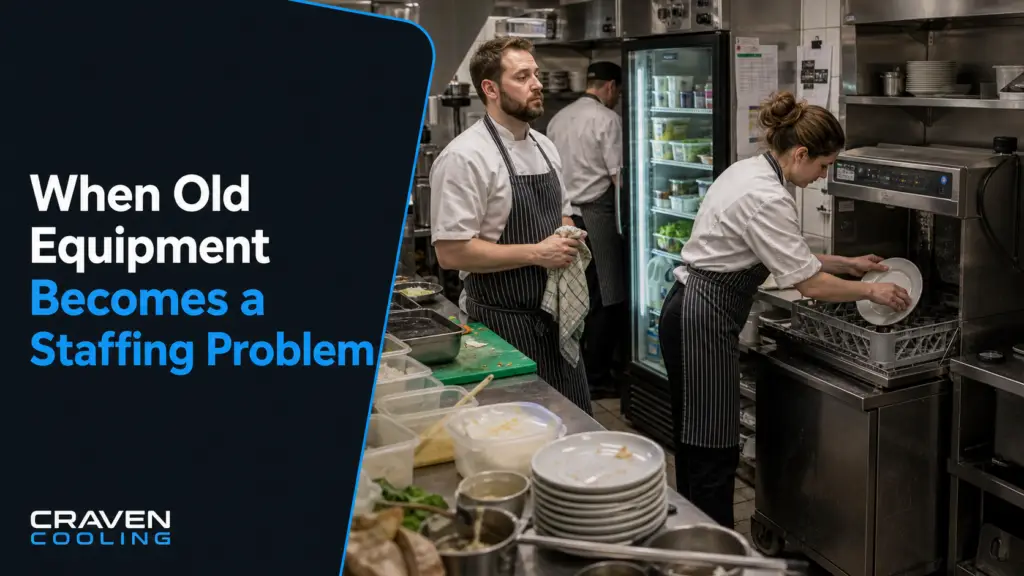
When Old Equipment Becomes a Staffing Problem
Old equipment does not only break down. It steals minutes. Staff wait for glassware, rewash pans, hunt for stock, cool food awkwardly, refill small fridges and work around temperamental kit. When labour is tight, those minutes become a commercial problem.
- Labour drag is hidden: small delays repeat across every service
- Warewashing is a bottleneck: slow potwash affects tables, bar and kitchen
- Refrigeration affects movement: poor layout makes staff open doors and search stock
- Prep kit changes output: blast chilling and GN counters can reduce repeated handling
- Replacement is not vanity: sometimes new kit buys back staff time
Craven has strong individual calculators for warewashing, blast chilling, ice and refrigeration. This article brings them together around staffing pressure.
Table of Contents
Map the Repeated Workaround
Ask the team what they do every day because equipment cannot keep up: hand-drying glasses, moving stock between rooms, splitting batches, cooling food in awkward containers or restocking small fridges too often. Those workarounds are the evidence.
Start With the Bottleneck, Not the Product
The right first purchase may not be the equipment that looks oldest. It may be the glasswasher that releases the bar, the blast chiller that protects prep time, or the refrigerated counter that reduces walking and door openings.
| Bottleneck | Equipment route |
|---|---|
| Bar waiting for glasses | Glasswasher or better rack flow |
| Chef cooling batches slowly | Blast chiller or prep workflow change |
| Staff hunting chilled stock | Better storage layout or capacity |
| Ice bought in at peak | Ice machine output and storage review |
Use Finance Against Time Saved
If equipment can be financed, compare the weekly cost with the staff time it releases. That does not make every purchase right, but it makes the question honest.
Keep the Multi-Brand View
A single manufacturer’s range may not solve every labour issue. Craven can compare warewashing, refrigeration, prep and display options across brands so the site buys for the workflow rather than the brochure.
The Manager Check Before You Spend Money
Before committing to a repair, replacement or new piece of equipment, step back and write a short operational brief. What happens in the busiest hour? Which member of staff notices the problem first? Which product, service point or customer experience is affected? Which records prove the pattern? That brief is often more useful to Craven Cooling than a vague request for “a bigger fridge” or “a better machine”.
For When Old Equipment Becomes a Staffing Problem, the strongest buying decision comes from matching equipment to the way the site actually trades. A pub, café, restaurant, care home and convenience store can all own the same category of kit and need different answers because their peak periods, staffing, stock movement and inspection pressure are different.
| Manager question | Why it improves the brief |
|---|---|
| When does the issue appear? | Separates peak-load problems from all-day faults. |
| Who works around it? | Shows the labour cost and training risk. |
| What record proves it? | Turns opinion into evidence: logs, wastage, service notes or sales gaps. |
| What would success look like? | Defines whether the answer is safer food, faster service, lower waste or more sales. |
Put numbers on labour
Craven calculators- Dishwasher true-cost calculator
- Glasswasher payback calculator
- Blast chillers and blast freezers
Workflow tools
Build a better kit list- Kit my kitchen builder
- Finance calculator
- Seasonal profit calculator
Craven Cooling view: The best replacement case is often not “newer is nicer”. It is “this piece of kit removes a repeated daily delay”.
Old catering equipment becomes a staffing problem when it creates repeated workarounds: slow washing, poor stock access, awkward prep, unreliable refrigeration or emergency buying. The right upgrade should remove a real bottleneck.


