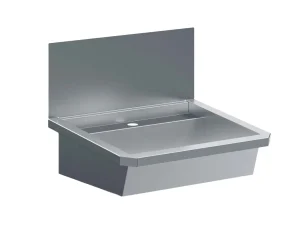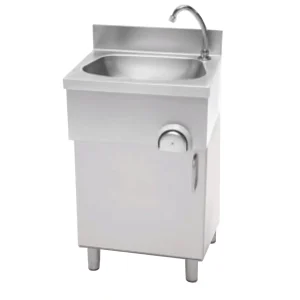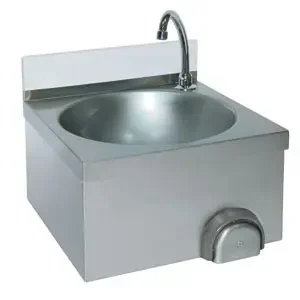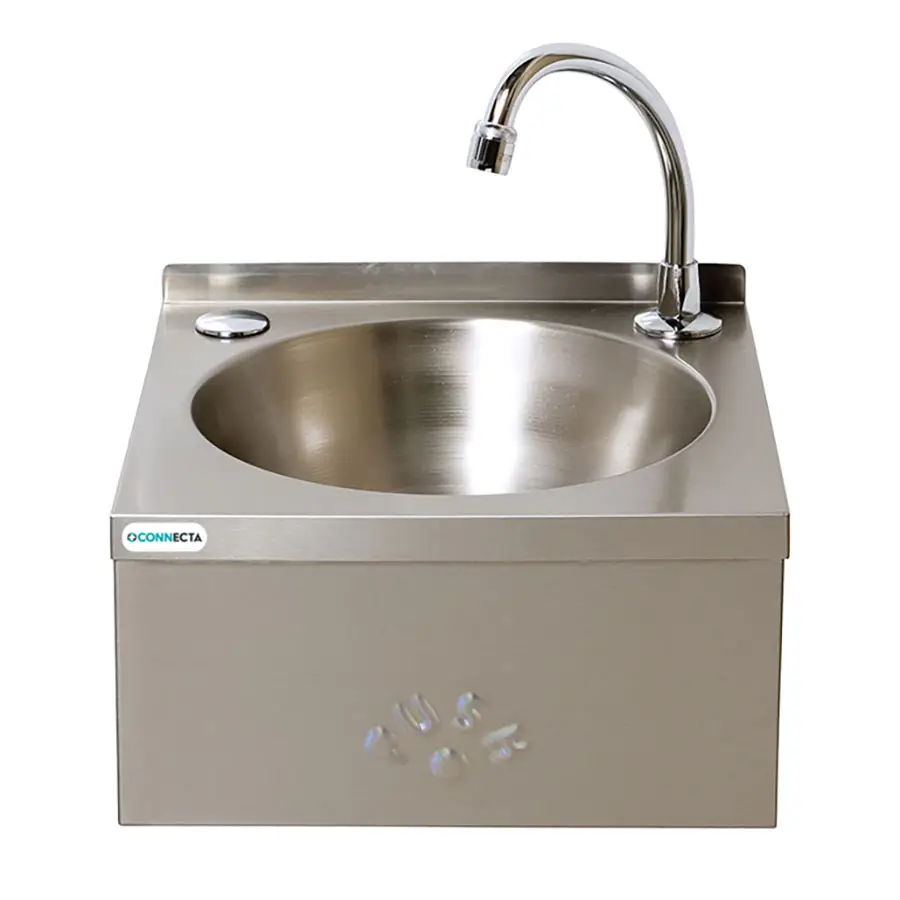
Why this wash hand station earns its place
The weakness in ordinary hand washing is the tap. The hand that opens it is the dirty one; the hand that closes it has just been washed. Everything gained in between goes back onto the same handle and comes off on the next pair of hands. Hands-free operation removes that step entirely — staff wash, walk away, and nothing touched before the wash gets touched again after it. In a kitchen moving between raw meat and ready-to-eat prep, that is the difference between hand washing that breaks the chain and hand washing that just relocates the problem.
It also removes a maintenance job nobody enjoys. There are no tap handles to scrub around, no crevices under a crosshead collecting soap and grease, and nothing left running by someone whose hands are full. At 320 × 195 mm it stays a compact fixture, so it can go where the hand washing actually needs to happen rather than where there is room for a full sink.
Stainless steel is what keeps it serviceable. It does not craze, stain or absorb, it wipes down with the same cleaner as the rest of the kitchen, and it takes daily knocks in a corridor or prep run without chipping the way a ceramic basin does. Give it soap and a hand-drying method within reach, keep it for hands only, and site it where staff pass rather than tucked away — an unused basin proves nothing to anyone.