


Why this washroom cleaner earns its place
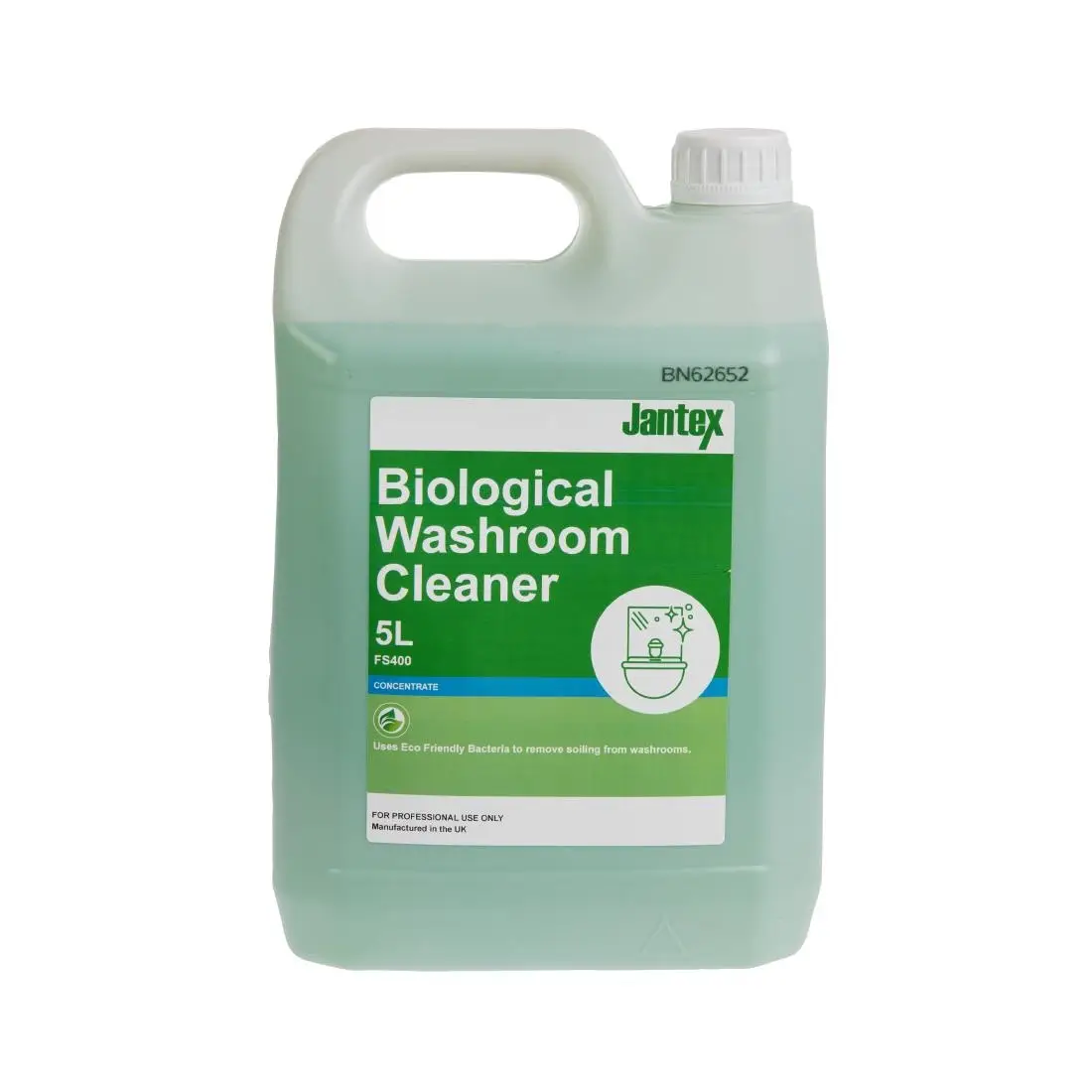
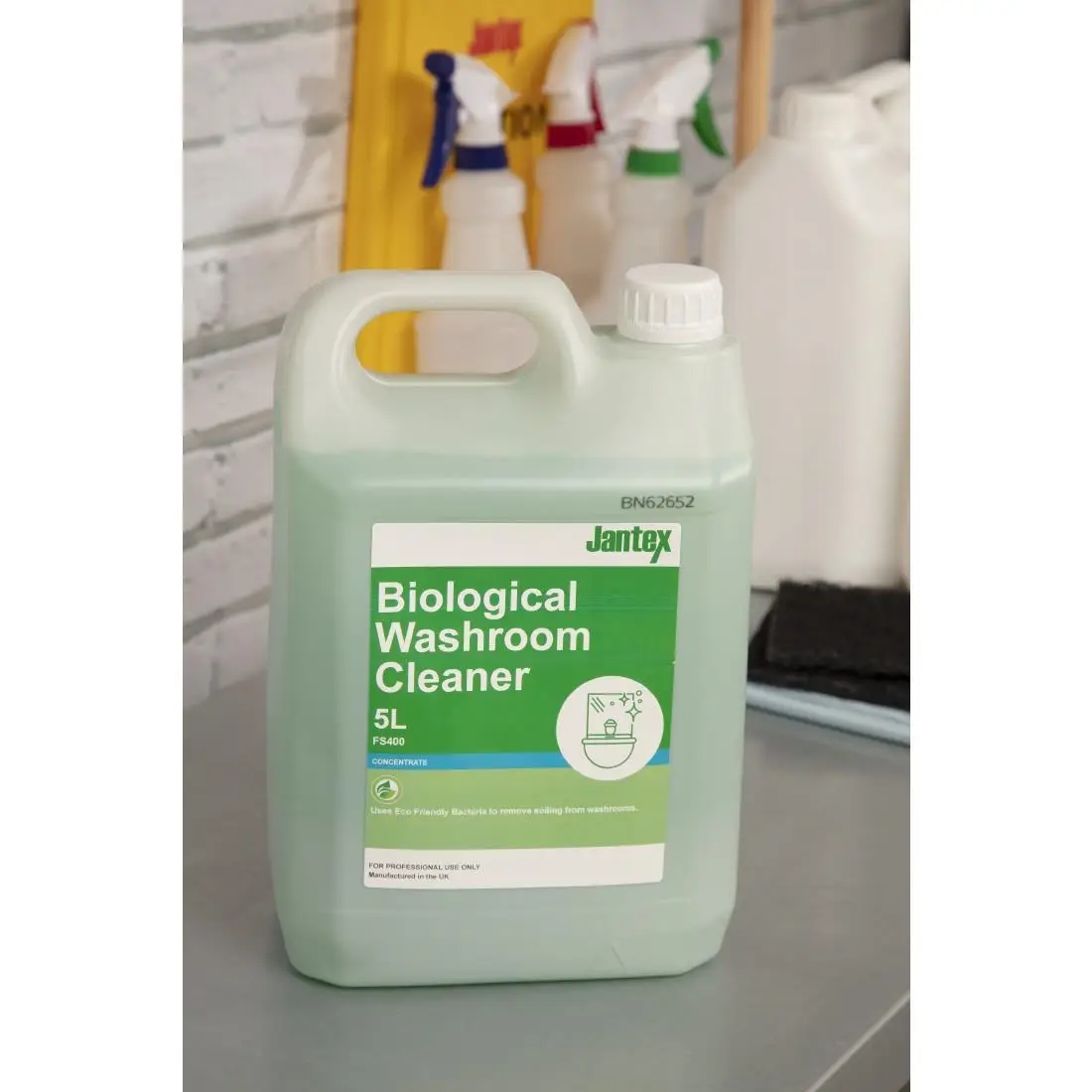
This is Jantex Green's biological washroom cleaner, built around a probiotic formulation of UK-cultivated enzymes rather than conventional detergent chemistry. Those enzymes work to break down organic soiling directly in the washroom environment, tackling odour issues at their source rather than masking them with fragrance.
Because it's enzyme-based, it keeps working after it's applied, continuing to break down soiling in places a one-pass wipe or mop can't reach — including working to eradicate blockages in pipes and drains, and reducing or even removing the need to flush urinals. It's safe to use with waterless urinal systems and compatible with septic tanks, and it's formulated to work alongside Jantex Green's biological urinal blocks (FS402).
It's flexible on dilution depending on the task: 1:1 for mop application and 1:20 for general maintenance or spray-and-wipe cleaning, with each 5 litre container making up to 100 litres of ready-to-use solution. The non-abrasive, probiotic formula cleans gently without tarnishing surfaces, and the bottle is made from 40% recycled plastic.
COSHH: six habits of safe chemical use
Control of Substances Hazardous to Health — the routine every commercial kitchen and cleaning cupboard is expected to run.


SDS
Read the label and the manufacturer’s safety data sheet — the pictograms tell you what you are holding.

Who could be harmed, and how badly? Judge likelihood against severity before anyone opens the cap.

Eliminate or substitute first, engineer and organise next — PPE is the last line, never the first.

Keep the controls working: check ventilation, dosing equipment and storage stay as they should be.


Everyone who uses it knows the hazards, the correct dilution and the PPE — before the first shift, not after.

Products and processes change. Reassess when they do, and keep the record that proves it.