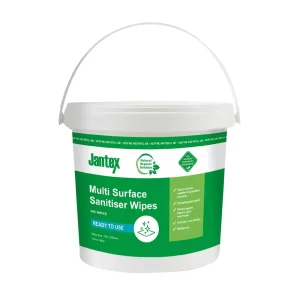

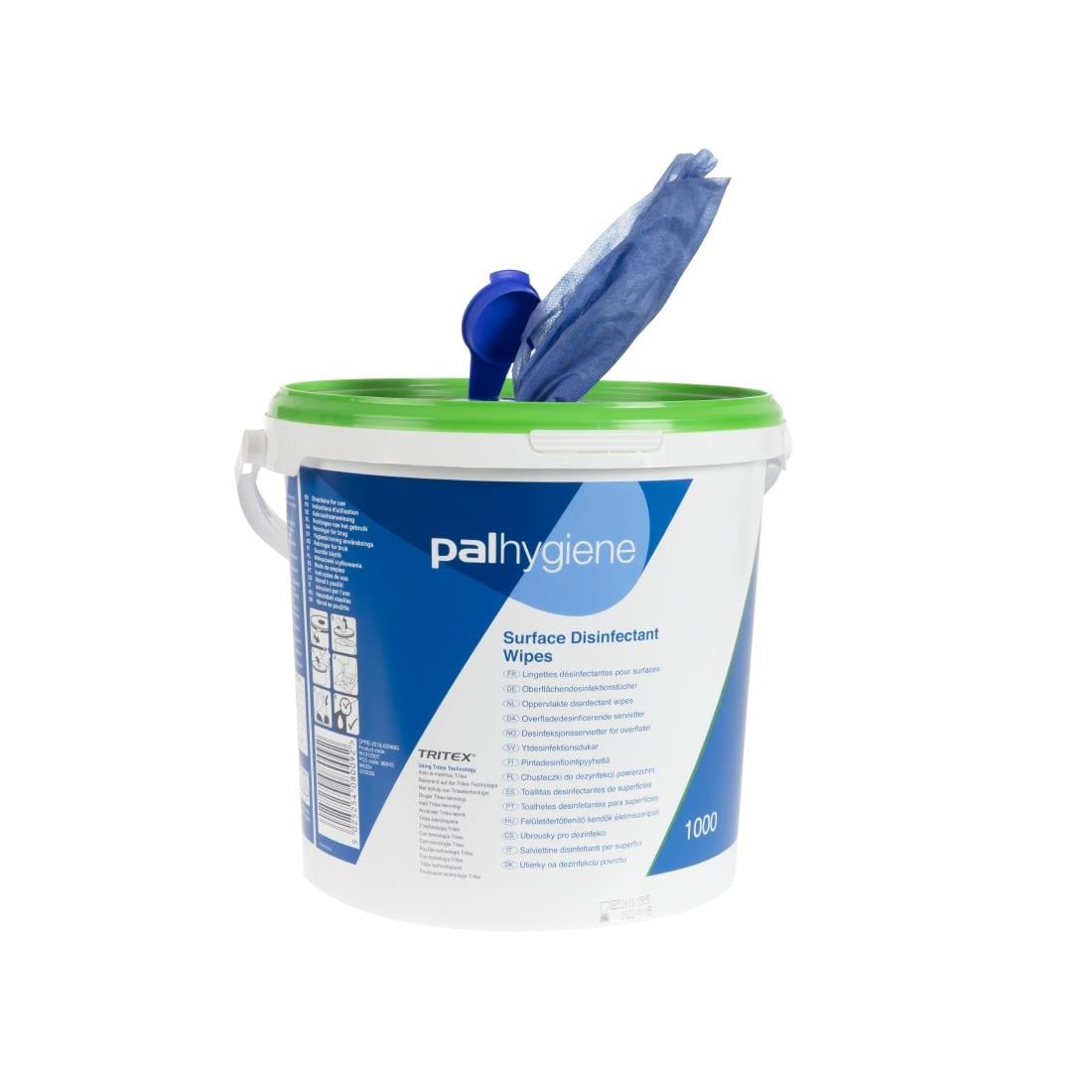


Why this antibacterial wipe earns its place
These wipes are built to decontaminate any surface across food handling areas and production equipment, and being supplied 1,000 to a tub, they're sized for commercial kitchens that get through wipe stock fast rather than reordering every week. One tub covers prep surfaces, equipment and general contact points without needing a second product for different areas of the kitchen.
The formula kills 99.9% of bacteria and is tested to both EN1276 and EN13697, the standards covering general bactericidal action and surface hygiene performance. It does this while staying free of alcohol, quats and PHMB, the three active ingredients found in most disinfectant wipes, so there's no flammability concern from alcohol and no risk of the chemical build-up some quat-based formulas leave behind on repeated use.
That makes it non-tainting and food safe, so it can go straight onto food-contact surfaces and production equipment without leaving a residue or scent that carries into what's being prepared. It's also formulated to meet current Maximum Residual Level (MRL) regulations, which matters on any surface that touches food downstream.
COSHH: six habits of safe chemical use
Control of Substances Hazardous to Health — the routine every commercial kitchen and cleaning cupboard is expected to run.


SDS
Read the label and the manufacturer’s safety data sheet — the pictograms tell you what you are holding.

Who could be harmed, and how badly? Judge likelihood against severity before anyone opens the cap.
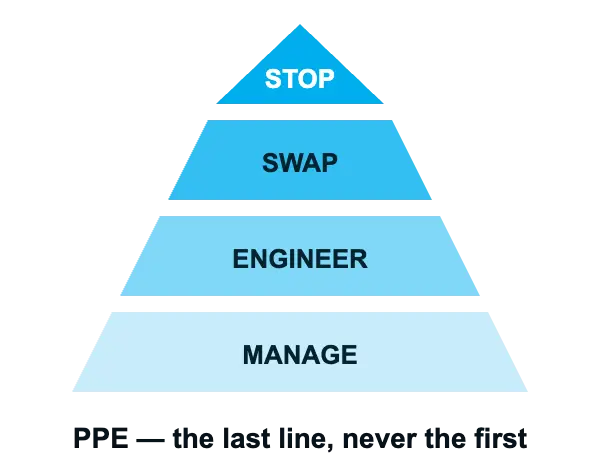
Eliminate or substitute first, engineer and organise next — PPE is the last line, never the first.
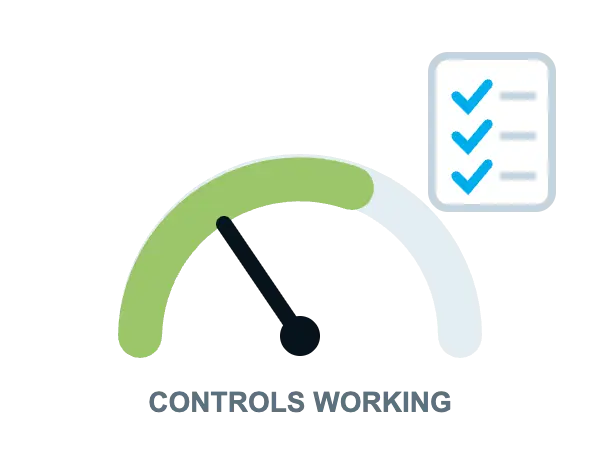
Keep the controls working: check ventilation, dosing equipment and storage stay as they should be.


Everyone who uses it knows the hazards, the correct dilution and the PPE — before the first shift, not after.

Products and processes change. Reassess when they do, and keep the record that proves it.