Why this disinfectant earns its place
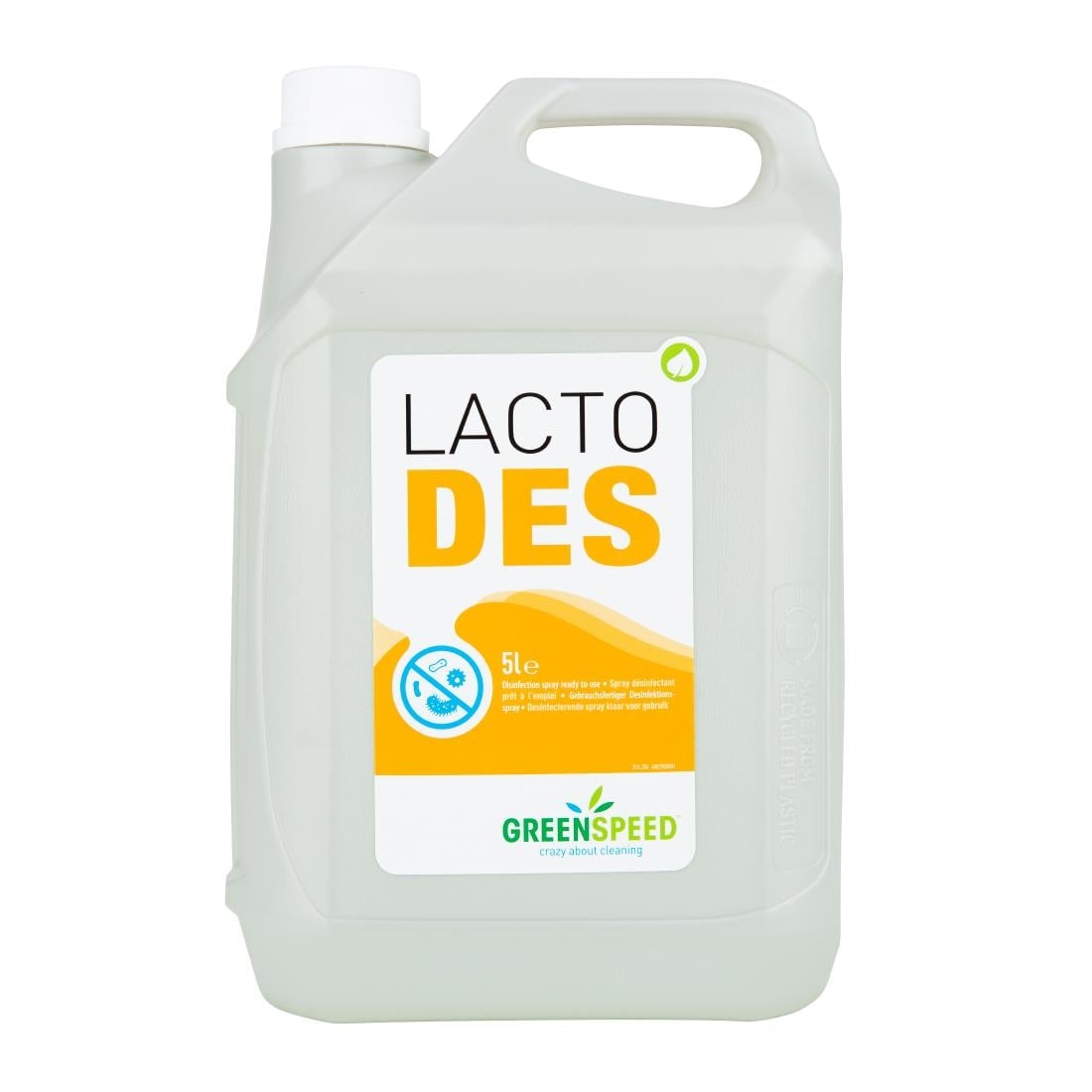
Lacto Des is built around lactic acid rather than chlorine or alcohol, which is the detail that lets it be used directly on food contact surfaces without the residue or fume concerns those more aggressive actives bring. It cleans and disinfects in a single application, tested to kill 99.99% of bacteria, yeasts and enveloped viruses within five minutes.
That performance is independently verified rather than just claimed: it's bactericidal to EN 1276 and EN 13697 (5 minutes), levuricidal to EN 1650 and EN 13697 (5 minutes), and virucidal to EN 14476 + A1 (5 minutes), though the virucidal claim was specifically tested against influenza virus A/H1N1 rather than a broader panel, worth noting if a specific virucidal claim is what's being checked against.
Being free of hazard symbols means it's CLP-free, which simplifies storage, handling and staff training compared with a chlorine-based disinfectant that needs COSHH precautions and dedicated PPE. It's supplied ready to use, so there's no dilution step or mixing ratio to get wrong before it goes on a surface.
COSHH: six habits of safe chemical use
Control of Substances Hazardous to Health — the routine every commercial kitchen and cleaning cupboard is expected to run.


SDS
Read the label and the manufacturer’s safety data sheet — the pictograms tell you what you are holding.

Who could be harmed, and how badly? Judge likelihood against severity before anyone opens the cap.

Eliminate or substitute first, engineer and organise next — PPE is the last line, never the first.

Keep the controls working: check ventilation, dosing equipment and storage stay as they should be.


Everyone who uses it knows the hazards, the correct dilution and the PPE — before the first shift, not after.

Products and processes change. Reassess when they do, and keep the record that proves it.