

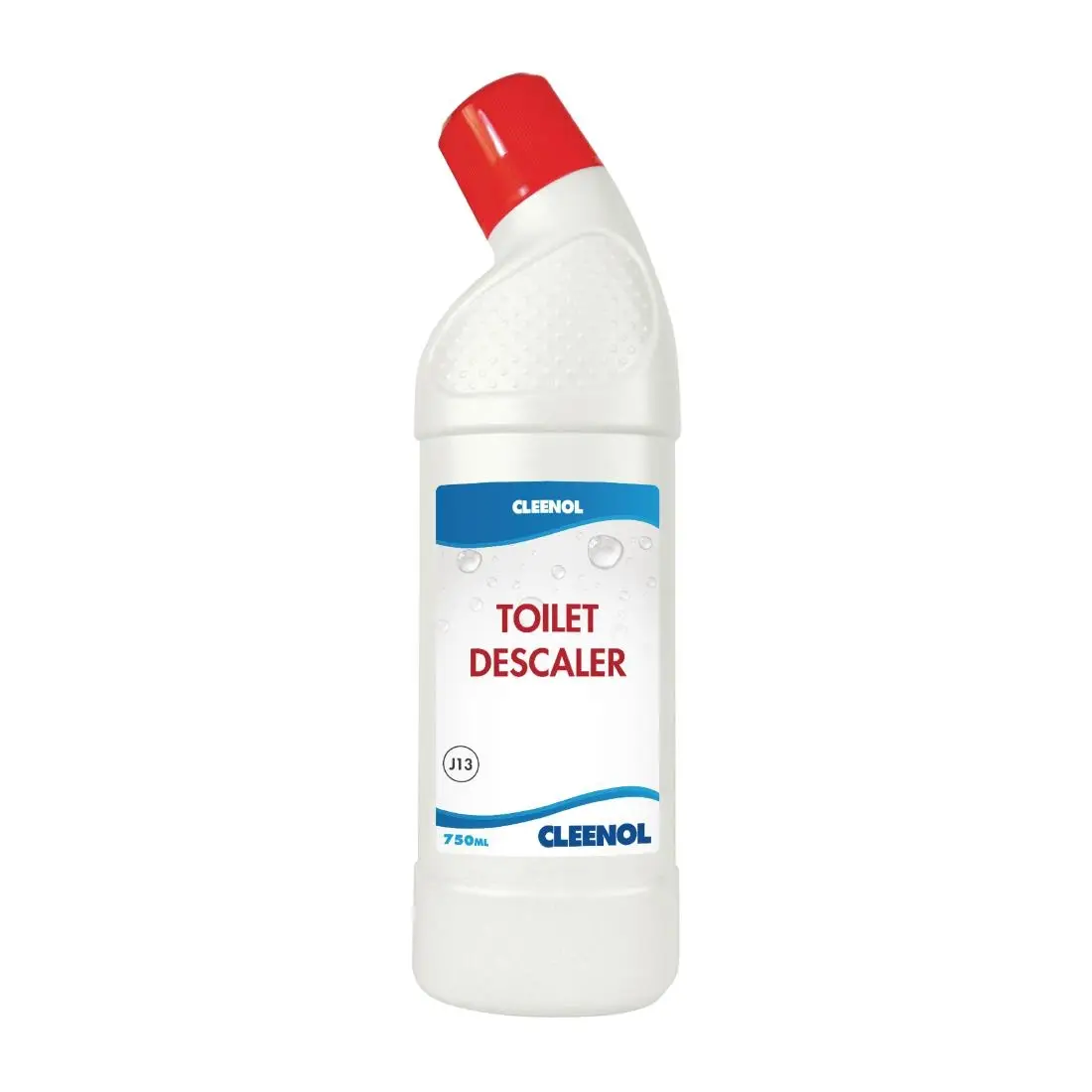
Why this toilet cleaner earns its place
Cleenol's Toilet Descaler is formulated for the jobs a standard toilet cleaner won't shift — heavy limescale that's built up over time in bowls and urinals rather than everyday surface grime.
The high-active phosphoric acid formulation gets through that scale properly, restoring bowls that have started to look permanently stained even after routine cleaning.It's built to be safe on the surfaces washrooms are actually made from: stainless steel and ceramics as well as porcelain, so it can be used across a washroom's fittings rather than being restricted to the bowl alone. A fresh, invigorating fragrance is worked into the formula, so beyond the cleaning result, it leaves the washroom smelling properly clean rather than just descaled — something that matters in customer-facing toilets as much as staff ones.Supplied twelve bottles to a case at 750ml each, this suits sites managing several washrooms — pubs, restaurants, hotels or any site with more than one set of facilities needing regular descaling attention.
It's classified as both corrosive and an irritant, reflecting the strength needed to shift heavy scale, so it should be used with gloves and ventilation, kept away from skin and eyes, and stored securely rather than left out in a customer-accessible washroom. Used as part of a routine descaling schedule rather than only when scale has become visible, it keeps washroom porcelain and fittings looking properly maintained rather than playing catch-up on years of build-up.
COSHH: six habits of safe chemical use
Control of Substances Hazardous to Health — the routine every commercial kitchen and cleaning cupboard is expected to run.


SDS
Read the label and the manufacturer’s safety data sheet — the pictograms tell you what you are holding.

Who could be harmed, and how badly? Judge likelihood against severity before anyone opens the cap.

Eliminate or substitute first, engineer and organise next — PPE is the last line, never the first.

Keep the controls working: check ventilation, dosing equipment and storage stay as they should be.


Everyone who uses it knows the hazards, the correct dilution and the PPE — before the first shift, not after.

Products and processes change. Reassess when they do, and keep the record that proves it.

