Why this order pad earns its place
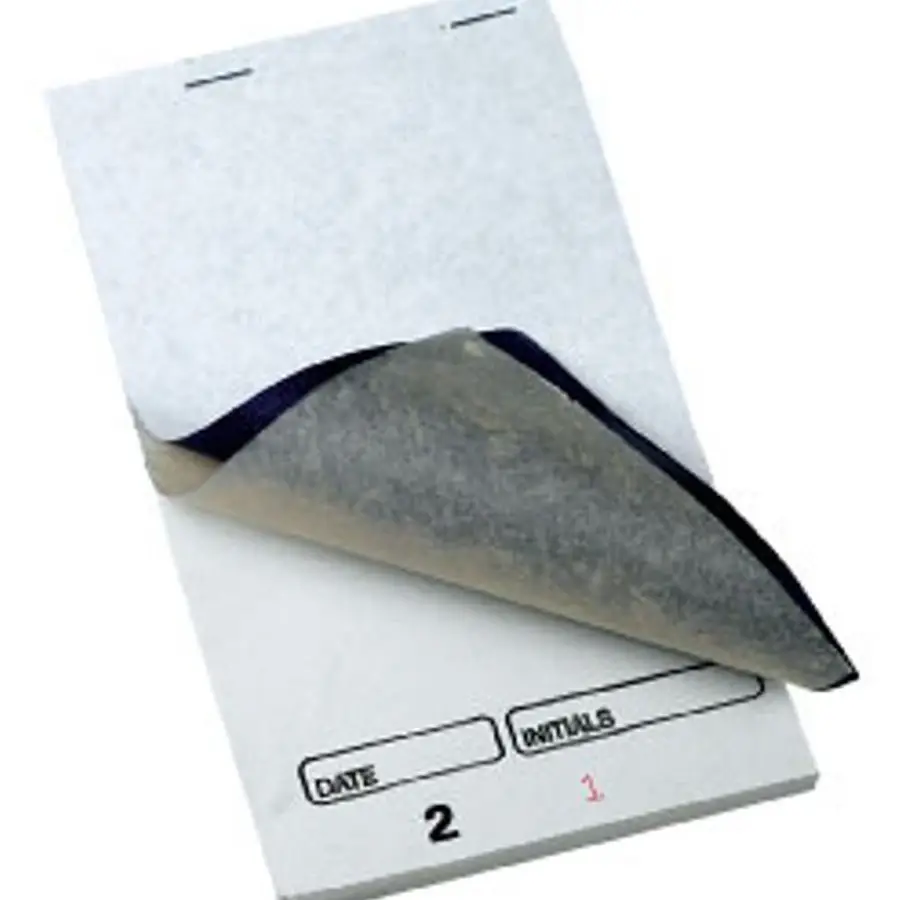
The duplicate is the whole reason to choose this pad. The top copy goes to the pass so the kitchen has the order in writing, and the second stays with the section as the floor's record — what was ordered, for which table, in what order it was written. That second copy is what settles the argument at the end of a service: a plate that never arrived, a course fired twice, a bill queried at the door. Without it the only version of events is whoever remembers hardest.
Numbered leaves do the other half of the work. Every docket carries its own number, so a docket can be matched back to a table and a gap in the sequence is visible at cash-up rather than invisible forever. At 95 x 160 mm the pad is large enough to take a full table's order — courses, covers and the modifications that come with them — while still writing comfortably in one hand at the table. Twenty-five pads to the pack is a stockroom quantity: it puts the reorder well clear of the next busy weekend rather than on the same shift.
Paper still earns its place alongside an EPOS system. Handhelds run out of battery, tills go down, and a marquee or a garden section will happily sit outside the wifi. A pad in an apron pocket works in all of those, needs no setup and no training, and hands the kitchen something it can clip to the rail and read across a hot pass.