Why this salt & pepper earns its place
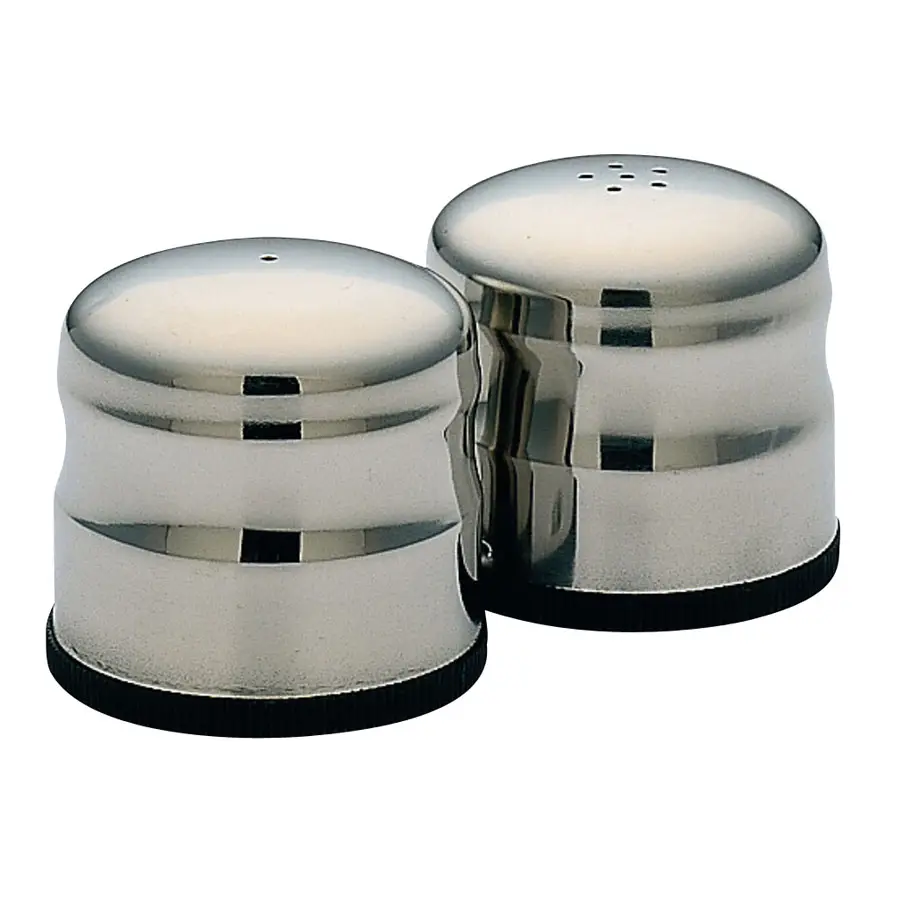
Cruets are the most handled item on a table. They get picked up by every cover, put down hard, knocked over, carried between tables during a reset and dropped often enough that breakage is a budget line rather than an accident. At 80 mm this pair is short and low-centred, which is the shape that stays upright when a sleeve catches it and stays within reach in the middle of a laid cover rather than looming over it.
Stainless steel is the answer to the breakage problem. Metal takes the drop that ends a glass or ceramic cruet, so a set survives a season of resets instead of being replaced in ones and twos through the year. It also handles what it is holding — salt is corrosive, which is exactly why stainless is the trade default for cruets rather than a plain metal that would pit around the holes.
In service the routine is short: check and top up between services, wipe down on turnaround. Salt draws damp out of the air and clumps, so refilling with dry salt into a dry body is what keeps them pouring on a humid evening rather than needing to be shaken at. A plain metal body wipes clean in one pass, with no printed finish to wear off where fingers go.