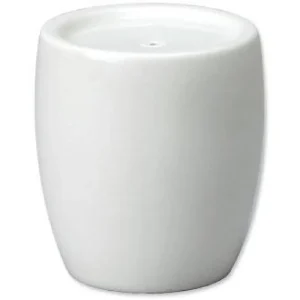

Why this salt & pepper pot earns its place
Salt on the table is the low-effort version of a job that otherwise costs a floor. Guests season when they want to, staff are not walking a cellar between covers, and the only ongoing work is a check at reset. What a food room needs from the pot itself is that it holds a fill, pours when picked up, and looks the same on table twelve as it does on table one.
At 6 cm this is a small pot, and small is right — it takes a place next to the rest of the table dressing without pushing into the cover, and it goes across a table one-handed. Small also means constant handling: lifted, tipped, put back down, wiped round at every turnaround. A glazed china body takes that. It does not scuff dull the way a plastic pot does after a few hundred passes through the wash.
Salt is the harder of the two fills to keep in condition, and it is worth working with that rather than against it. It pulls moisture out of the air, so a pot sat in a warm, steamy room will clump before an evening is out. Two habits fix most of it: fill in small amounts and turn the stock over rather than topping up on top of old salt, and make sure the pot is bone dry before it is refilled. Vitrified china helps here — it is fired dense and non-porous, so the body is not carrying water into the fill, and unlike a metal cellar it has nothing in it for salt to corrode. Finished in white with the plain Monet styling, it stays neutral through a day that changes what the room is for.