Why this server earns its place
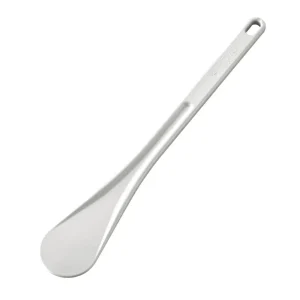
A pastry server is a lifting tool first and a portioning one second. The wedge shape is what does the work: the point reaches the centre of the tin where the slice is at its narrowest, and the wide end takes the weight of the crust edge, so the whole portion comes up supported along its length rather than folding in the middle on the way to the plate. That is the entire difference between a slice that arrives looking like the display and one that arrives looking like the offcut. At 29 cm there is enough reach to work across a large flan or a raised stand without your hand going over the food, and enough leverage to lift a heavy, set portion cleanly out of the tin.
Colour coding is the other half of what this is for. On a servery the failure is never dramatic — it is one server picked up from the neighbouring dish because it was nearer, and that is exactly what a coded set is there to prevent. Giving black to one dish and keeping it there makes the rule visible to anyone working the line, including agency staff who have not seen your system before. Stainless holds up to that traffic: it does not stain from fruit acid or a dark filling, it holds no odour from the last thing it served, and it cleans back bright between services rather than dulling into something you would not want on a display counter.