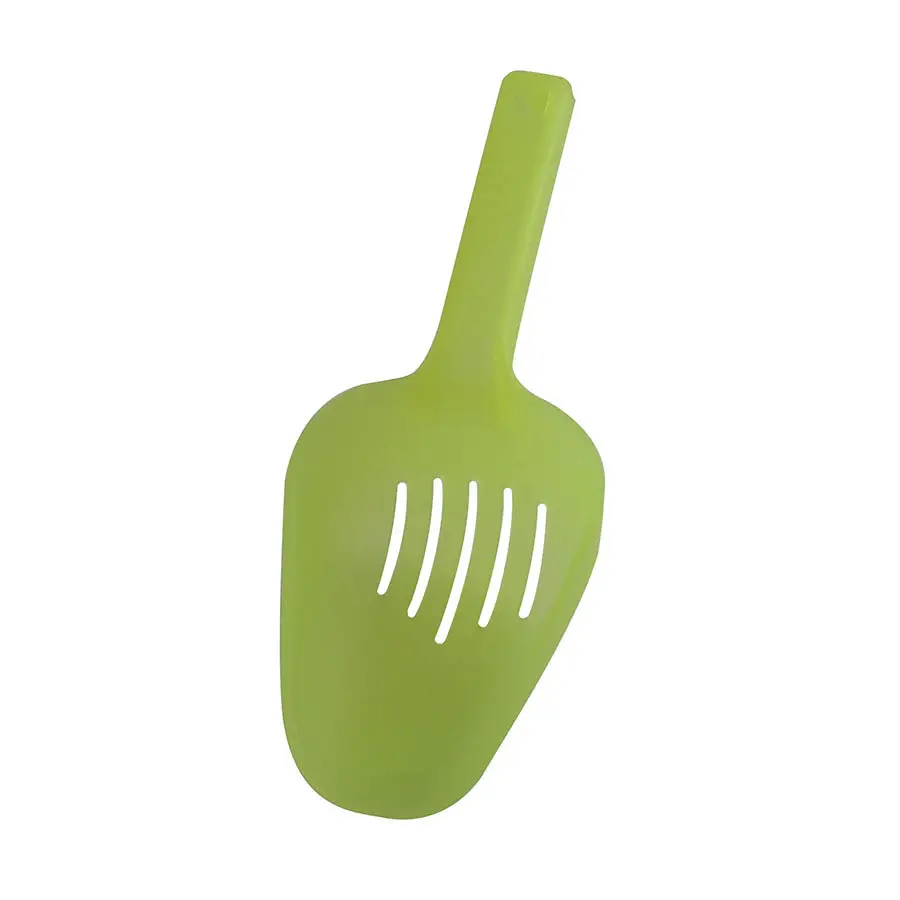
Why this ice scoop earns its place
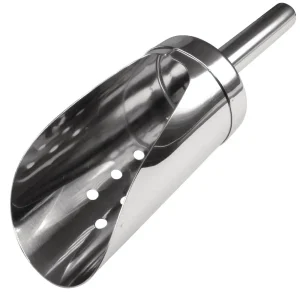
The slots are what separate this from a plain scoop. Ice sitting in a bin is always shedding water, and a solid scoop carries that water to the glass along with the cubes — the drink starts diluted, the ice arrives as a wet clump rather than loose cubes, and whatever drips on the way puts a puddle on the counter. Large slots let the water fall back into the bin where it belongs, so what reaches the glass is ice. That matters most late in a session, when the top of the bin has been open and worked repeatedly and the surface has started to go.
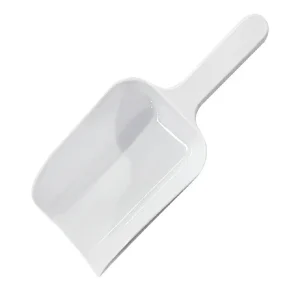
At 10 oz the bowl is a glass at a time rather than a tray at a time, which suits one-handed work: glass in one hand, scoop in the other, no setting anything down between drinks. A lighter load is also easier to work into the far corners of a bin, where ice tends to be left until it fuses. Green makes the scoop unmistakably its own tool on a shelf of similar-looking kit, which is the practical half of colour coding — the ice scoop should not be the one that was last in the flour. Plastic will not chip a glass rim the way a metal edge does, and it will not damage the machine if it ends up somewhere it should not. Keep it out of the ice between uses and wash and dry it daily; ice is a food and gets treated as one.