Why this scoop earns its place
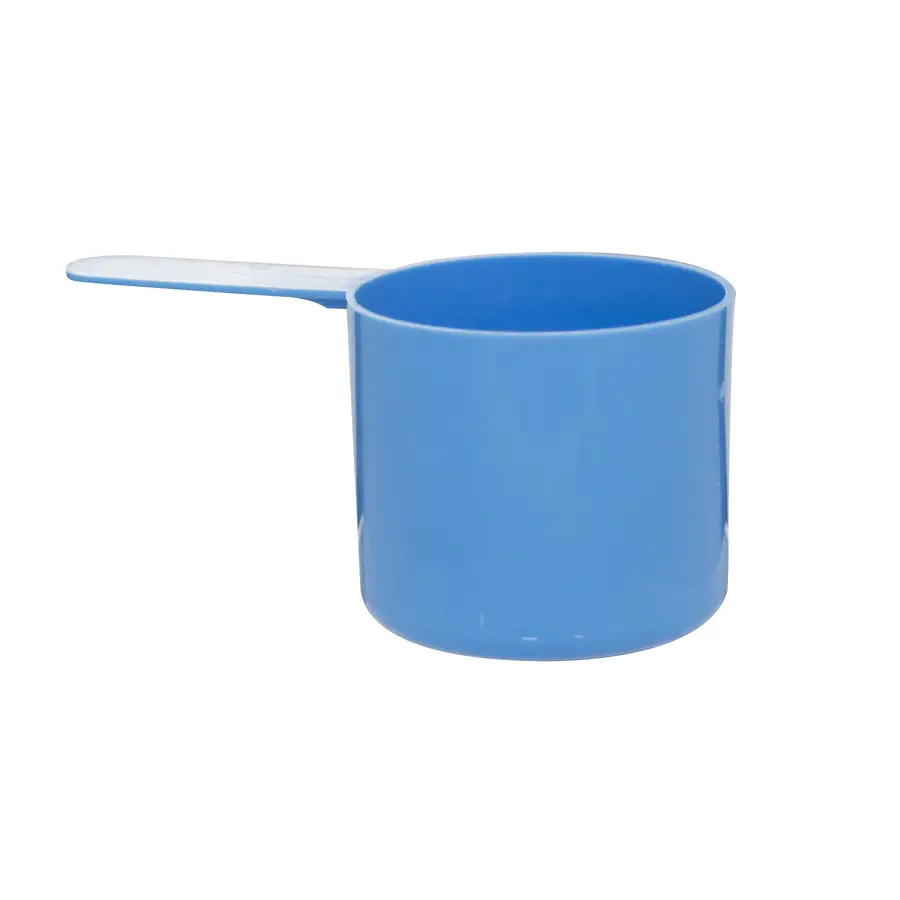
A scoop is a measure people will actually use. Weighing out every dose of milkshake powder or detergent survives the first hour of a shift and then stops happening, whereas a fixed-volume scoop that lives in the tub gets used because it is already in your hand. At 60 ml — 2 oz — this is the small end of that range: a single-dose measure for the things a kitchen adds by the spoonful rather than by the kilo, which is where inconsistency does the most damage to both taste and cost.
The dimensions are what make it a working scoop rather than a drawer scoop. The bowl is 38 mm across, so it goes down the neck of a narrow tub and into a tall container without fighting the opening, and the whole thing including the handle is 86 mm, short enough to sit inside a container with the lid back on. That matters more than it sounds: a scoop stored in the product is a scoop nobody has to go and find, which is the difference between a portioning routine that holds and one that lasts a week. The bowl is deep rather than flat, so a level dose comes out without shedding powder across the bench on the way up.
It is polypropylene, in blue. The colour is doing a job — blue reads immediately against white and beige powders, so a scoop left in a tub is spotted before the tub goes back on the shelf, and a scoop that ends up somewhere it should not be is found. The one discipline worth setting is keeping the food scoops and the chemical scoops permanently apart. The same shape works for detergent and for milkshake powder, and that is exactly why a scoop should be dedicated to one product, washed and dried fully before it goes back in, and never moved between the two.