Why this safety sign earns its place
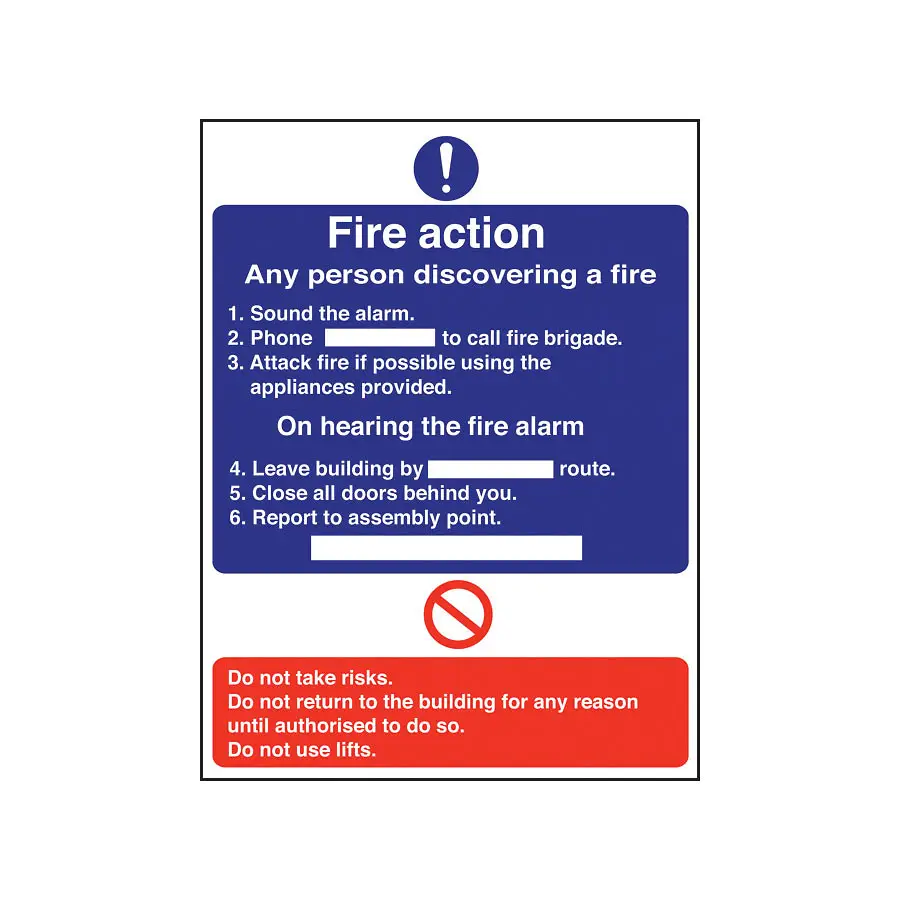
A fire action notice is the one piece of instruction in a building that has to work when nobody is thinking clearly. It gets read by a chef who has just found a fire in a dry store, or by an agency member on a first shift who has never been walked round the site, and in both cases it is read once, quickly, standing still. That is why it goes where that person will be standing rather than where there is wall space: at the manual call point, beside the final exit, on the route out through the back of house. At 200 × 150 mm this is the small-format version of that sign — sized to be read at arm's length by a door or a call point, not across a room.
It is paper, and that sets where it belongs. A back-of-house corridor, an office wall, a staff room noticeboard or the inside of a door is where it will last; a wet, greasy kitchen wall or a spot in the steam path from a dishwasher is not, unless it is mounted behind a clear holder and put on the same replacement round as everything else that fades. How many you need and exactly where they go comes out of the premises fire risk assessment rather than from a rule of thumb, though one at each call point and one on each route out is the pattern most small sites end up with. And a notice only earns its place if the drill behind it is real — staff who have actually walked to the assembly point, not simply been told there is one.