Why this vase earns its place
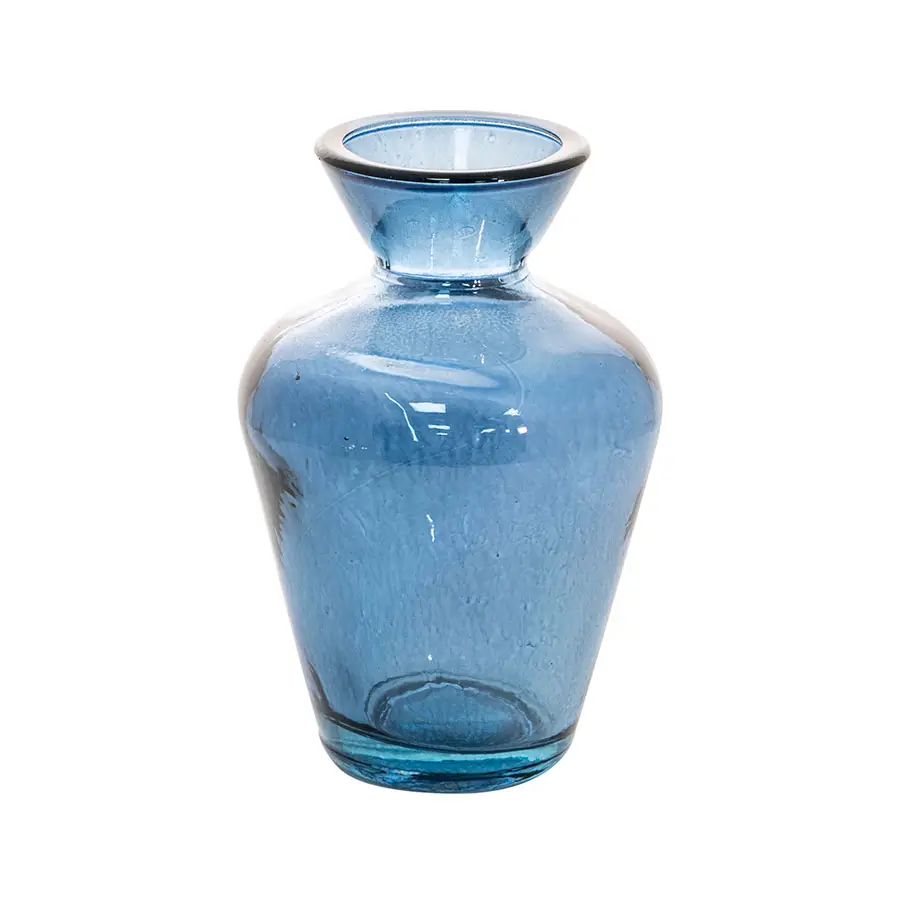
Colour is the decision here, and blue is a specific one. Against white linen it reads cool and clean rather than decorative, which is why it turns up in seafood rooms, coastal dining rooms and anywhere the palette is already whites, pale woods and greys. It does the job an empty vase has to do — give the table a focus when there is nothing in it — without adding warmth to a room that has been styled cool on purpose. A single stem in it becomes the accent; take the stem out and the glass still holds the cover.
The size is what makes it workable service after service. 110 mm keeps it under the eye line of two people talking across a table, and a 70 mm body leaves space for the cruet, the candle and the menu that also have to live there. Resets are quick because there is nothing to assemble and no right way round to place it: it comes off the tray, goes on the cloth and the table is dressed. Plain glass helps there too — no cut pattern to hold dust or fingerprints, no moulding to catch the light awkwardly under a downlighter.
Recycled glass is not uniform, and that is the point of it. Tone varies a little from piece to piece and small bubbles sit in the wall, so a room of them looks made rather than moulded. Cleaning is a bottle brush job rather than a cloth — nothing useful fits inside a 70 mm body — and coloured glass shows limescale and drying marks more plainly than clear does, so they want draining and drying properly before they go back on the pass shelf.