
Why this chopping board earns its place
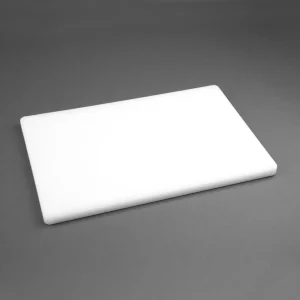
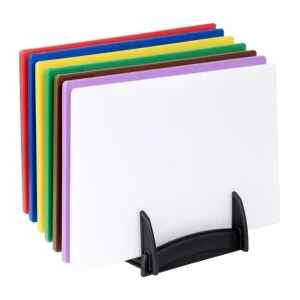
White is the bakery and dairy board: bread, dough, pastry and cheese. It is also the colour that gets abused most, because a white board looks like a general-purpose one and a kitchen under pressure will treat it that way. Holding the line on white is worth the effort, because the food on it is ready to eat and it should never be the surface that took the overflow from a raw job when every other board was in the wash.
The size suits what bakery work actually asks for. 610 × 440 mm gives room to roll and portion dough without the piece running off the edge, to cut a batch of bread down with the slices staying on the board, and to break a cheese without the offcuts crowding the knife. At 25 mm the slab sits solid under the downward push a cheese wire or a firm bread knife needs, and it does not creep across the bench while it is being worked.
Polyethylene keeps flour, fat and dairy on the surface, so the board washes back to clean rather than holding butter or cheese fat in the grain the way timber does. White has one practical advantage the other colours do not: it shows everything. A smear that has not come off, a stain from something that had no business being on this board, the first stage of scoring — all of it reads immediately on a white face, which makes it the easiest board in the set to check honestly and the easiest to condemn once it is finished.