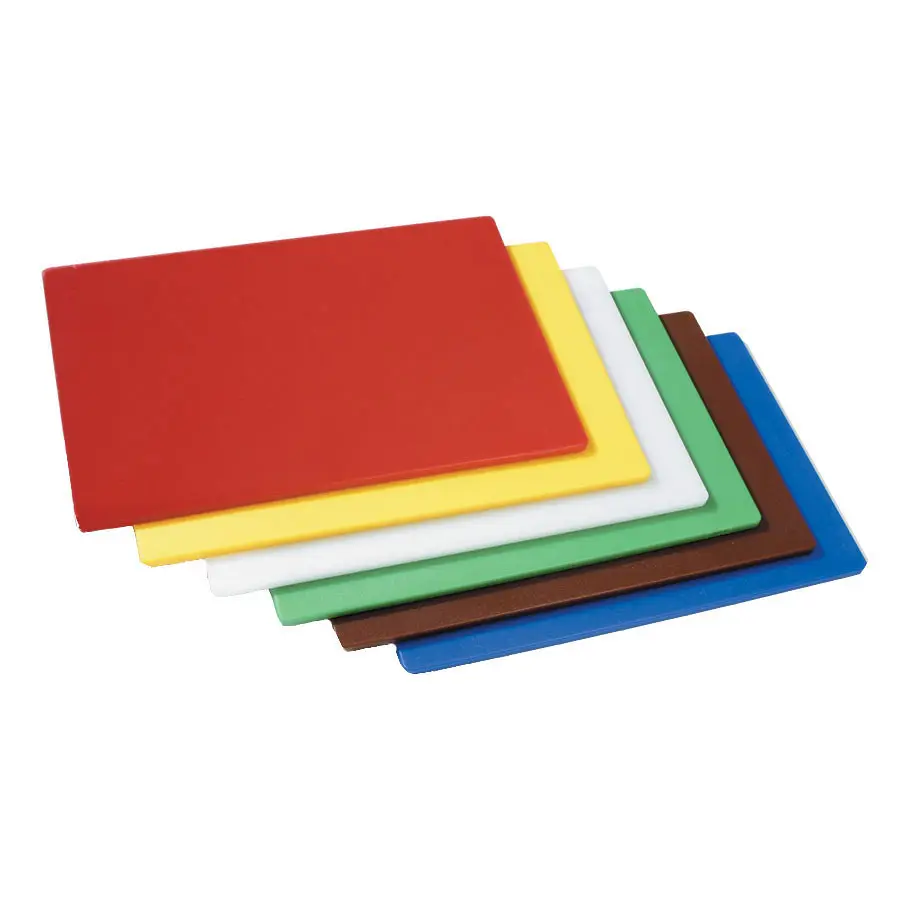
Why this chopping board earns its place
Brown is the code for vegetables, and the reason it exists is dirt. Root veg arrives with field soil on it, and soil carries bacteria that have nothing to do with the vegetable itself. That is why veg gets its own board rather than sharing with salad: one is going in a pot, the other is going straight onto a plate. This is the board for onions by the sack, swede, celeriac, carrots and potatoes — the unglamorous volume work that fills the first hour of most prep lists.
Veg prep is also the heaviest knife work in the kitchen. A board doing a full brunoise or a stockpot's worth of mirepoix takes thousands of cuts a week, and 12 mm of polyethylene gives it the body to stay flat and absorb that without flexing. The material gives under the edge rather than pushing back, so a chef's knife holds its sharpness through the run — on a hard surface the same job would send you to the steel repeatedly.
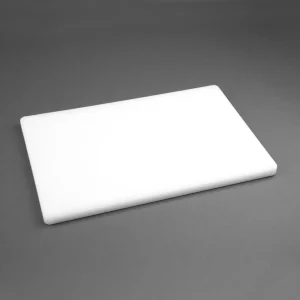
At 450 × 300 mm the board holds a working dice as it builds rather than spilling it over the edge, which is what makes the difference between prepping into a tray and prepping into a mess. Because of the volume it handles, this is usually the board that scores fastest, so keep an eye on the surface: once the cuts hold residue after a wash, it needs replacing rather than nursing along.