
Why this chopping board earns its place
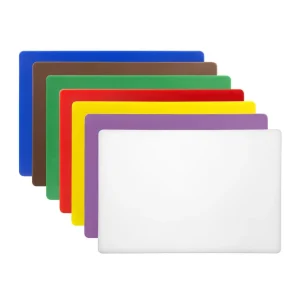
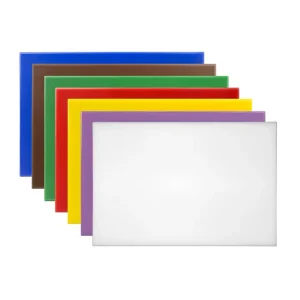
Blue is the code for raw fish, and fish earns its own board twice over: it carries the same raw-product risk as meat, and fish and shellfish are named allergens, so anything they touch has to be accounted for. This is the board for filleting, skinning, pin-boning and portioning, and it stays on that job. At 450 × 300 mm a fillet lies flat with room to run a knife the length of it rather than working it in sections.
Polyethylene suits fish work particularly well. The surface is non-porous, so oils and brine sit on top and wash away instead of soaking in and going stale — the failure that eventually ruins a timber block on a fish bench. It is also soft enough to work a flexible filleting knife against without turning the edge, which matters when the whole job depends on a fine blade held at a shallow angle.
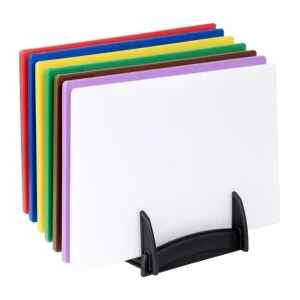
At 12 mm the board has the body to stay flat while you draw a long knife along a fillet, rather than lifting at the corners. Wash it while the residue is still wet — fish oils are far harder to shift once they have dried on — and stand it on edge so both faces dry. Once the scoring holds residue through a wash, take it out of the section.