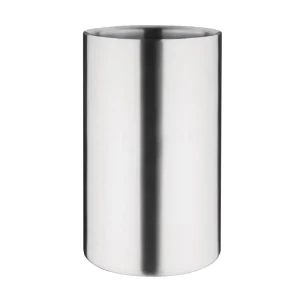
Why this champagne bucket earns its place
5 litres is the working volume for a single bottle. It takes enough ice and water to surround the bottle up to the shoulders and hold it cold through a long meal, and it stops short of the size that dominates a laid table or that nobody wants to carry across a floor once it is full. The part that is regularly got wrong is the water. Ice on its own only touches a bottle at the points where cubes happen to meet the glass; ice topped with water makes contact with the whole surface at once and pulls the temperature down several times faster. A bucket filled with ice and no water is a bucket that will not have the bottle cold by the time the starters land.
Stainless is the material for a vessel that lives wet. It takes ice going into a warm bucket without complaint, it does not corrode from sitting damp all night, and a knock that would crack glass or ceramic leaves it serviceable. The silver finish is a front-of-house consideration as much as a practical one: it shows fingerprints and water spotting, which is why a bucket gets a buff before it goes out — this is an item that sits in the guest's eyeline for the length of a meal, at the table rather than behind the bar. Rinse it out, dry it and polish it back between uses and it stays presentable indefinitely.