Why this champagne bucket earns its place
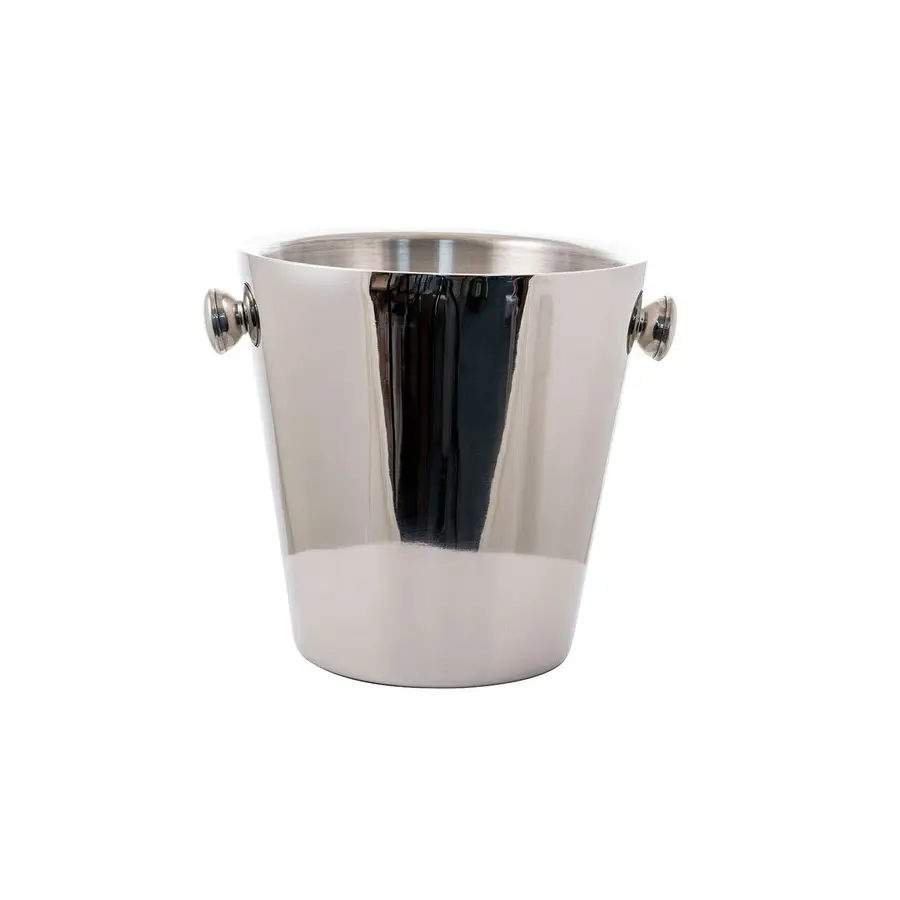
A bucket has one job and it is harder than it looks: keep a bottle at drinking temperature in a room that is a good deal warmer than the cellar it came from, for as long as the table takes to finish it. The double wall is what decides that. The insulating gap between the two skins means the ice is working on the bottle rather than on the room, so the last glass out of the bottle is still worth pouring instead of going slack somewhere around the halfway mark.
The second thing the double wall fixes is condensation, which is the reason single-skin buckets get wrapped in a napkin. Cold metal pulls moisture straight out of warm dining-room air and it runs down the outside onto the cloth. Here the outer skin sits close to room temperature and stays dry — nothing marks the linen, nothing drips across the table when the bottle is lifted, and a server can carry it one-handed without a towel.
Polished stainless in silver is the standard front-of-house finish because it picks up the light in the room and reads as dressed rather than functional. It shows fingerprints and water spotting, so it gets a buff with a dry cloth on the way out, the same as glassware does. Underneath that, stainless takes the actual working life — ice, melt water, the wash, and being knocked about behind a bar — without pitting or losing its colour.