
Why this tray earns its place
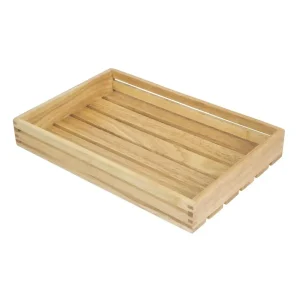
A butler tray is the surface an order travels on and then stays on. This one is the 1/1 rectangular format — 636 × 398 mm across the top — the full-size rectangle service lines and counter layouts get planned in, so it takes a whole course rather than a single plate. Loaded in the kitchen, carried out, set down, and the carrying tray becomes the display.
The 80 mm height is what separates it from a flat board. It gives the tray presence on a counter and lifts what is on it clear of the surface rather than leaving everything flat in the guest's eye line. The ribbed face works the same way visually: at the start of service, or once a counter has been picked over, the rib pattern keeps an unloaded tray looking deliberate instead of bare.
Oak is the reason to buy a wooden tray rather than a laminate one — a dense, close-grained hardwood that takes daily handling without looking beaten after a season. The natural finish leaves the grain and tone of the timber showing rather than staining over it, so no two trays read identically, and against stainless, glass and white china the wood warms the whole counter up. Treat it as timber: wipe down and dry after service, and don't leave it standing in water.