Why this display stand earns its place
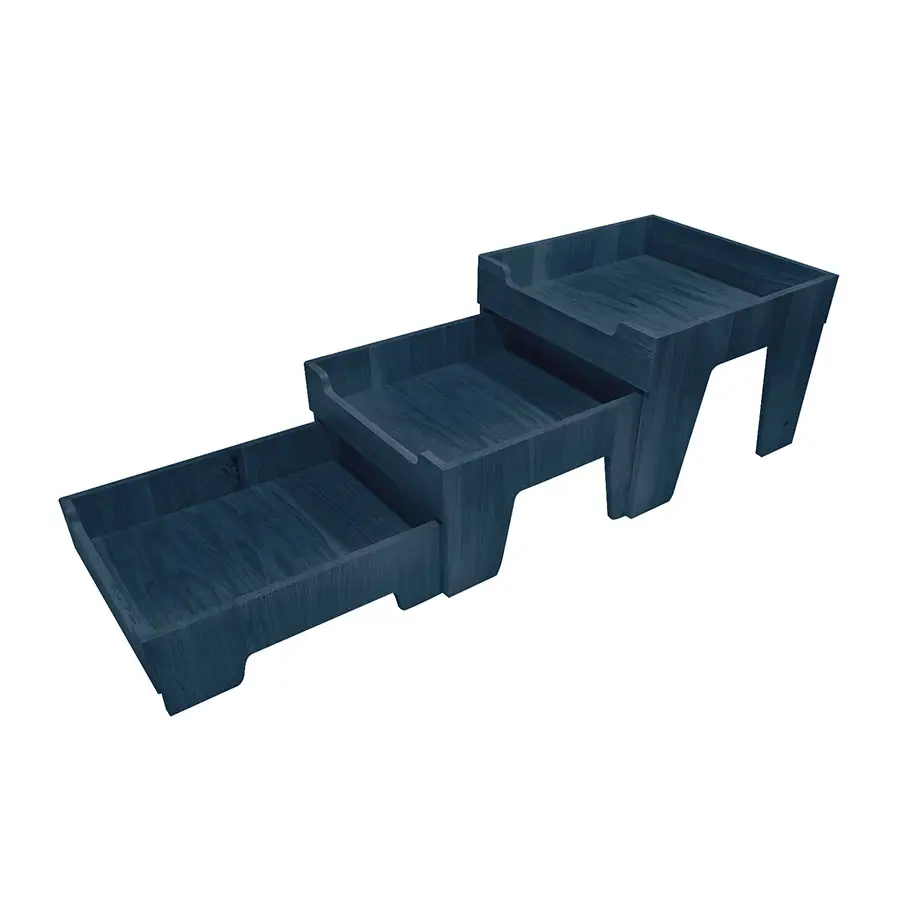
A riser turns a flat run of platters into something a guest can read at a glance. This is a large rectangular display riser in oak, and the manufacturer designs it to nest or to stand alone — the difference between a piece that lives permanently on a counter and a piece that comes out for an event and then gets out of the way.
The 300 mm height is a real step rather than a token lift. It brings the top of a display towards a natural sightline across a room, so the item on top is the one people see first from the door, and it leaves clear air underneath so the level below still reads instead of being swallowed. The 398 mm footprint gives a broad, square block to plan into a counter layout — a platter or board sits squarely on it rather than overhanging at the corners, and the display line stays predictable when a run has to be re-laid mid-service.
Storage is where risers usually cause trouble: they are bulky, awkward, and end up stacked badly in a corner. A nesting design collapses back into its own volume once service is over, so a van or a store cupboard takes it without a fight. Solid oak matters as soon as there is weight on top — no flex and no rattle when a guest reaches across — and timber absorbs the knocks of loading and unloading better than it shows them. The Amberley Grey finish is a cooler, muted grey over the oak grain, which holds its own alongside slate, steel and monochrome table settings without pulling attention off the food.