Why this tea chest earns its place
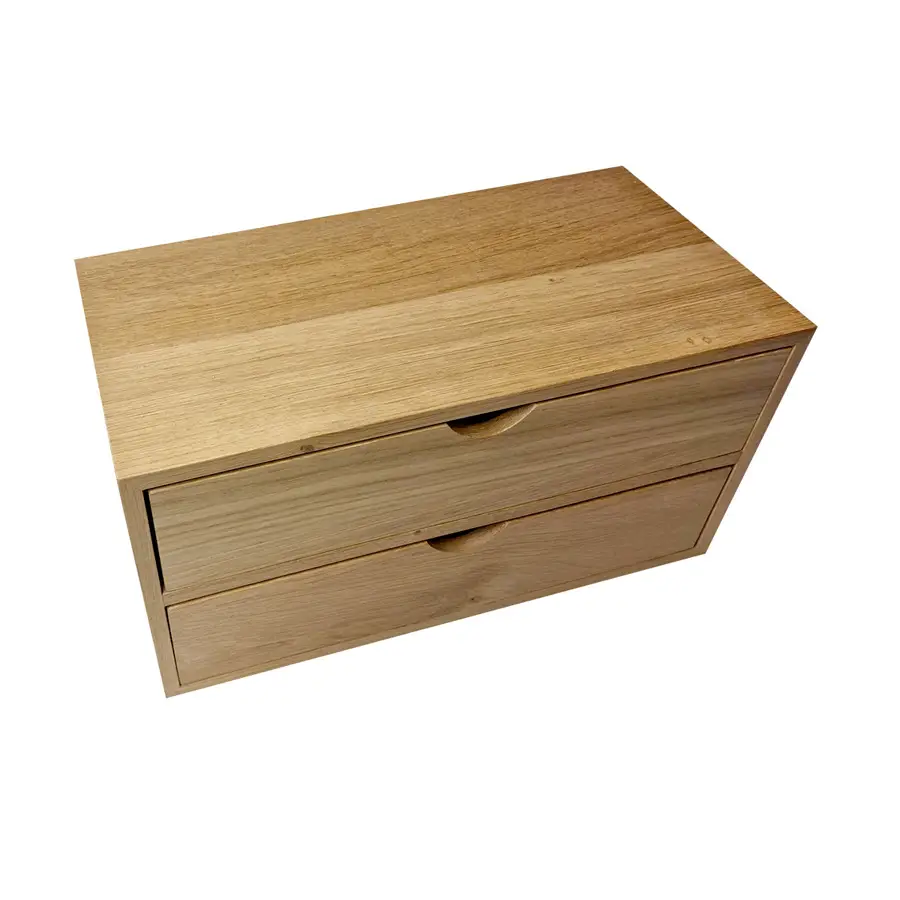
This is a two-drawer oak chest that turns a box of sachets into a selection a guest can browse. That is the whole job, and it is a bigger one than it sounds: sachets in their delivery packaging read as stock, and a counter carrying three open boxes reads as a store room. Put the same selection in drawers and it becomes an offer — the guest opens one, sees what is there and takes what they want, and nobody has to be asked what the choice is. Two drawers let the selection be split so it stays legible rather than being turned over by hand.
The footprint is 398 mm wide by 212 mm deep, which is a defined block of counter rather than a spread. The depth is the useful number: at 212 mm the chest can sit close to the front edge of a counter or station so a guest reaches a drawer without leaning across, and there is still working space behind it. At 244 mm high it stands as a piece on the counter rather than disappearing behind cups and urns. It works on its own, so a breakfast counter, a meeting-room station or a back bar can each carry one without anything else being set up around it.
Oak is the right material for something opened and closed a few hundred times a week. Solid timber takes constant drawer use and the knocks of a counter without loosening or showing every mark, and the natural finish keeps the grain pale and open — warm under counter lighting, comfortable next to stainless urns and white crockery. Clean it as wood: clear the drawers, wipe with a lightly damp cloth and dry it off. Oak should never be soaked or left standing in a wet patch on a counter.