Why this fillet knive earns its place
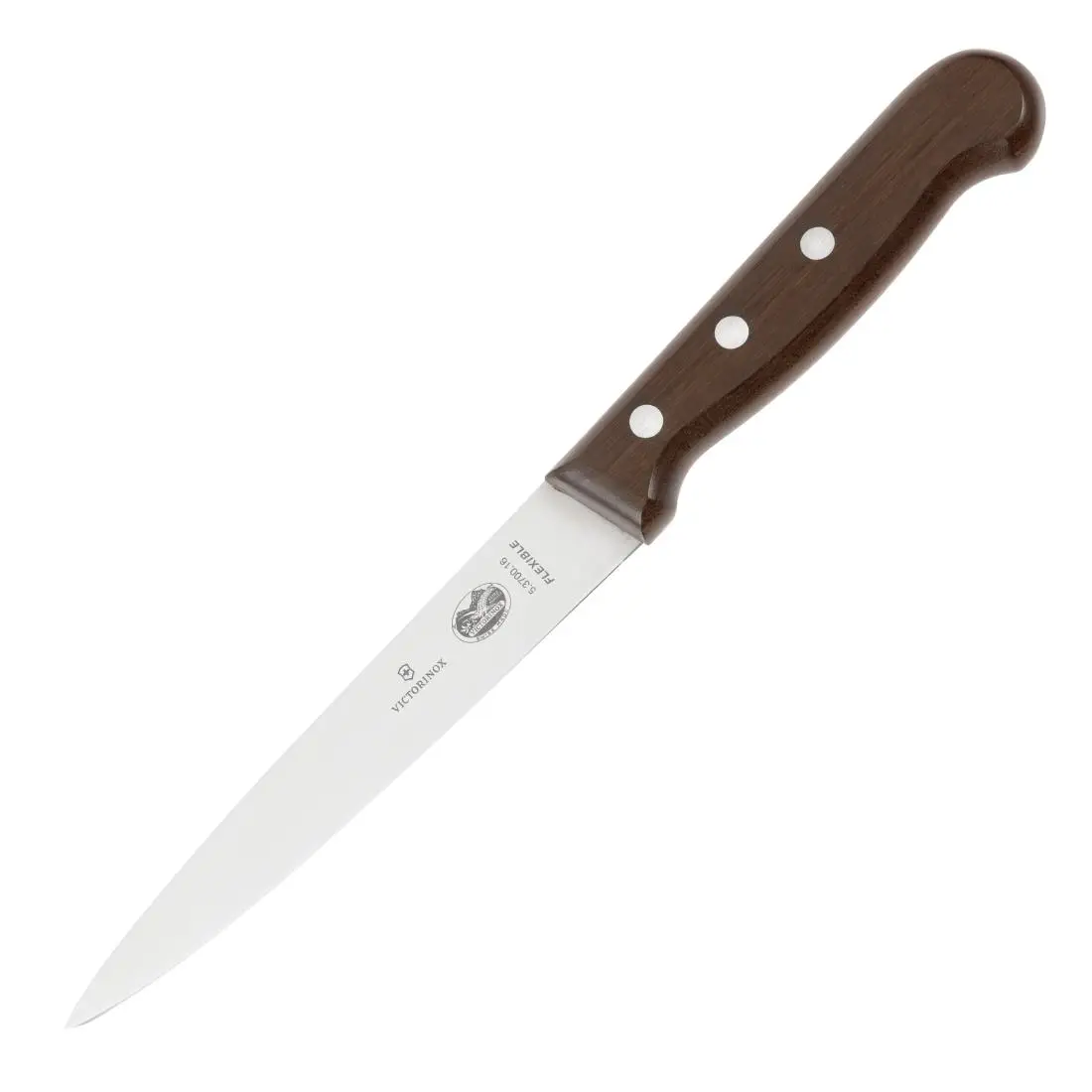
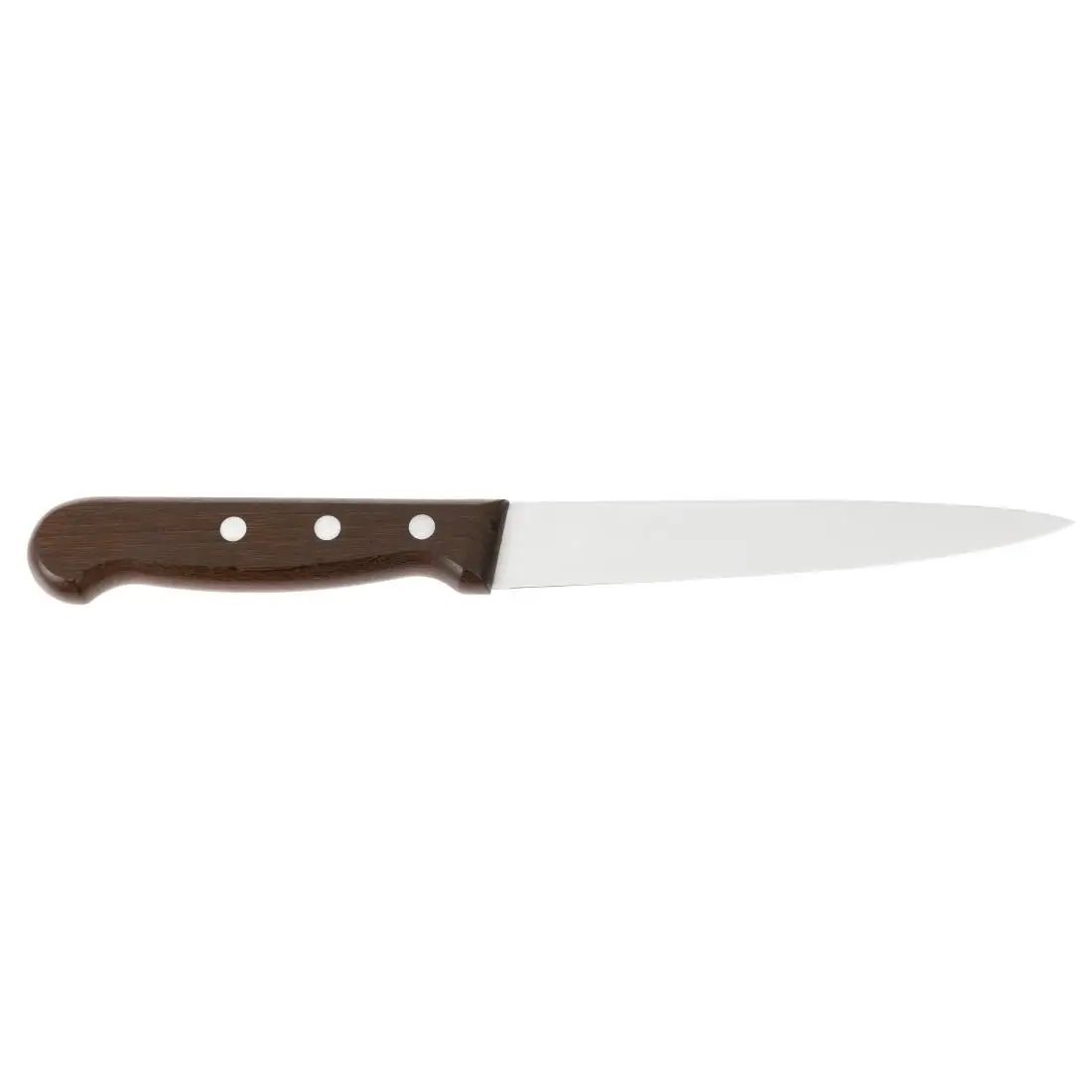
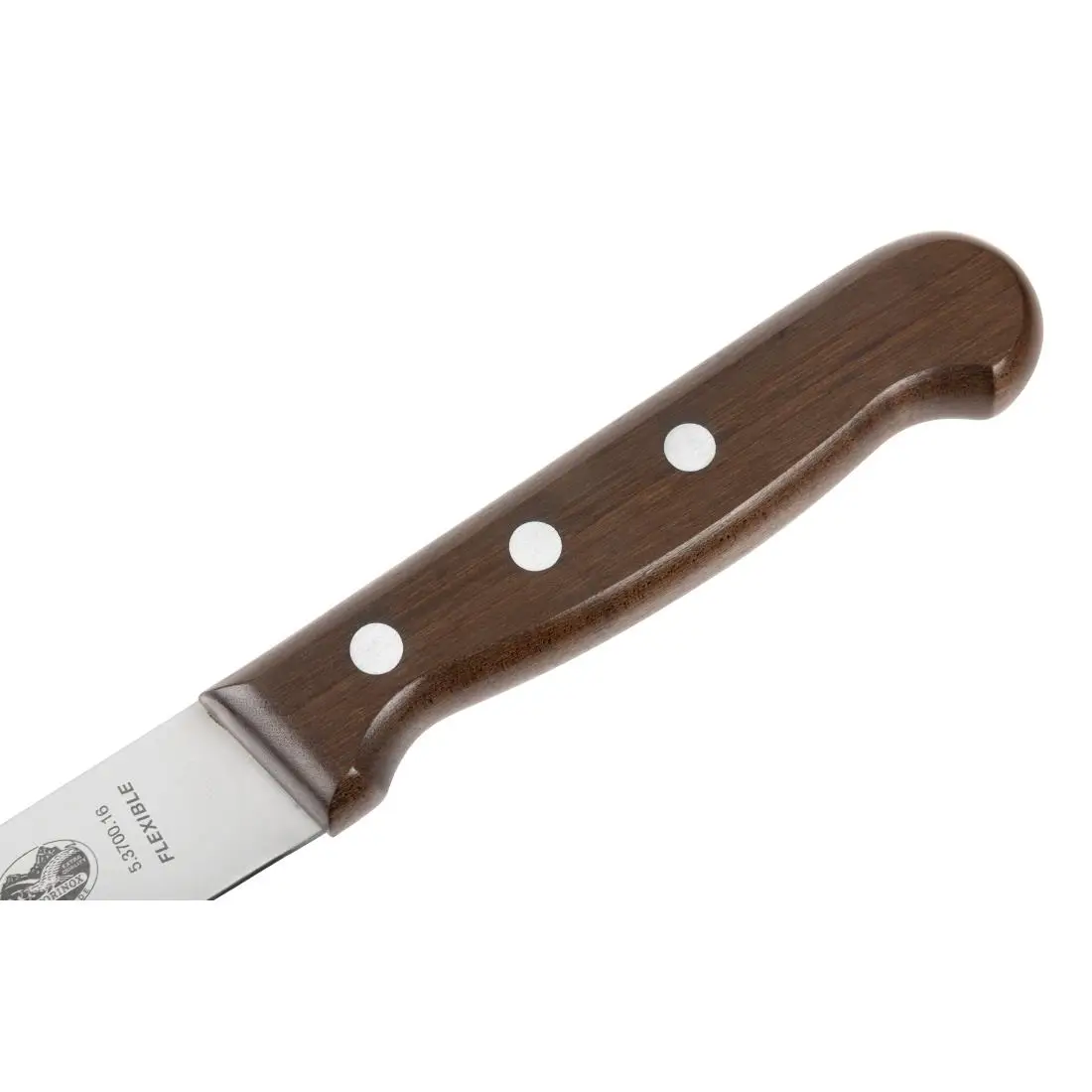
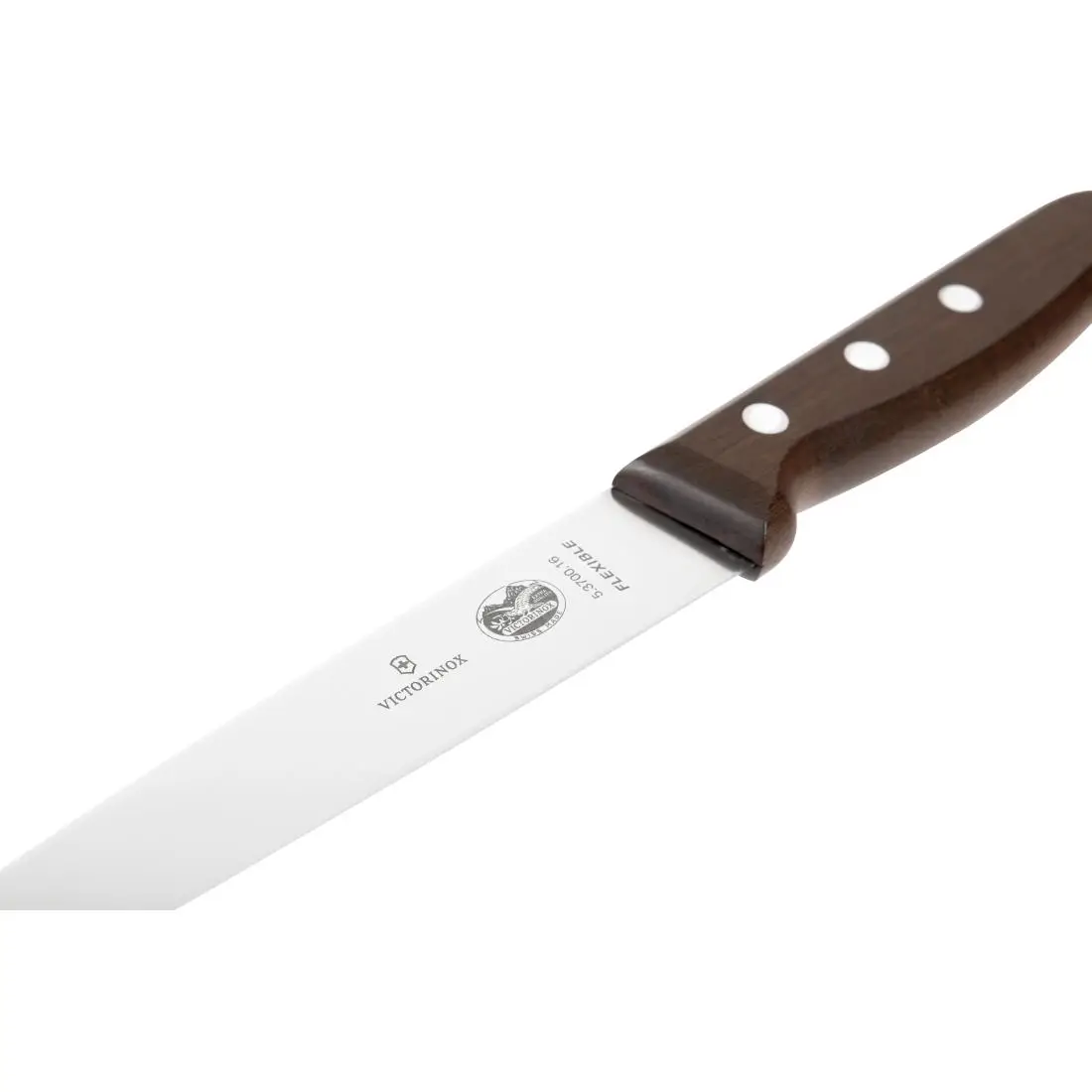
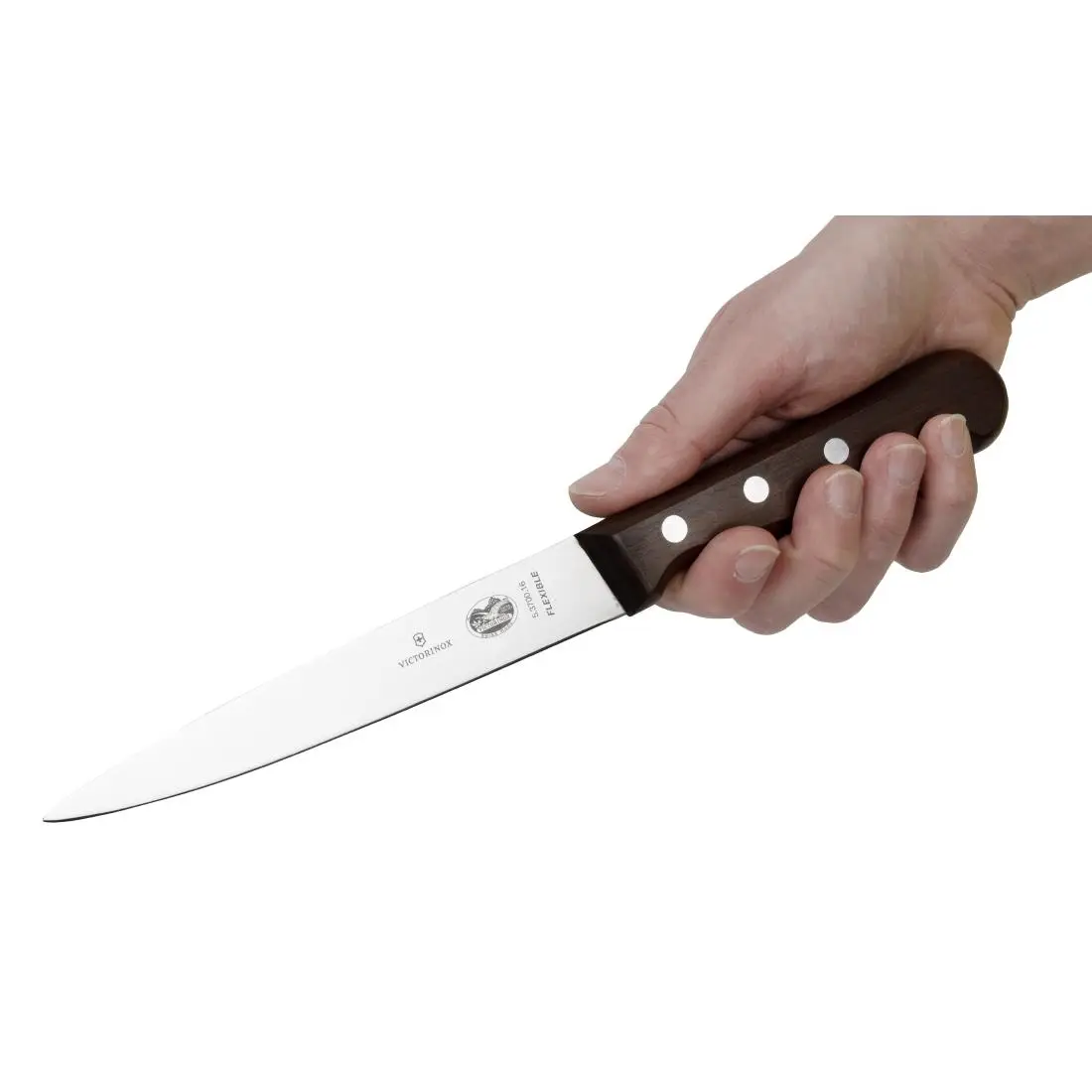
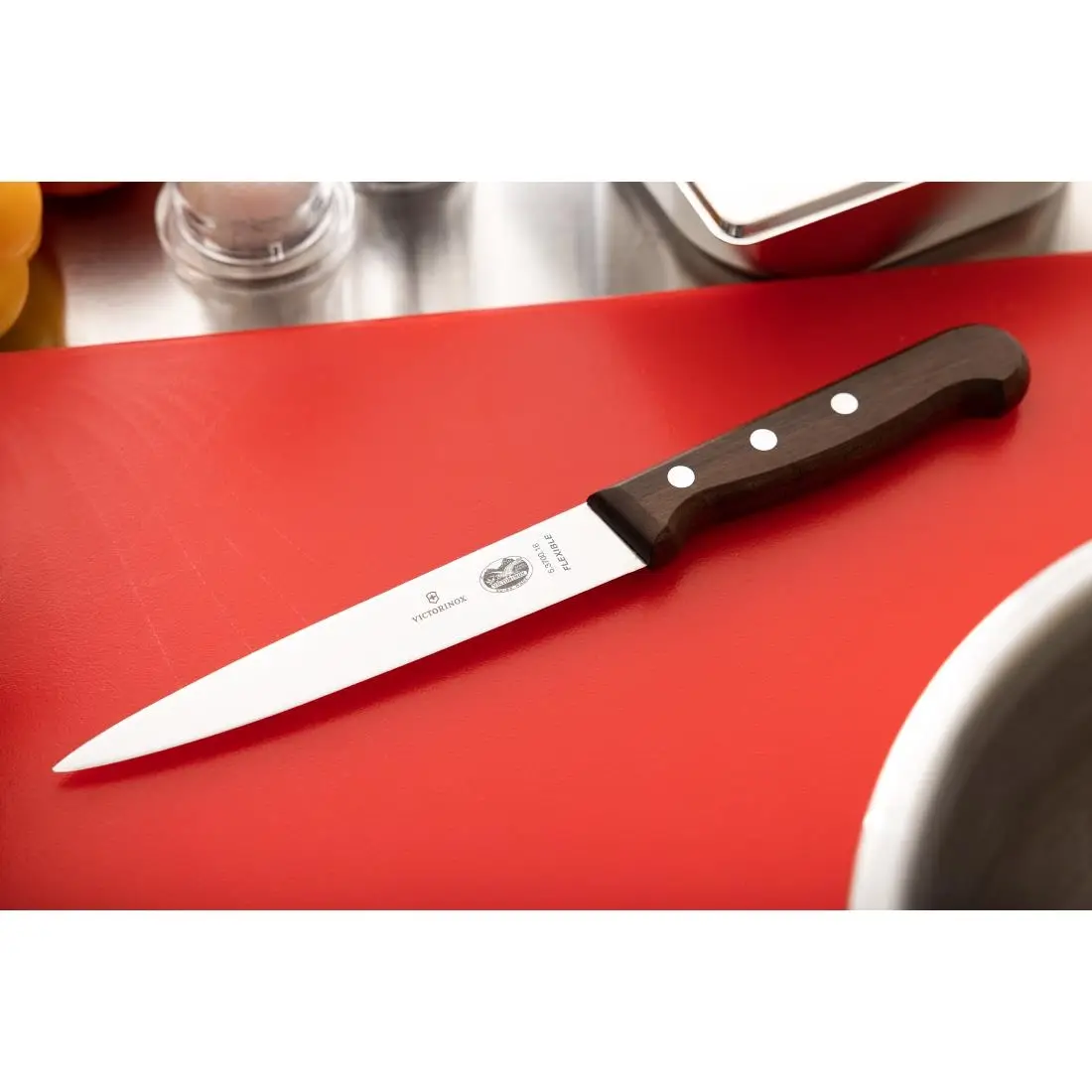
Filleting demands a blade that's flexible enough to follow the contour of bone, rigid enough to cut cleanly, and sharp enough to work close to the flesh without waste. This Victorinox fillet knife is 289 mm tip to handle, with a 16 cm blade narrower than a chef's knife—exact leverage for detailed work. The blade itself is carbon stainless steel, stamped and tempered to hold an edge you can feel the moment you handle it. The handle is rosewood, riveted solid, and the weight at 70 grammes sits perfectly balanced in your hand for hours of close work.
Professional fish mongers, game processors and fine-dining chefs reach for fillet knives constantly. This blade is thin and keen enough to work the natural seams between muscles and bones, separating usable meat from waste with minimal loss. The same tool works equally well on poultry, game birds, and shellfish where precision matters. Unlike a boning knife (which is stiffer and straighter), a fillet knife flexes slightly, letting you follow curves and angles without forcing the blade. That's the whole point.
Victorinox's professional range has built its reputation on tools that work. This fillet knife is no exception. It's been the choice of commercial kitchens for decades—not because of prestige, but because it cuts and holds an edge better than cheaper alternatives. The rosewood handle darkens with use and oil, developing character. These are knives that last.