Why this muddlers & rammer earns its place
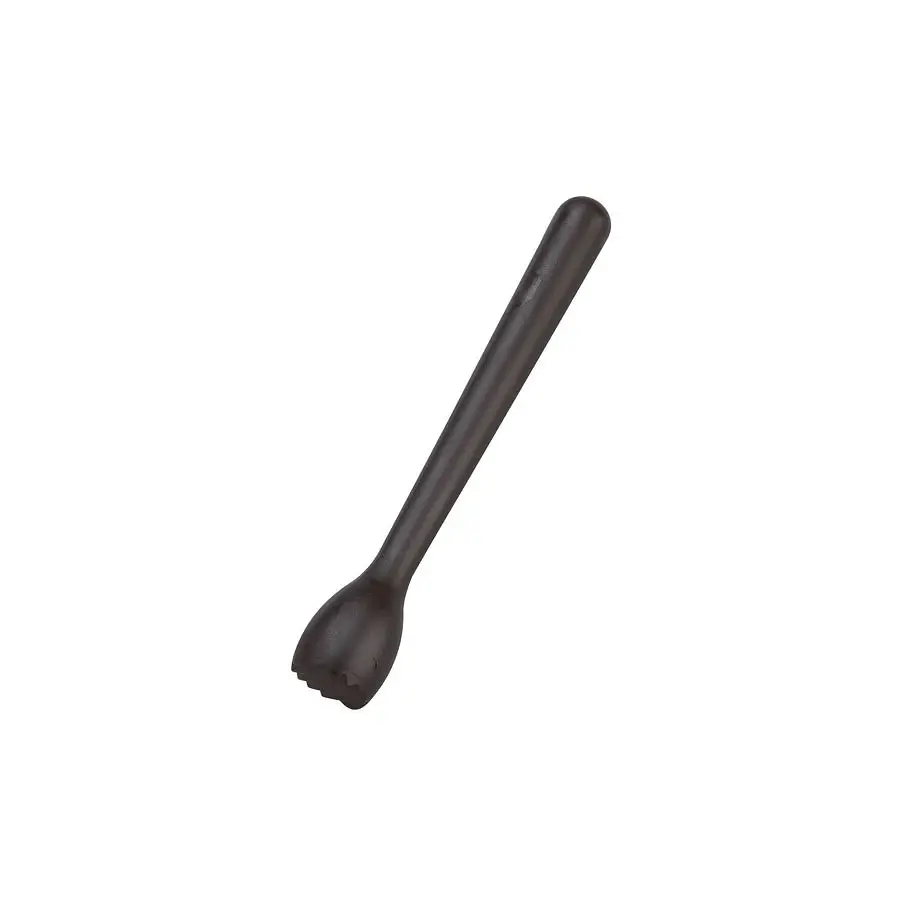
A muddler bruises; it does not shred. Mint gives up its oil when it is pressed and turned, and turns bitter and black the moment it is torn — which is what happens when someone tries to make weight up with force. The extra weight in the tool is what removes the need for that force: the mass does the pressing, so the bartender presses, turns a quarter, lifts, and repeats, and the pressure lands evenly across the base of the glass instead of being driven hard into one spot. The result is a drink that smells of mint rather than tasting of chlorophyll.
22 cm is the length that reaches the bottom of a tall glass or a shaker tin with the hand still above the rim. A short muddler puts the bartender's knuckles down inside the vessel, which is unpleasant to watch from the customer's side of the bar and worse for the drink. A plastic head is the right choice for working against glass — it will not scratch or star the inner wall the way an unfinished metal head or a chipped wooden one will, and a starred glass is a glass on its way to failing in the wash. Black does not stain from berries, mint and citrus the way a pale head does after a week of service. Rinse it as soon as the drink is built, before sugar and fruit dry onto the working face.