Why this wok earns its place
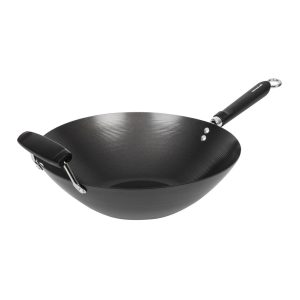
The Dexam School of Wok does the hard bit for you. Cast iron woks usually need you to build the seasoning layer yourself — weeks of cooking and oiling to develop the non-stick patina. This one arrives twice pre-seasoned already. Drop in some oil and start cooking. The layer isn't pristine (seasoning improves with use), but it's mature enough to cook properly from day one.
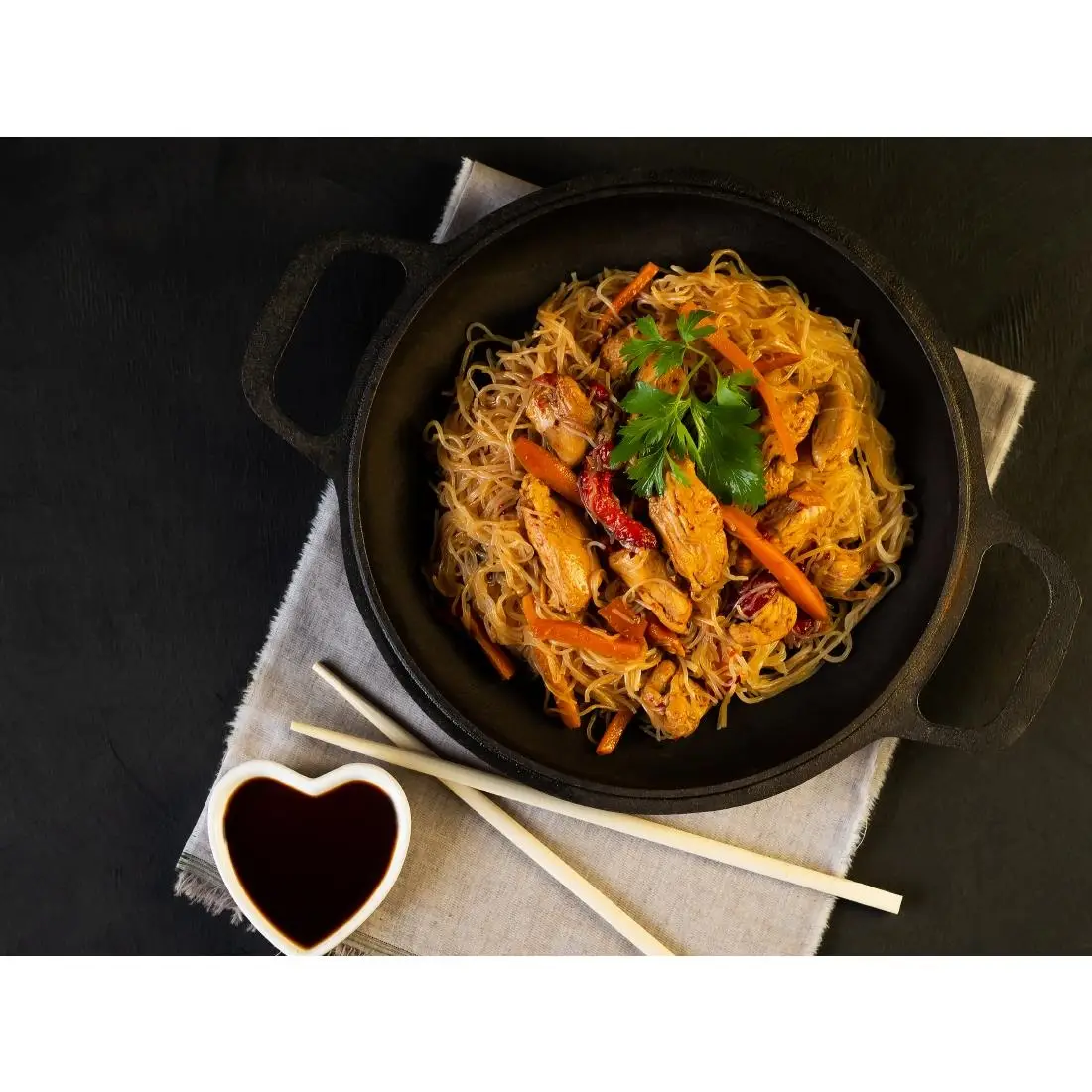
The flat base is deliberate engineering. Traditional round-bottomed woks need a ring stand on Western hobs; a flat base sits stable on any cooktop — gas, electric, ceramic, or induction. At 300 mm diameter and 351 mm tall, you've got genuine wok volume: quick-fry for 3–4 people, deep-fry small batches, or slow-cook curries and braises. The iron walls conduct heat from the bottom and sides simultaneously, which is the whole point of a wok shape. You're not improvising with a sauté pan.
At 2.9 kg, it's substantial but not immovable. The built-in handles sit high enough that you can toss food without burning your forearms. The cast iron ages beautifully: each use adds to the seasoning, so a 10-year-old wok cooks better than a new one. If you care for it (hand wash, oil lightly after each use), you're building a piece of kitchen kit that'll outlast you.