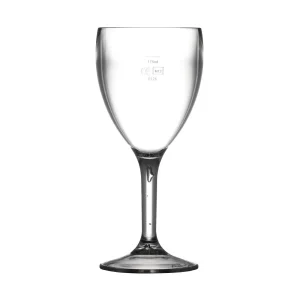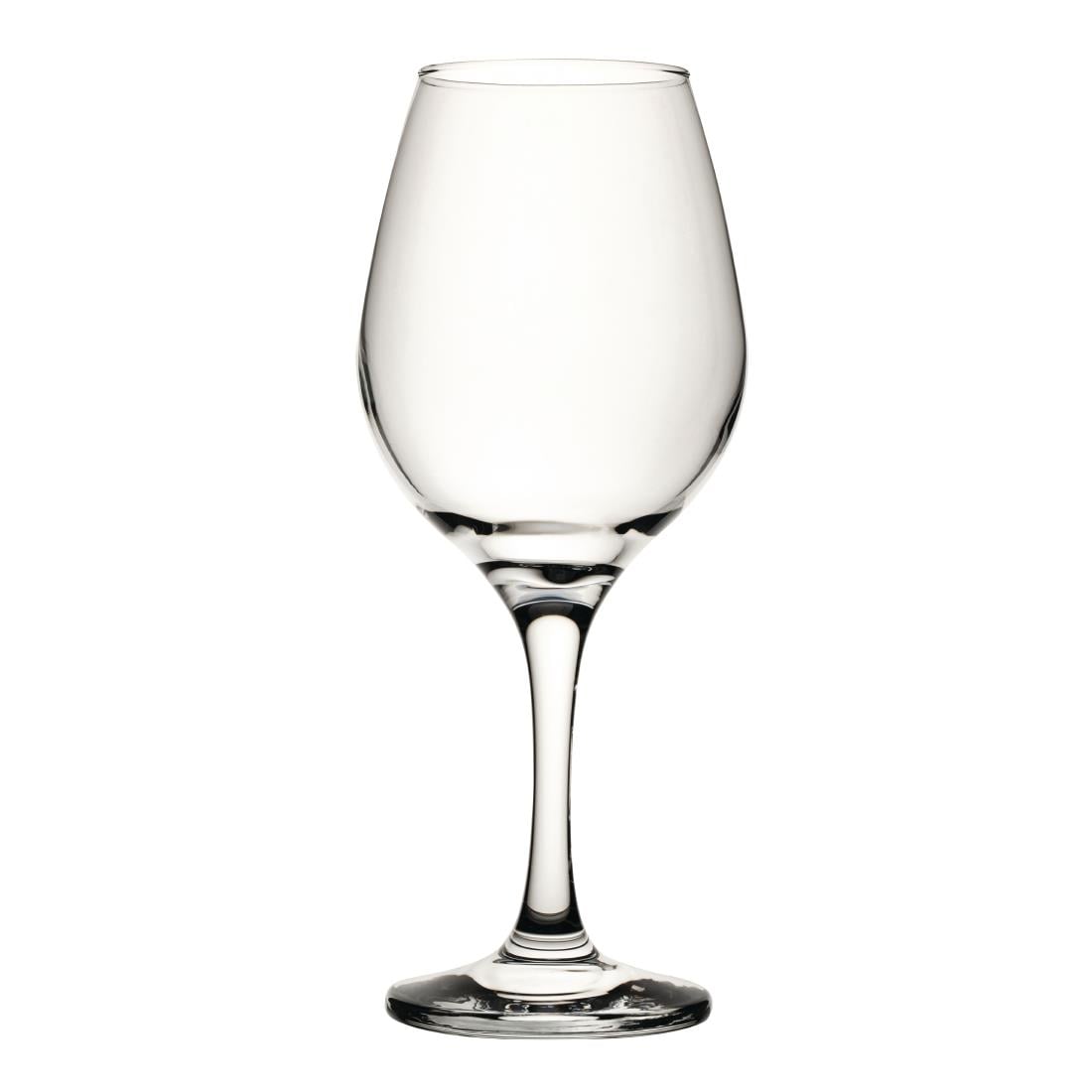
Why this wine glasse earns its place
350ml sits in the middle ground — not the generous 450ml pour, not the trim 290ml. It's the working size for venues that need flexibility. Smaller enough to look intentional with a modest house pour; large enough to give wine room to breathe; standard enough that customers recognise the shape without thinking about it. That's the sweet spot for hospitality.
The engineering is where the durability lives. One-piece moulding removes weak points: no seams, no joins that collect debris or fail under service pressure. The beaded rim is structural reinforcement, not decoration. It's shaped during manufacture to take impact — the part of the glass that suffers most in the dishpit, in the rack, in a customer's hand. Soda-lime glass is the proven material: it won't yellow, it handles thermal stress, and it costs enough less than crystal that you can actually rotate stock economically.
350ml pours naturally at around 125–150ml, giving customers a generous measure without over-pouring wine from your margin. It works for house reds, for wine-by-the-glass programmes, for table service where you're building customer value without giving away margin. Twenty-four per pack is the unit for catering venues — enough for one service rotation, enough stock to build without overselling to warehousing.