

Why this plate earns its place
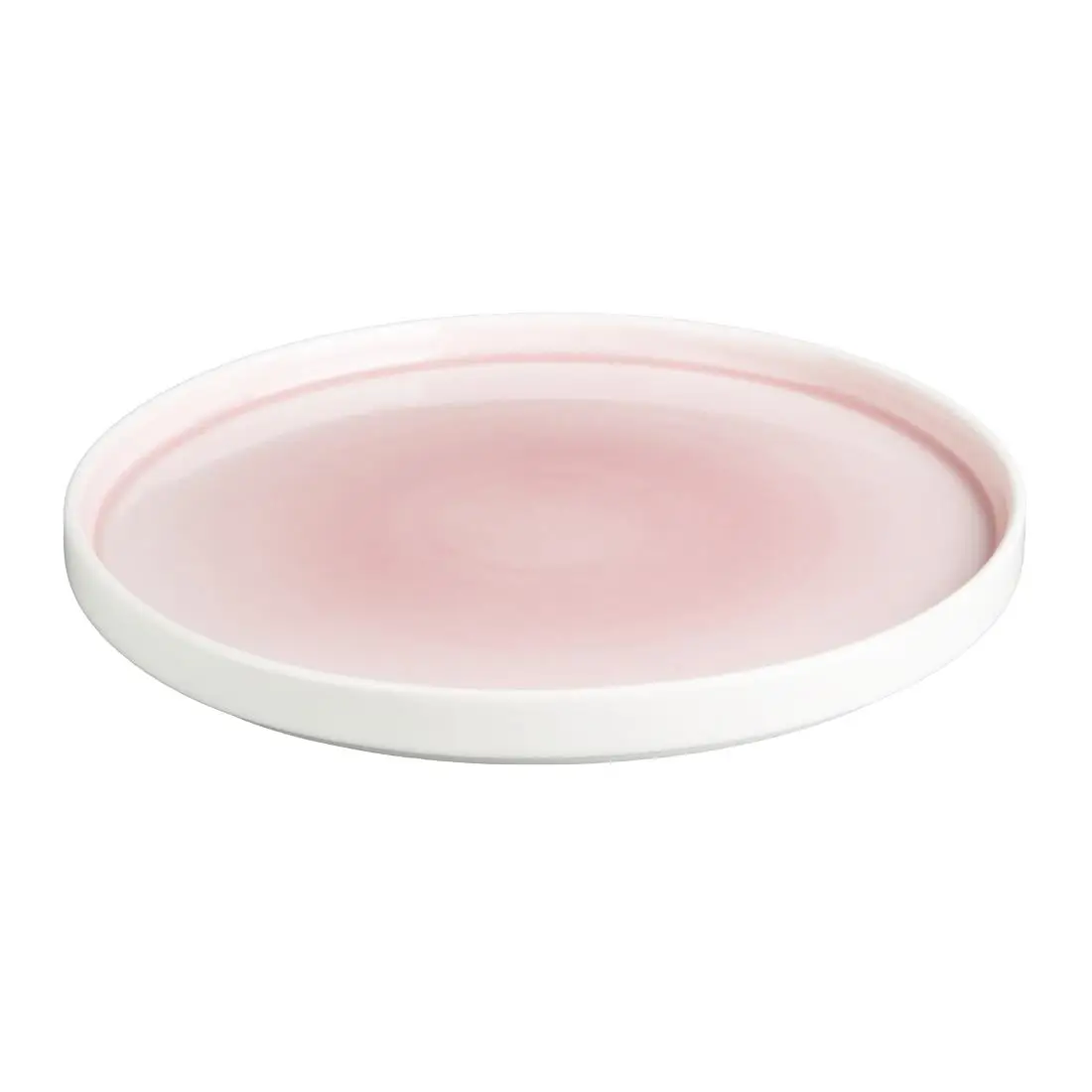
At 270 mm, these are true dinner plates — wide enough for a proper plating line, not oversized or fussy. A chef can compose a 200 g protein, starch and two vegetable components without crowding, or plate a finished pasta dish with garnish and sauce. The rim sits proud of the table edge so a guest can knife and fork without the plate sliding, and the glaze is dense enough that most sauces won't soak or stain.
The pink finish from Olympia's Fondant range sits between pure white and a bold statement. It reads as a deliberate choice without demanding attention from food — you choose this when you want your table to feel contemporary and curated, not corporate or industrial. Rolled edges on the rim resist chipping and crazing, which is where most plates fail: a single chip at the table-edge makes the plate feel worn after weeks of service.
Porcelain is the default for working kitchens because it holds temperature (hot plate out of the pass stays hot long enough for plating, cooling to comfortable-to-touch by service), survives repeated commercial washing without warping, and doesn't retain flavours or odours the way ceramics can. The 4-pack is a single table set, so you'd typically order multiples — one set per table, plus backups in wash.