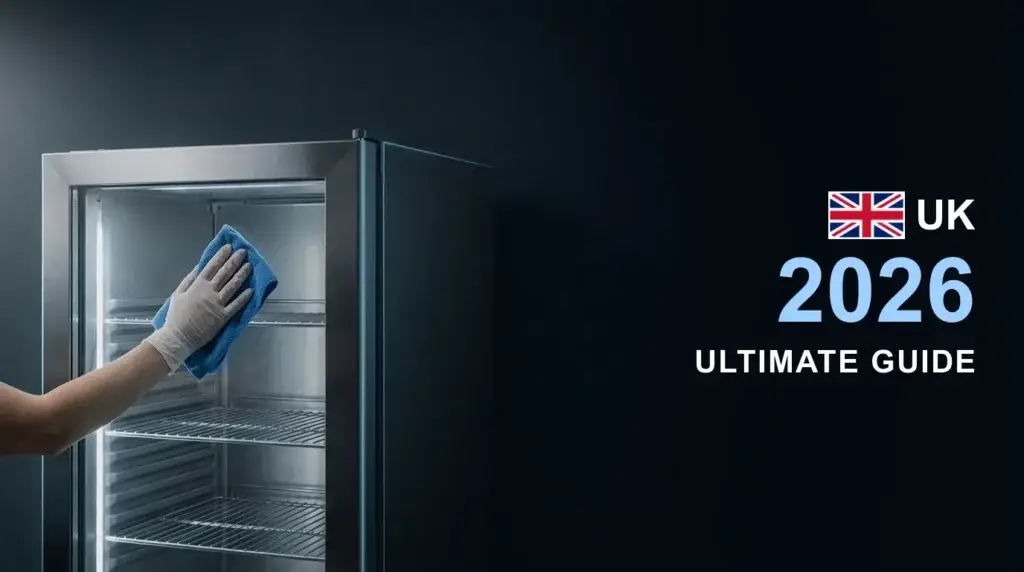
How to Clean a Commercial Bottle Cooler & Back-Bar Fridge: Daily, Weekly & Annual Protocol (UK 2026)
The difference between a clean bottle cooler and one failing EHO inspection is a 5-minute daily wipe and 30-minute weekly deep clean. This guide covers maintenance for GAMKO Maxiglass, Tefcold UR, Polar, Koldbox, and Williams bottle coolers. Blocked condensers cause 80% of cooling failures; most cost £180 to fix with a 5-minute brush.
- Daily (5 mins, end of service): Wipe interior shelves with food-safe sanitizer cloth. Wipe exterior and door. Empty and clean drip tray. Visual check for spills or leaks. Check temperature display reads 2–8°C.
- Weekly deep clean (30 mins): Empty unit. Remove shelves and soak in warm food-safe degreaser solution. Wipe all interior walls and door gasket. Brush condenser grille at front, rear, and underneath (most critical step — dust blocks airflow). Reassemble and restock.
- Monthly (20 mins): Pull unit away from wall. Vacuum floor and walls behind fridge. Inspect door gasket for splits or hardening. Test door seal with thin paper (should grip paper when door closes). Check castor brake locks are engaged.
- Quarterly (engineer visit, 30 mins): Refrigerant pressure check. Fan motor inspection. Thermostat calibration. Defrost cycle test. LED lighting inspection and bulb replacement if dim. Cost: £120–£180 depending on brand.
- Annual (engineer service, 1–2 hours): Full refrigeration service. F-Gas compliance documentation check. Gasket replacement assessment (typical replacement cost £40–£80). WEEE end-of-life assessment if unit is 8–12 years old. Service contract review.
- Temperature discipline: Bottle coolers run +2 to +8°C for beer (target 4°C). Daily temperature log required for HACCP compliance and EHO audit trail. Any reading above 8°C = stop service, call engineer within 2 hours.
- Cleaning chemicals cost: Food-safe surface sanitizer (500 ml) ~£3.50. Degreaser concentrate (1 L, makes 20 L working solution) ~£4. Weekly spend on chemicals ~£0.80. Annual chemical spend ~£42. A single engineer callout to clear a blocked condenser costs £180 — that’s the ROI on 4 years of meticulous cleaning.
- Multi-brand protocol: This guide covers GAMKO Maxiglass, Tefcold UR series, Polar G-series, Koldbox BC125, and Williams Quartz — the five brands responsible for 70% of UK commercial bottle coolers. The cleaning protocol is identical across all five; only door and condenser access points vary slightly.
A bottle cooler sees 200+ door opens per shift. The Environmental Health Office inspects hygiene records, not bottle count. One unplanned failure, one failed temperature log, one dusty condenser, and you lose hygiene rating points. The insurance and reputation cost far exceeds the £150/year maintenance spend that prevents it. This guide covers daily, weekly, and quarterly maintenance. Follow the protocol, and your cooler will run cool, pass EHO checks, and last 12+ years.
In this guide ↓
- The daily, weekly, monthly, quarterly and annual cleaning checklist
- Tools, chemicals and PPE required
- Multi-brand protocol (GAMKO, Tefcold, Polar, Koldbox, Williams)
- Why blocking the condenser causes 80% of service calls
- Temperature logging and HACCP compliance
- Common cleaning mistakes and how to avoid them
- When to call an engineer vs. when to replace the unit
- Answers to eight frequently asked questions about bottle cooler maintenance
Daily Cleaning Protocol (5 mins, end of service)
Daily cleaning is non-negotiable. It prevents mould, cross-contamination, and door gasket degradation. Every cooler sees condensation, spills, and sticky residue. Wipe at end of service.
Use a microfibre cloth dampened with food-safe sanitizer (chlorine-based 200 ppm or quat). Wipe from top down, paying attention to corners where mould can start.
Use a fresh damp cloth. On sliding-door units, wipe the top track. On hinged units, wipe hinges with a dry cloth to prevent rust.
Wipe glass with a damp cloth, dry with lint-free towel. Wipe the door gasket (rubber seal) with a separate cloth — gaskets trap moisture and are mould-prone.
Lift out the drip tray, empty liquid, rinse with warm water, wipe dry, and return. A full tray can cause water pooling inside the unit.
Scan interior for standing liquid or mould. Black or green patches indicate high humidity or a gasket leak — call engineer within 48 hours.
Target is 2–8°C (ideally 4–5°C). If above 8°C, contact technician within 2 hours. If below 0°C, adjust thermostat up 0.5°C.
Weekly Deep Clean (30 mins)
Once a week — typically on a quiet shift or a day before restocking — remove all bottles, remove the shelves, and give the unit an interior deep clean. This is where the real hygiene happens. This is also where you brush the condenser, which is the #1 reason bottle coolers fail cooling performance.
Remove all bottles. Plan this for a time when the cooler is naturally low or rotate stock to a backup cooler if available.
Slide out shelves and submerge in warm water (40–50°C) with food-safe degreaser (1:10 ratio) for 10–15 mins. Scrub gently, rinse thoroughly, and air-dry on a clean towel.
Wipe all interior surfaces with degreaser solution, then rinse with clean water to remove residue. A degreaser film attracts dust and reduces light transmission.
Wipe the entire rubber seal with warm water and mild degreaser. If the gasket has visible splits or lost its grip, flag it for replacement (typically £40–£80).
Using a soft-bristled brush, gently brush the metal fins at the front, rear, or underneath the unit (location varies). Dust blockage causes 80% of cooling failures. Spend 3–5 minutes here.
Return dry shelves and restock using FIFO (first in, first out). Confirm temperature reaches 2–8°C within 15–20 minutes. If slower, contact your engineer.
Monthly Maintenance (20 mins)
Monthly: spend 20 minutes on inspection and prevention.
With two staff, gently pull the unit forward 30–40 cm (watch power cords). Vacuum the floor and under the unit to prevent dust blocking the condenser air inlet. Return carefully to position.
Run your fingers along the entire rubber seal. Look for cracks, splits, or hardening. A failing gasket loses grip and the unit works harder. Flag for replacement if damaged (typically £40–£80).
Place a thin piece of paper vertically across the gasket, close the door, and try to pull it out. If it pulls out easily, the seal is failing — call your engineer.
If on wheeled castors, ensure all four brake locks underneath are engaged. Loose brakes allow the unit to creep during service due to compressor vibration.
Quarterly Service (Engineer Visit, 30 mins)
Quarterly: engineer visits for 30-minute preventive check.
Engineer confirms pressure is within spec. High/low pressure = urgent repair needed.
Engineer checks for abnormal sounds and motor wear. Cost to replace: £80–£150.
Engineer verifies display temperature is accurate. Misread temps cause freezing or warmth. Cost: £40–£100.
Engineer triggers manual defrost and confirms water drains properly. Ice buildup signals a stuck defrost valve or blocked drain line.
Engineer replaces dim or failing bulbs/LED strips. Cost: £15–£35. Keep lights at full brightness.
Cost of quarterly service: £120–£180 per visit depending on brand and location. Over a year, four quarterly visits cost £480–£720. Compare that to one mid-service emergency callout costing £180 plus lost revenue from downtime — quarterly maintenance pays for itself.
Annual Full Service and Inspection
Annual service: F-Gas refrigerant charge, compressor oil, electrical test, full condenser clean, thermostat calibration, gasket assessment. Cost: £150–£400. Non-negotiable for units 5+ years old.
End-of-life assessment: If the cooler is 10+ years old, shows persistent temperature issues despite quarterly engineer visits, or requires gasket replacement twice in a year, consider replacement. Energy costs of old units (EEI 75+) are 40–50% higher than modern R600a units (EEI 55–65). A replacement pay-back period is typically 3–4 years on energy savings alone.
Tools and Chemicals Checklist
- ✓Soft cloths Microfibre cloths, 3–4 per clean. Not paper towels (leave lint).
- ✓Soft-bristled brush For condenser grille and interior tracks. Avoid hard-bristle (scratches).
- ✓Vacuum (handheld) For behind-unit dust and interior floors.
- ✓Warm water Primary cleaning agent. No hot water (thermal shock).
- ✓Food-safe sanitizer Approved for food contact surfaces. Quat-based or chlorine-based.
- ✓Food-safe degreaser For condensed oils and drip tray. Check COSHH data sheet.
- ✓Dry towels Cotton only. Prevents water marks on glass.
What NOT to use: No bleach, acid cleaners, abrasive pads, or high-pressure water. These damage seals, electrical components, and refrigerant lines.
Multi-Brand Guide: GAMKO, Tefcold, Polar, Koldbox, Williams
The cleaning protocol (daily wipe, weekly deep clean, monthly gasket check, quarterly engineer visit) is identical across all commercial bottle cooler brands. Cleaning does not require brand-specific tools or chemicals.
GAMKO Maxiglass
- R600a refrigerant (F-Gas compliant)
- Stocked at Craven Cooling
- 500–1,000L upright range
Tefcold UR
- R600a refrigerant
- Heavy-duty construction
- 600–1,200L models
Polar, Koldbox
- R600a or R290 refrigerant
- Compact and entry-level
- 300–800L capacity
Williams
- R600a/R290 options
- High-spec finish
- 800–1,500L range
All brands use similar condenser designs, thermostat systems, and defrost cycles. The cleaning checklist applies universally. Refrigerant charges and pressures vary slightly — consult your unit manual or engineer.
HACCP Compliance and Temperature Logging
Bottle coolers are food storage. The UK Food Standards Agency and the Environment Health Office require that any food storage equipment has a temperature log as part of HACCP (Hazard Analysis and Critical Control Points) food safety documentation.
Create a simple paper or digital log. Example template:
If temperature goes out of spec: Above 8°C — stop service, remove stock, call engineer within 2 hours. Log the incident. Below 0°C — reduce thermostat 0.5–1°C. If it remains below 0°C, call engineer. Environmental Health Office visit — be prepared to show 12 months of temperature logs. Gaps longer than 7 days trigger compliance warnings. Temperature logs are your defence if something goes wrong.
Common Cleaning Mistakes and How to Avoid Them
- Not brushing the condenser grille: Dust blockage causes 80% of cooling failures. Brush weekly — it takes 3 minutes.
- Overfilling the drip tray: Prevents water from draining. Empty daily, wipe weekly.
- Using the wrong chemicals: Bleach and acid damage seals and refrigerant lines. Use food-safe sanitizer only.
- Ignoring slow cool-down: If the unit takes more than 30 mins to reach 4°C, call engineer — don’t wait.
- Pressure washing the exterior: High-pressure water damages electrical components. Hand-wash only.
- Skipping the monthly gasket check: A failing gasket doubles the energy cost. Use the paper test monthly.
Daily (5 mins): wipe shelves, empty drip tray, check temperature. Weekly (30 mins): soak and clean shelves, wipe interior, brush condenser grille. Monthly: inspect door gasket, vacuum behind unit. Quarterly: engineer checks refrigerant, thermostat, and fan motor. Annually: full refrigeration service and assess gasket replacement. Keep temperature log daily for HACCP and EHO compliance. Total annual DIY cost: £8–£12 chemicals; total with quarterly engineer service: £500–£800. Skipping this causes warm beer, mould, gasket failure, and EHO compliance notes — all preventable with a printed checklist.