Dual-Zone vs Single-Zone Wine Fridges Explained: The Complete UK Guide (2026)
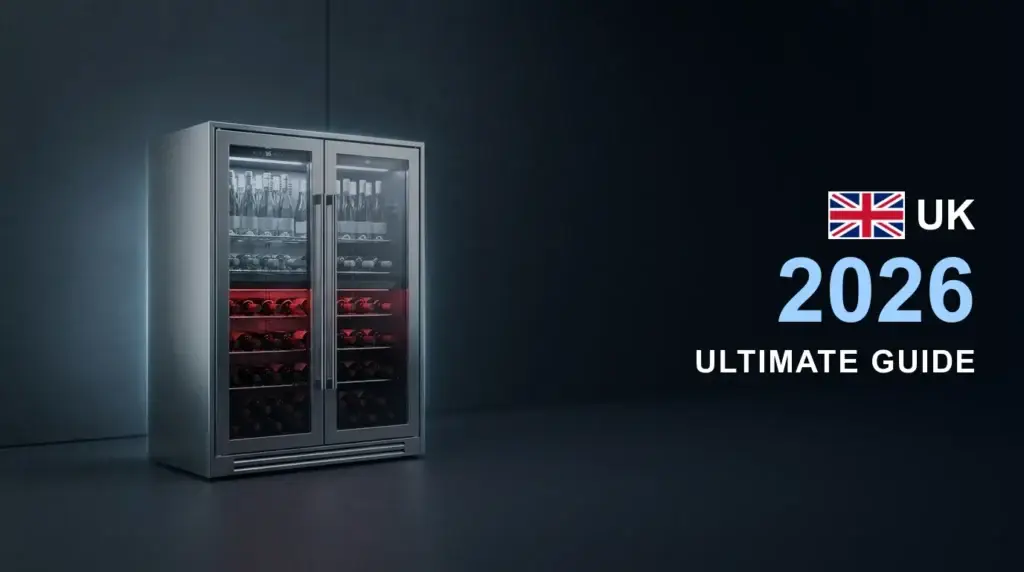
The dual-zone versus single-zone question comes down to one operational fact: red wine serves best at 12–16°C and white at 6–10°C, and no single temperature does both jobs properly. A single-zone wine fridge holds one temperature band across the whole cabinet — right for an all-red cellar setting, an all-white bar setup, or long-term storage at a steady 12–13°C. A dual-zone cabinet runs two independently controlled compartments, so one unit puts reds and whites at their correct service temperatures behind the bar. This guide covers the service temperature bands by wine style, the economics of zones against wine list length, why humidity, UV-protective glass and vibration matter, and how to spec refrigeration for a by-the-glass programme.
- Service temperatures: sparkling 5–7°C, crisp whites and rosé 6–10°C, fuller whites 9–12°C, light reds 12–14°C, full-bodied reds 15–18°C. “Room temperature” in a modern 21°C dining room is too warm for every red on the list.
- Single-zone: one temperature band across the cabinet — right for a single-style offer, or storage at a steady 12–13°C. Simpler, cheaper, slightly more usable capacity per litre.
- Dual-zone: two independently controlled compartments in one cabinet — reds up top around 14°C, whites below at 7–8°C is the standard bar setup. One footprint, both service temperatures.
- Zone economics: under roughly 20 lines served mostly by the bottle, a dual-zone cabinet covers the list; past that, split into multiple single-zone cabinets each set to a style band — it is cheaper per bottle and removes the single point of failure.
- UV and vibration: wine fridges use UV-protective glazed doors and low-vibration mounting because light strike and constant agitation both degrade wine — a standard bottle cooler does neither job.
- Wine is not an 8°C food: the Food Safety (Temperature Control) Regulations 1995 8°C rule applies to perishable foods that support bacterial growth — wine temperature is a quality decision, not a food-safety one.
- Formats: dual-zone, upright single-zone and under-counter wine coolers — Craven Cooling stocks or sources all three.
Wine refrigeration is where restaurants and bars quietly leak margin. A £38 bottle of Rioja served at 21°C tastes soupy and gets sent back or silently not reordered; a £9 glass of Sauvignon poured at 14°C from an overworked bottle fridge tastes flat. The fix is not a better wine list — it is serving the list you already have at the temperatures the wines were made for, which is an equipment specification question with exact numbers attached.
This guide is for trade buyers: restaurants and gastropubs building a by-the-glass programme, bars and hotels speccing back-bar wine display, farm shops and wine merchants retailing bottles in condition, and operators replacing a domestic-grade cabinet that has died in commercial service. Browse the wine coolers and wine fridges range at Craven Cooling when ready.
Table of Contents
- Decision 1: Service Temperatures by Wine Style
- Decision 2: Single-Zone vs Dual-Zone — Zone Economics
- Decision 3: Humidity, UV Glass and Storage vs Service
- Decision 4: Vibration and Placement
- Decision 5: Speccing for By-the-Glass Programmes
- Decision 6: Capacity, Formats and Running Cost
- Frequently Asked Questions
- Related Buying Guides
Decision 1: Service Temperatures — the Numbers That Drive Everything
Every zone decision follows from the temperature bands wine actually serves at. Pin these to the bar wall:
| Style | Service temperature | Notes for the bar |
|---|---|---|
| Sparkling, Champagne, Prosecco | 5–7°C | Coldest serve on the list; pressure and mousse behave better cold — the one style a standard bottle cooler serves acceptably |
| Crisp whites, rosé | 6–10°C | Sauvignon, Pinot Grigio, most rosé. Below 6°C the aromatics shut down — over-chilling hides the wine you paid for |
| Fuller whites | 9–12°C | Oaked Chardonnay, white Rioja, orange wines. Noticeably warmer than the crisp band — one reason “all whites at 4°C” fails |
| Light reds | 12–14°C | Pinot Noir, Beaujolais, chillable reds. A genuine growth category that a 14°C zone serves perfectly |
| Full-bodied reds | 15–18°C | Rioja, Malbec, Shiraz, claret. “Room temperature” meant a 17°C dining room, not a modern 21°C one — cellar-cool, not kitchen-warm |
Note what is absent here: food law. Wine is not a perishable food that supports pathogen growth, so the 8°C rule in the Food Safety (Temperature Control) Regulations 1995 does not apply to it — the same fridge’s cheese and charcuterie garnish is another matter and belongs in food refrigeration. Wine temperature is purely a quality and revenue decision, which means you get to make it on commercial grounds alone.
Decision 2: Single-Zone vs Dual-Zone — the Economics of Zones
Zones cost money: a dual-zone cabinet carries more control hardware and partitioning than a single-zone of the same size, and gives up some bottle capacity to the divider. Whether that premium pays depends entirely on your list.
| Factor | Single-zone | Dual-zone |
|---|---|---|
| Temperature | One band across the cabinet | Two independently controlled compartments |
| Best for | All-one-style offers; long-term storage at 12–13°C; dedicated white or red cabinets | Mixed red-and-white service from one footprint — the standard restaurant back-bar setup |
| Purchase price | Lower per litre | Premium for the second circuit and controls |
| Usable capacity | Full cabinet at one setting | Fixed split between zones — check the ratio suits your red/white sales mix |
| Failure exposure | One cabinet down = one style down (if you run several) | One cabinet down = the whole wine service down |
| Rule of thumb | Big lists: several single-zones, one per style band | Lists under ~20 lines: one dual-zone covers service |
The crossover logic works like this. A bistro with a 14-line list pouring 8 by the glass needs perhaps 40–60 bottles at service temperature at any moment — one dual-zone cabinet with reds at 14°C above and whites at 7°C below does the whole job in one footprint. A 60-line restaurant with a serious by-the-glass programme needs hundreds of bottles staged across four temperature bands; there, three or four single-zone cabinets — sparkling/crisp white at 6–7°C, fuller whites at 10°C, light reds at 13°C, big reds at 16°C — cost less per bottle than the equivalent dual-zone capacity, let you tune each band precisely, and mean a compressor failure takes out a quarter of the programme rather than all of it.
Decision 3: Humidity, UV Glass and the Storage-vs-Service Distinction
A wine fridge is built differently from a bottle cooler, and the differences are exactly the features that protect stock you may hold for months:
UV-Protective Glazing
Light strike protection- UV exposure causes “light strike” — dank, struck-match off-flavours
- Clear-glass bottles (rosé, some whites) most vulnerable
- Wine fridge doors use UV-filtering glass; display lighting is low-UV LED
- Keep cabinets out of direct sun regardless
Humidity Behaviour
Cork protection- Long-stored corks dry and shrink in over-dry air → oxidation
- Wine cabinets are designed to hold moderate humidity
- Matters for months-long storage, less for fast-turning service stock
- Store bottles horizontal to keep corks wet; screwcaps are indifferent
Gentle, Stable Cooling
No shock cycles- Wine cabinets cycle in narrow bands — stability beats speed
- Repeated warm-cold swings age wine prematurely
- A steady 13°C beats an oscillating 10–16°C average of 13°C
- Another reason domestic and bottle-cooler substitutes disappoint
Shelving for Bottles
Format matters- Sliding wooden or coated racks cradle bottles horizontally
- Burgundy and Champagne bottles are fatter — quoted capacities assume Bordeaux shape
- Expect ~10–20% fewer bottles on a mixed list
- Display-angle top shelves sell; flat racks store
The storage-versus-service distinction settles a common confusion: a cabinet holding your cellar stock for months wants a single steady 12–13°C, humidity-kind conditions and minimal light — a single-zone cellaring cabinet. A cabinet feeding tonight’s service wants style-correct bands and fast restock access — a dual-zone or a bank of single-zones by the bar. Plenty of operations correctly run both, and they are different purchases.
Decision 4: Vibration and Placement — the Quiet Spec Lines
Wine dislikes agitation. Constant vibration keeps sediment suspended in older reds, and there is good trade consensus that long-term vibration is generally unkind to wine condition — which is why wine cabinets are built with compressor mounts and rack designs that damp it, and why placement decisions matter:
Back-bar real estate is tight, but siting a wine cabinet hard against machinery that vibrates all shift transmits that energy into every rack. Leave a gap or relocate the cabinet along the run.
A cabinet rocking on an uneven floor amplifies its own compressor cycle. Level it at install; check again after the first deep clean moves it.
The universal display-fridge rules apply: solar gain and nearby heat sources force longer compressor runs (more vibration, more cost), and blocked vents shorten compressor life. Follow the manual’s clearances.
A wine wall in the dining room or a cabinet in a private dining suite needs the quietest unit you can spec. If refrigeration is going anywhere guests sleep or dine, see our quiet refrigeration guide for the dB(A) discussion.
Decision 5: Speccing for a By-the-Glass Programme
By-the-glass is where wine refrigeration earns hardest. The programme lives or dies on two things: every listed wine held at its service temperature ready to pour, and open bottles managed so the last glass tastes like the first.
Open-bottle discipline completes the spec. Date every opened bottle; most by-the-glass wines hold acceptably for 2–3 days re-stoppered in the correct zone (sparkling less, with a proper stopper), and preservation systems stretch premium lines further. The fridge is part of that system — an open bottle “resting” on the back bar at 22°C is losing condition by the hour, while the same bottle re-stoppered in its zone holds for tomorrow’s service. Train the routine: pour, re-stopper, return to zone. Every time.
Decision 6: Capacity, Formats and Running Cost
Three formats cover the trade, all available through Craven Cooling stocked or sourced:
-
✓
Under-counter wine coolers — the bar workhorse Slot into a 600–900mm run under the back bar at point of pour. Single or dual-zone versions; a pair at different settings is the flexible small-site answer. See the under-counter wine coolers category.
-
✓
Upright wine fridges — capacity and display Full-height glazed cabinets holding serious bottle counts, doubling as merchandising in restaurants, farm shops and wine merchants. See the upright wine fridges category.
-
✓
Dual-zone cabinets — two temperatures, one footprint Under-counter and upright dual-zones for mixed service from a single cabinet. See the dual-zone wine fridges category.
-
✓
Count bottles, then discount the brochure figure Quoted capacities assume standard Bordeaux bottles racked tight. Burgundy, Champagne and odd formats cost you 10–20% of quoted capacity on a real mixed list.
-
✓
Budget the running cost A glazed wine cabinet runs 24/7 like any display fridge. As a planning figure, a mid-size cabinet drawing ~2–4 kWh/24h costs roughly £197–£394 a year at £0.27/kWh — modest against the by-the-glass margin it protects, but worth checking the energy label when two models are otherwise level.
UK Price Tiers — July 2026
Indicative UK market ranges, July 2026, ex VAT. Capacity, glazing spec and noise rating move prices within each tier.
In this guide ↓
- Key facts and the service temperature bands by style
- Single-zone vs dual-zone — the ~20-line crossover rule
- UV glass, humidity and storage vs service cabinets
- Vibration, placement and noise considerations
- By-the-glass programme sizing worked example
- Formats, capacity discounting and running cost
- UK price tiers, July 2026
- FAQ — eight buyer questions answered
Setup Checklist for a New Wine Fridge
Whichever format you buy, the first week decides whether it delivers:
Whites and sparkling 6–8°C, reds 13–15°C is the standard service split. Write the settings on the HACCP-adjacent equipment log so a well-meaning closer does not “fix” them to 3°C.
Load the cabinet, give it 24 hours, then check actual bottle temperature — a thermometer against glass in the middle of each zone — rather than trusting the display alone.
Shelf-label which wines live where so restocking keeps styles in their bands. A Malbec restocked into the white zone is a cold, closed pour at 8pm.
Date labels on every opened bottle, re-stopper and return to zone after each pour, 2–3 day rotation rule, sparkling on proper stoppers. The fridge protects only what goes back into it.
Condenser coil vacuumed monthly, door seals checked, vents clear, glass cleaned with non-abrasive product. The failure modes are ordinary refrigeration failure modes — the stock inside is just more expensive.
Related reading: spec the rest of the bar with the bar equipment checklist for a new pub or cocktail bar, compare merchandising formats in the glass door fridge retail guide, keep bedroom and lounge units silent with the quiet refrigeration for guest bedrooms guide, and match the glassware to the programme in the sharing-style tableware guide.
Dual-zone versus single-zone is decided by your wine list. Reds serve at 12–16°C and whites at 6–10°C (sparkling 5–7°C, fuller whites 9–12°C), and no single setting covers that 9-degree spread — so a single-zone cabinet suits an all-one-style offer or storage at a steady 12–13°C, while a dual-zone cabinet puts both service bands in one footprint and is the standard answer for lists under roughly 20 lines. Beyond that, multiple single-zone cabinets tuned to style bands cost less per bottle, track a seasonal red/white mix better, and remove the single point of failure. Wine-specific cabinets earn their premium over bottle coolers through UV-protective glazing (light strike protection), humidity-kind stable cooling that avoids shock cycles, low-vibration construction, and horizontal racking — with quoted capacities assuming Bordeaux bottles, so discount 10–20% for a mixed list. Wine is not covered by the 8°C rule in the Food Safety (Temperature Control) Regulations 1995; its temperature is a pure quality-and-margin decision protecting 70%+ by-the-glass GP. Craven Cooling stocks or sources dual-zone, upright and under-counter wine fridges — Swansea showroom, 2-year parts warranty UK & Ireland: 01792 732702, sales@cravencooling.co.uk.