
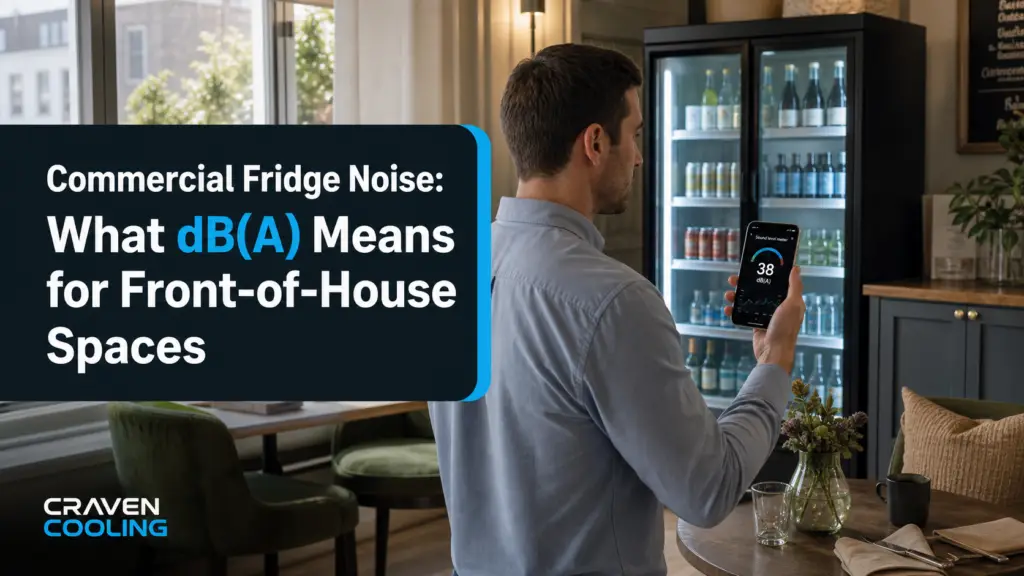
Commercial Fridge Noise: What dB(A) Means for Front-of-House Spaces
A refrigeration noise figure is not just a technical line in a specification. In a kitchen it may disappear under extraction and service noise. In a café, village shop, hotel corridor or quiet dining room, the same hum can become part of the customer experience. dB(A) ratings help, but only if you read them as a front-of-house decision: where will the unit sit, who will hear it, when is the room quiet, and what other sounds are already there?
- dB(A) is weighted for human hearing: it is more useful for perceived loudness than an unweighted sound pressure figure.
- Ratings are usually averages: a cabinet may be slightly louder or quieter during different parts of the cooling cycle.
- Measurement method matters: one supplier states sound is measured at 1.2m height and 1.2m distance; compare like with like where possible.
- Context changes everything: a figure that is fine in a busy shop may be intrusive in a quiet bedroom corridor or small dining room.
- Cabinet type influences sound: absorption minibars can be near-silent, while open-front multidecks and ventilated cabinets generally produce more audible airflow and compressor noise.
Craven Cooling already covers quiet bedroom refrigeration in detail, so this article stays broader. It is for operators choosing refrigeration that customers, residents or guests may actually hear: bottle coolers behind a bar, display fridges beside tables, grab-and-go cabinets near a queue, storage fridges in open kitchens, and retail multidecks in smaller shops.
Because Craven supplies multiple brands, the right conversation is not “which brand is quietest?” It is “which technology, placement and cabinet type suits this space?”
Table of Contents
Read the Number, Then Read the Room
dB(A) is useful because it gives you a comparison point, but it is not a guarantee of how the unit will feel in your venue. A café at lunchtime has crockery, conversation and coffee equipment. The same space at 7am may be almost silent. A care home dining room, hotel corridor or boutique retail space may make small mechanical sounds much more noticeable.
| Space | Noise sensitivity | What to prioritise |
|---|---|---|
| Busy pub bar | Moderate | Reliable pull-down, bottle capacity, vibration control |
| Small café | Medium to high | Placement away from seating and till conversations |
| Hotel or care setting | High | Quiet technology, correct ventilation, no cabinet rattle |
| Convenience store | Varies by format | Balance display access, energy use and background hum |
Understand What the Rating Includes
A listed sound level is commonly an average across operation, not a promise that every moment will sound identical. Compressors start and stop. Fans move air. Defrost cycles can change the sound temporarily. If the cabinet sits where customers pause, those changes are more noticeable than if it sits in a busy back bar.
Match Cabinet Type to the Space
Different refrigeration types have different sound personalities. A display multideck needs airflow across open product. A bottle cooler cycles behind a bar. A storage cabinet in a kitchen has different expectations from a quiet minibar in guest accommodation. Instead of chasing one magic dB(A) figure, shortlist by use case.
Open display
Retail and grab-and-go- More airflow noise
- Strong merchandising
- Best in active retail soundscapes
Glass-door display
Shops and cafés- Can reduce open-front noise and energy loss
- Needs good lighting and door discipline
- Often suits quieter venues
Back-of-house storage
Kitchens and stores- Noise less customer-facing
- Ventilation and heat rejection still matter
- Keep away from office or sleeping areas
Stop Avoidable Noise Before You Blame the Cabinet
Some fridge noise is a specification issue; plenty is installation and maintenance. Cabinets rattle when feet are not level, panels touch walls, bottles vibrate against each other, condenser coils clog, or vents are blocked. A unit that is working too hard because it is hot, dirty or boxed in can sound worse than its published figure suggests.
- ✓Level the cabinet. Rocking and vibration are often floor problems, not refrigeration faults.
- ✓Keep vents clear. Restricted airflow makes fans and compressors work harder.
- ✓Check the load. Bottles, shelves and trays can create rattles that sound like mechanical faults.
Shop by siting
Back-of-house and guest-facing spaces differRelated decisions
Noise is only one fit questionAsk Craven
Check the room, not just the labelCraven Cooling view: A dB(A) figure is useful, but it does not describe every annoyance. Hard floors, corners, poor ventilation and night-time trade can all make an acceptable cabinet feel wrong in the room.
Use dB(A) as a comparison tool, not the whole decision. For front-of-house refrigeration, the room, cabinet type, ventilation, installation and time-of-day soundscape decide whether a fridge feels acceptable to customers and staff.


